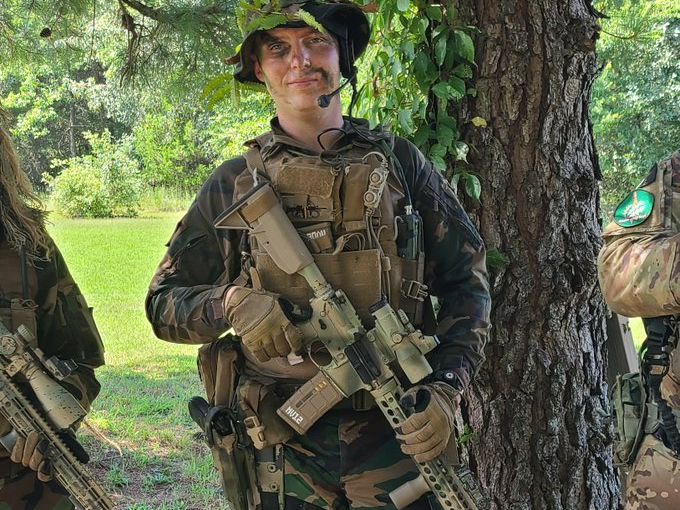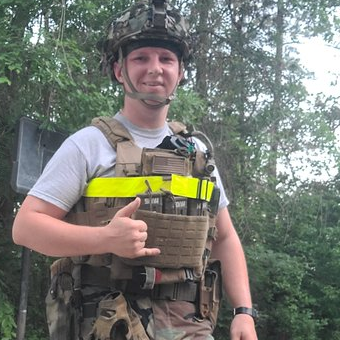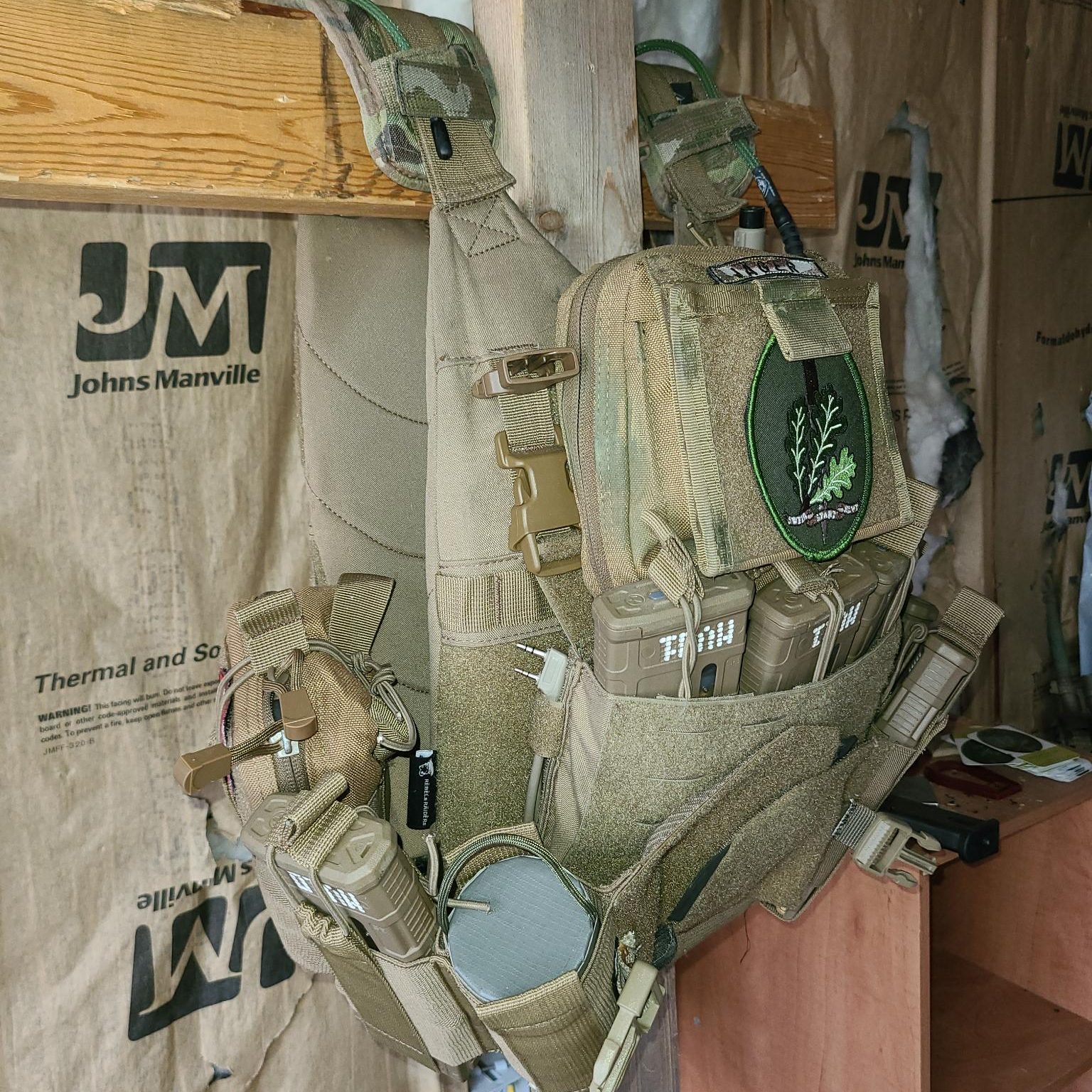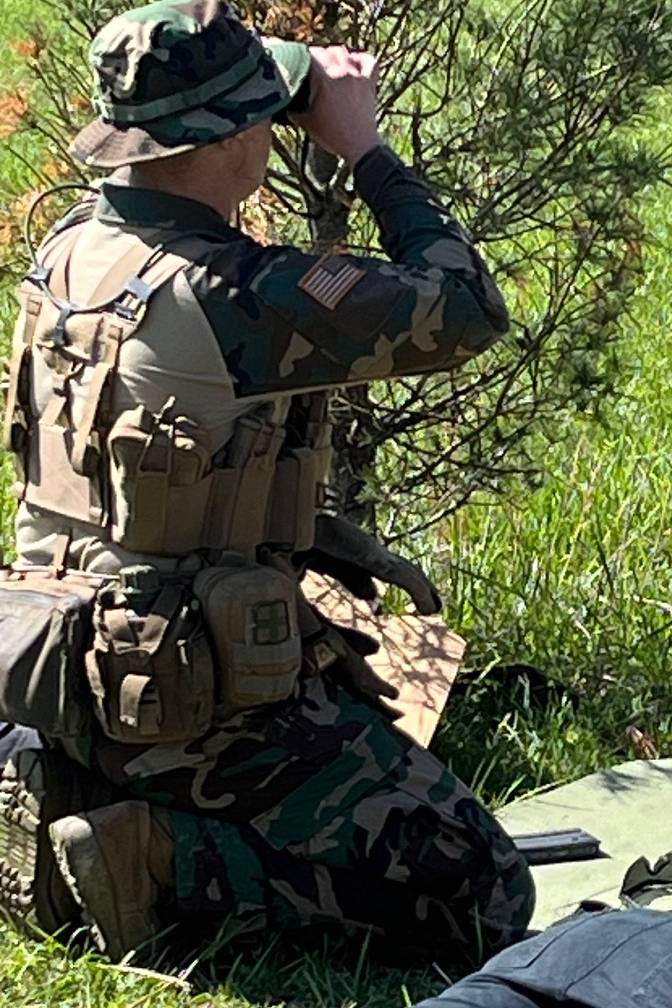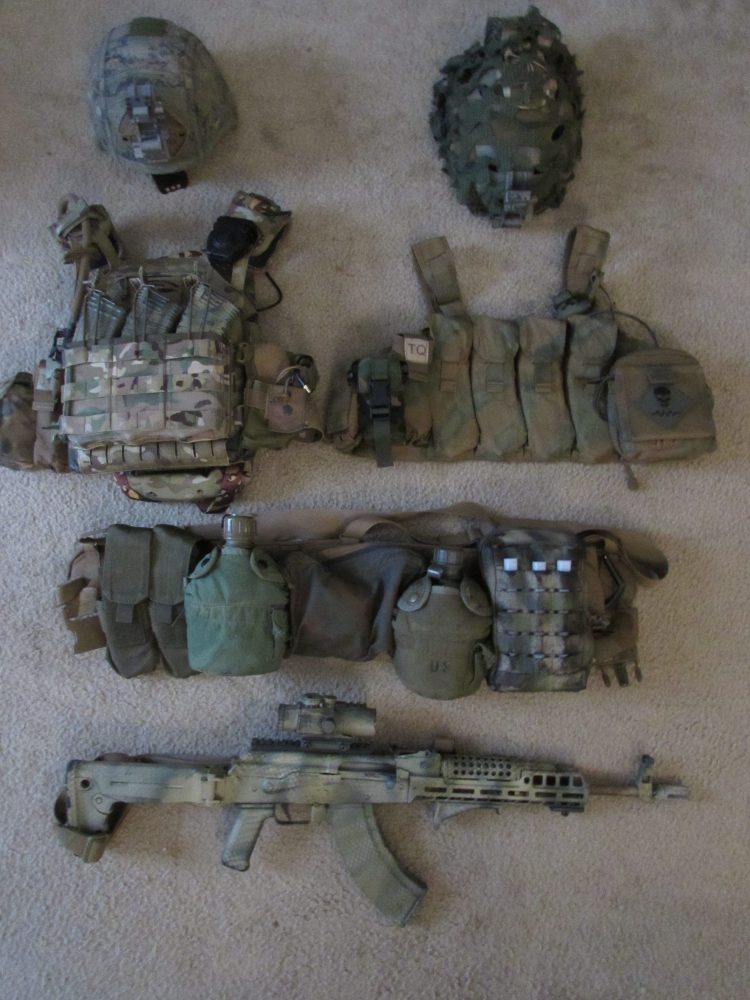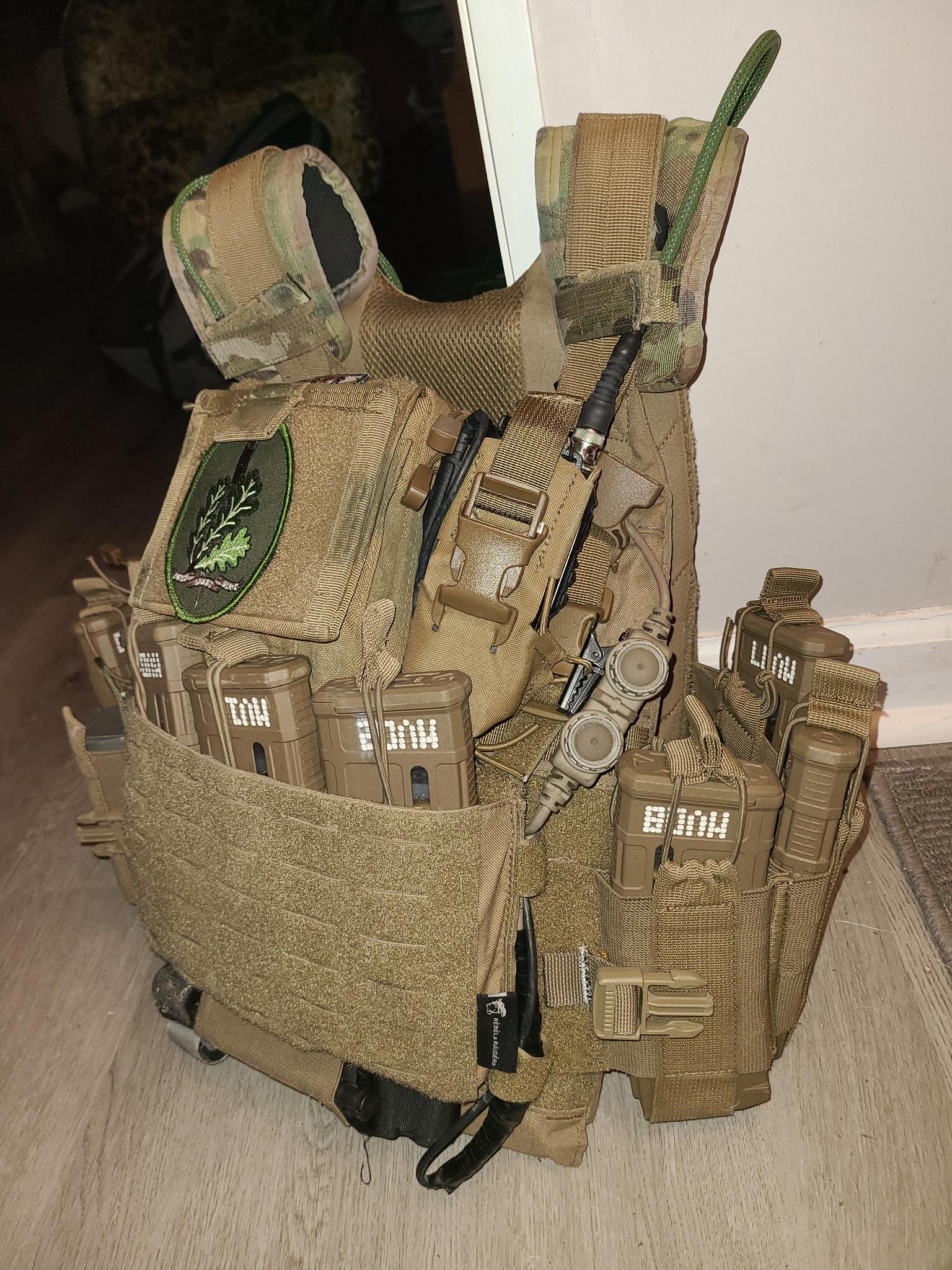
Review: Vakarian PC/LBE from REBELs RAIDERs

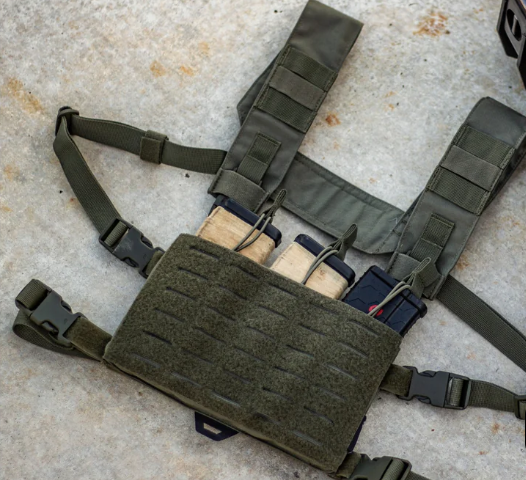
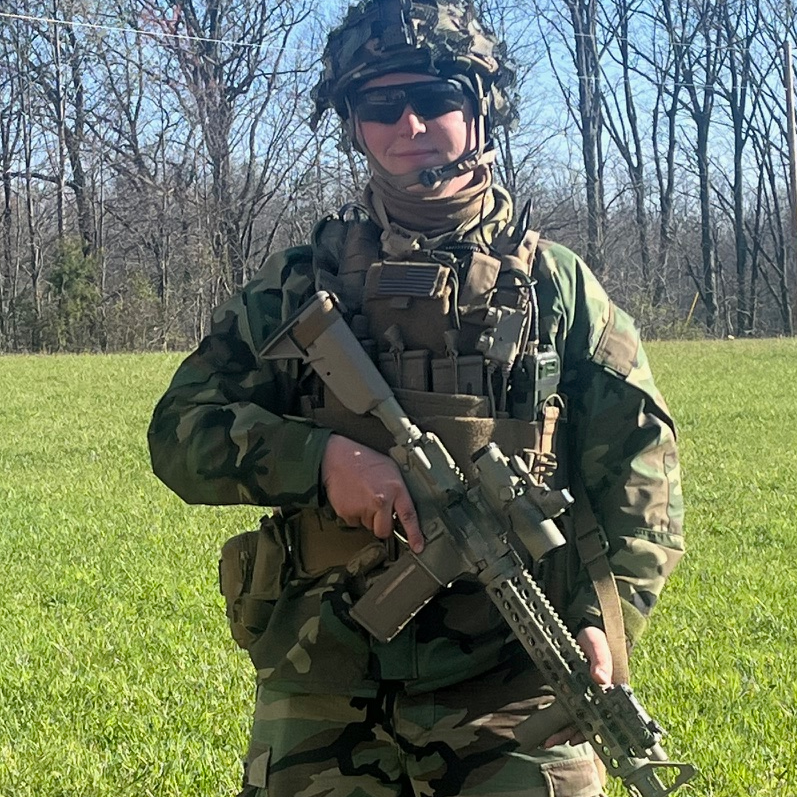
I don’t often do gear reviews (I believe this is my 3rd ever), but I make exceptions when I find something innovative or especially useful. I have been following Rebel SMG on X (@Rebels_Raiders) since he started working on the Vakarian, and the concept intrigued me. A 3-in-1 kit that can be readily converted from plate carrier to micro chest rig to “recce rig” (conventional chest rig) in minutes with just buckles and velcro, and at a mere $240 all told. So as soon as they became available for purchase I bought one to see if it could fit my needs.

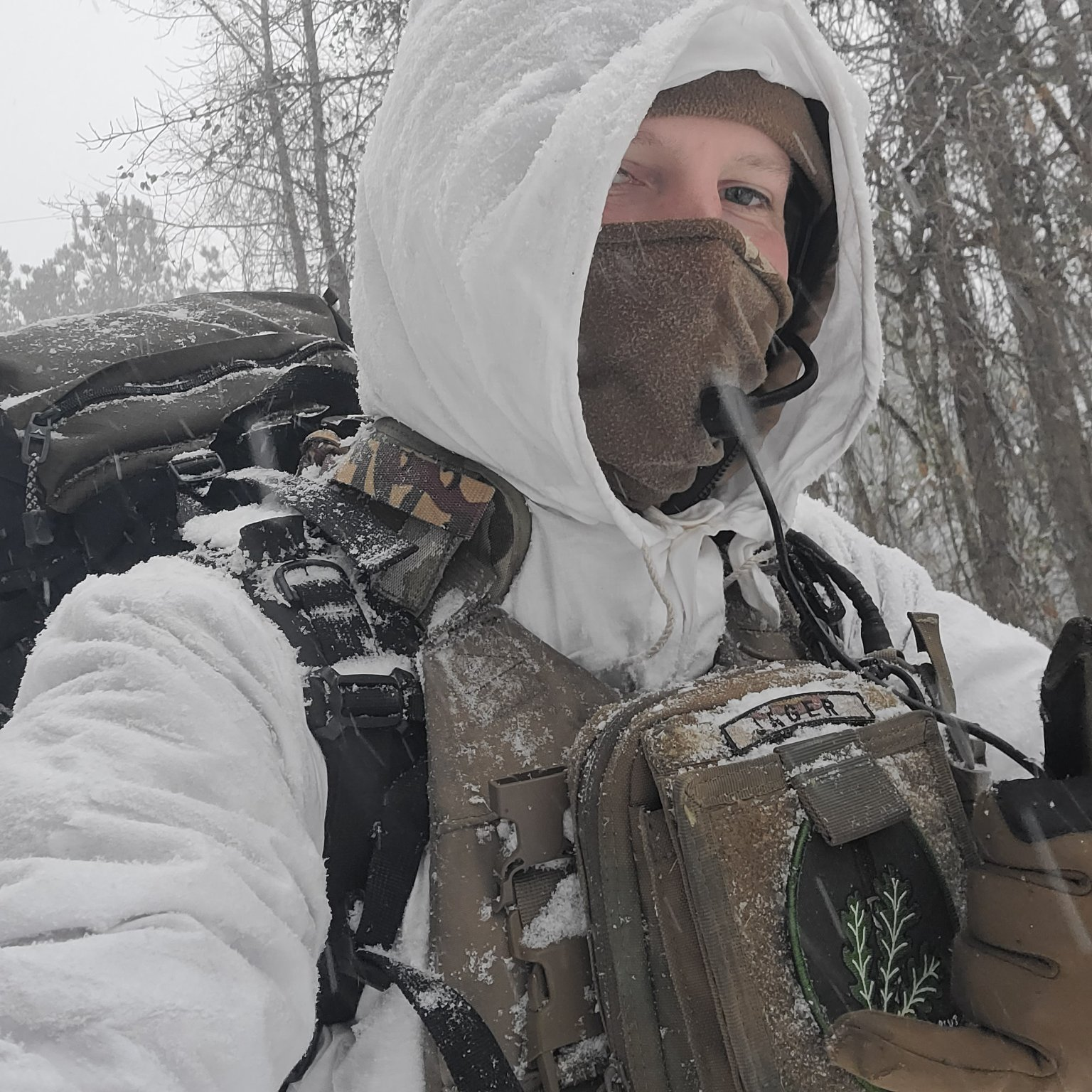
I’ve had my Vakarian for 2 months now, I’m only now writing a review after I had the chance to run it for a week while teaching the last Jäger Course in Kentucky. More testing is forthcoming in the next year or so, but I feel that I have enough field time this kit to give it the thorough review that it deserves. Nothing was given to me, I bought (and modified) this equipment with my own money. I was not asked to write this review, I just felt that this piece of gear deserved it.

TLDR: It looks cool and works well.

Context: My Personal Requirements for My Kit

My requirements for my tactical Load-Bearing Equipment (LBE) are as follows:

  • Able to use with or without armor without moving pouches around
  • Carry at least the following: 5 AR magazines (plus what’s on my belt and assault pack), a radio, IFAK, 1 smoke grenade, and an admin pouch
  • Comfortably wear with a backpack and while riding in a vehicle
  • Rugged enough to withstand hard field use (crawling across rocks, dragging through dirt, etc.)

I’ve always adopted the stance that there is a time and a place for wearing armor and not. Because of this, I’ve been setting up my equipment such that I have two full sets of kit, one with and one without armor, for the last several years. This imperfect solution has been “good enough” for me, until I went to West NC last October to assist in Hurricane Helene relief efforts.

While there, I wished I had a way to slick down my plate carrier to just wear armor without tediously removing all my pouches, or an easy way to wear a radio and some administrative tools without looking like Rambo. But I couldn’t pack 3 sets of kit, so I just threw my Plate Carrier (PC) into a pelican case and made do with everything else.

The Vakarian solved all of that by being extremely versatile in one package.

What’s in the Box?

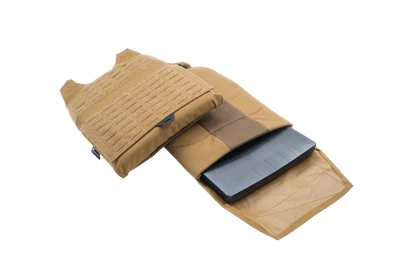
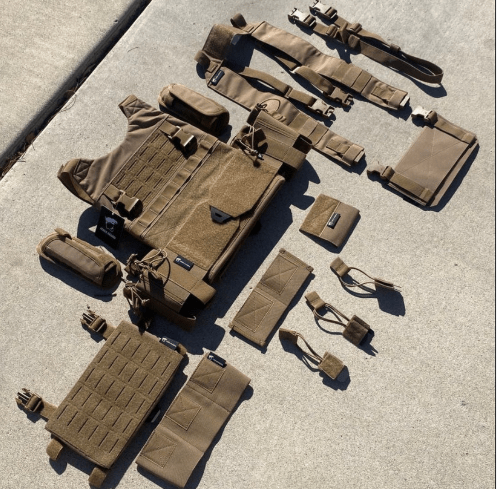
ALL of this comes with the base model.

• Complete Front and Back Plate Bags
• Retention Cummerbund
• 2 x Adjustable Shoulder pads with pass throughs
• Single stage placard with Laser Cut MOLLE field
• 1 x 5.56 Elastic 3 Mag Insert
• 1 x 7.62 Elastic 2 Mag Insert
• Elastic Torniquet Pouch
• H – Harness
• Standalone Waist Strap
• Ready Rig Conversion Attachment
• Velcro delete panel

The Vakarian comes with literally everything you need to throw stuff on it and go. You don’t need to have any other pouches or accessories unless you want them. This makes it a great option for beginners who don’t know what they want yet and need a base to build on.

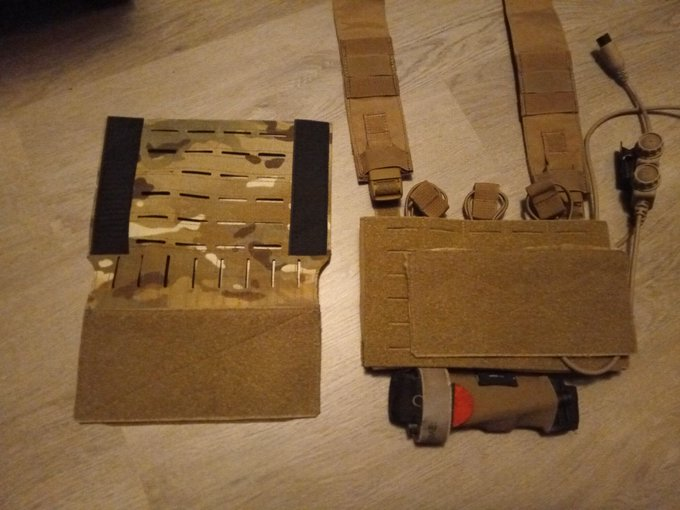
My favorite part is how it uses the same cummerbunds in both the PC and chest rig configurations, so I can run the exact same setup with and without armor. No need to move pouches around or move mags from one place to another. Just pull the velcro off of one, clip 4 buckles, re-apply velcro, and you’re fully switched over in 2 minutes. Amazingly simple.

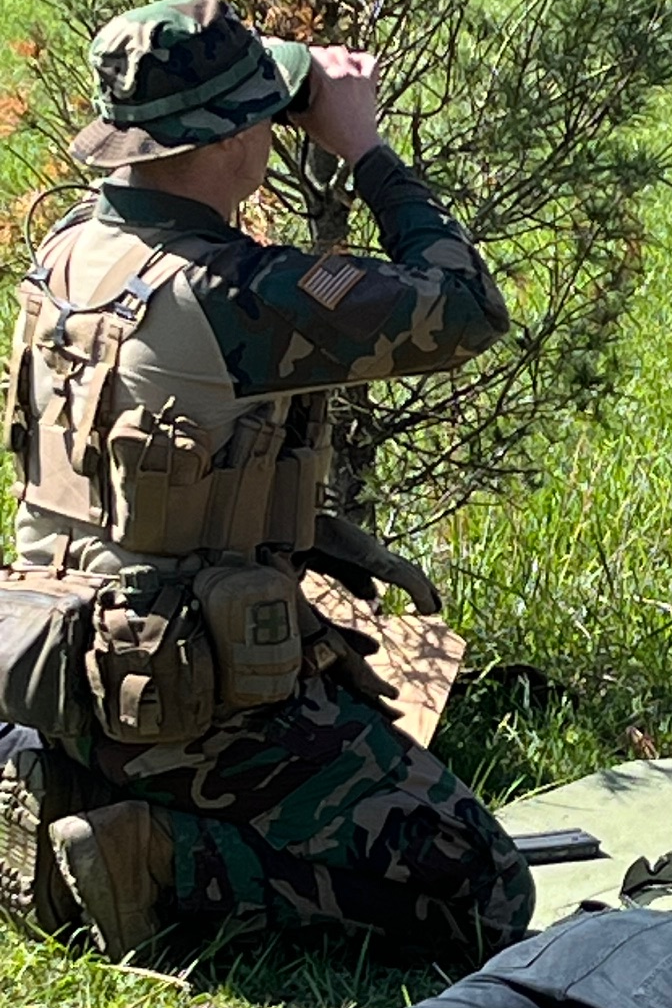
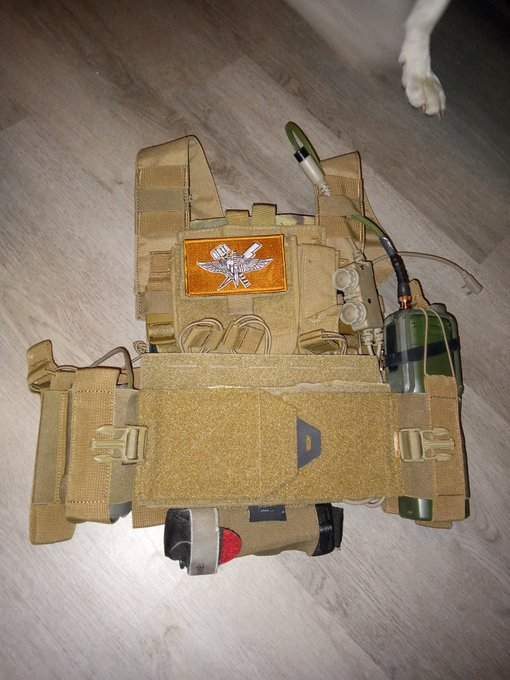
How I Set it Up

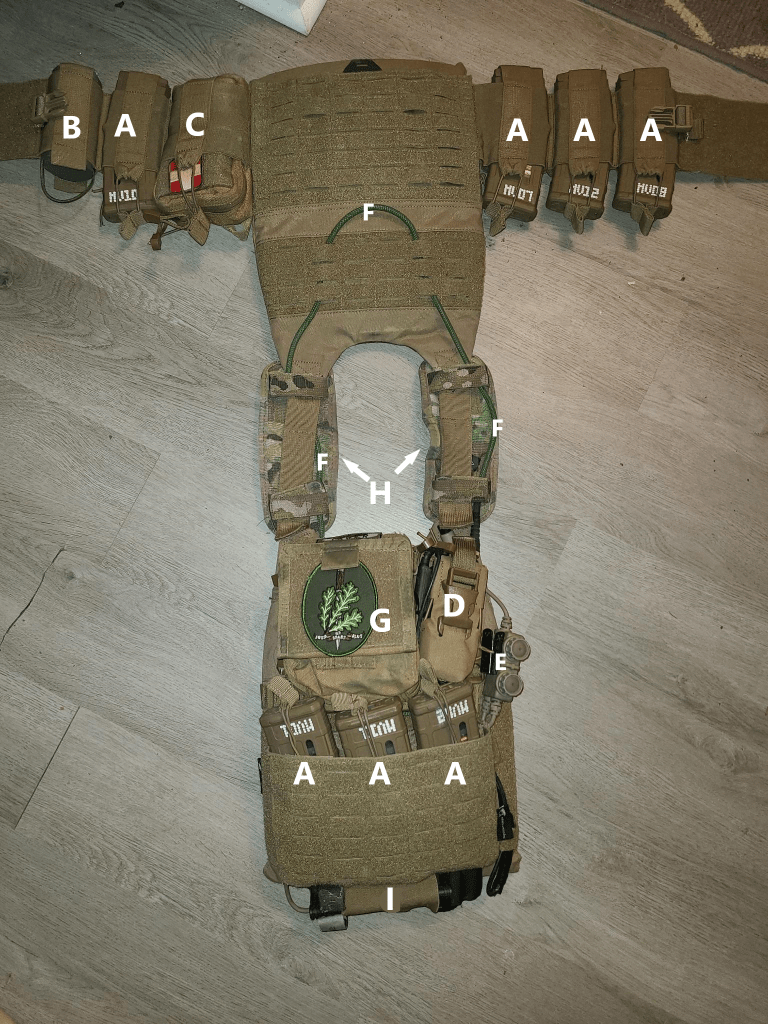
  • A: 6x Gen3 PMAGs
  • B: AR-152
    • C: Dual comms PTT
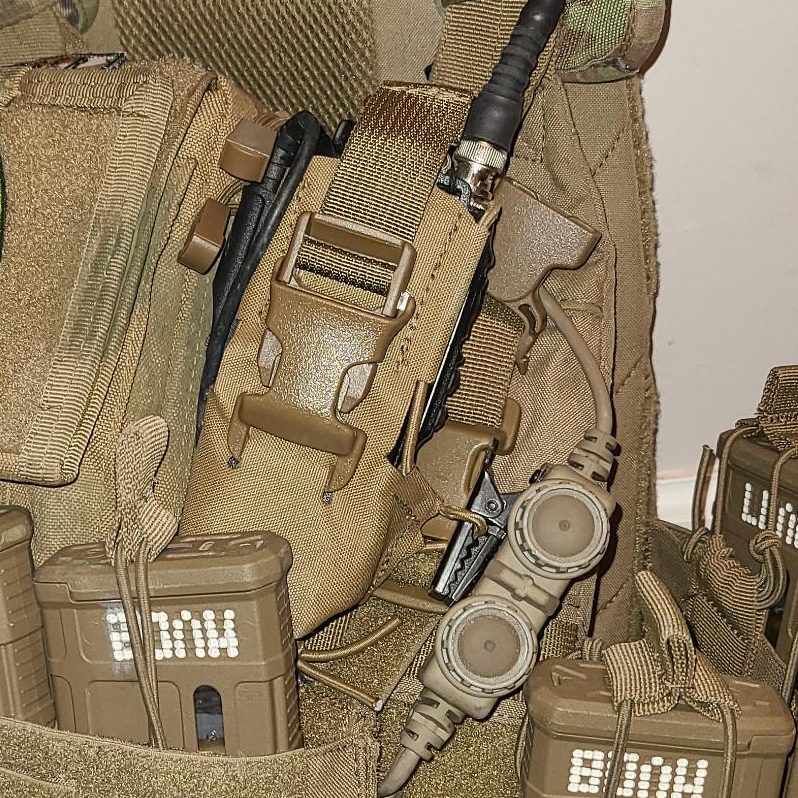
    • D: CAATail antenna weaved into the harness (I can’t recommend these antennas enough. Seriously, go buy one. Not an affiliate, just good kit.)
  • E: Admin Pouch containing map tools, my compass, a multitool, and a signal whistle
  • F: Field prepped EG-18X smoke grenade
  • G: IFAK in a pull-out pouch
  • NOT SHOWN: one CAT tourniquet in a dangler

Modifications

I have always had the mindset of “if it doesn’t do what I need, I’ll make it.” I modify almost every piece of gear I own. Well, actually my amazing wife does it for me. These modifications don’t reflect negatively on the kit, I’m just not afraid to modify things if they don’t work *just* right for me.

DARC Strap

I add this mod to every plate carrier I’ve used. It’s a very simple method of running tubular nylon (or, in my case, a cut-up 1″ wide ratchet strap) through the back webbing of a carrier to create a longer drag strap that is easier for my teammates to use if I become a casualty. This only works in the PC configuration, I don’t have an equivalent mod for chest rigs yet.

Assault Pack Buckles

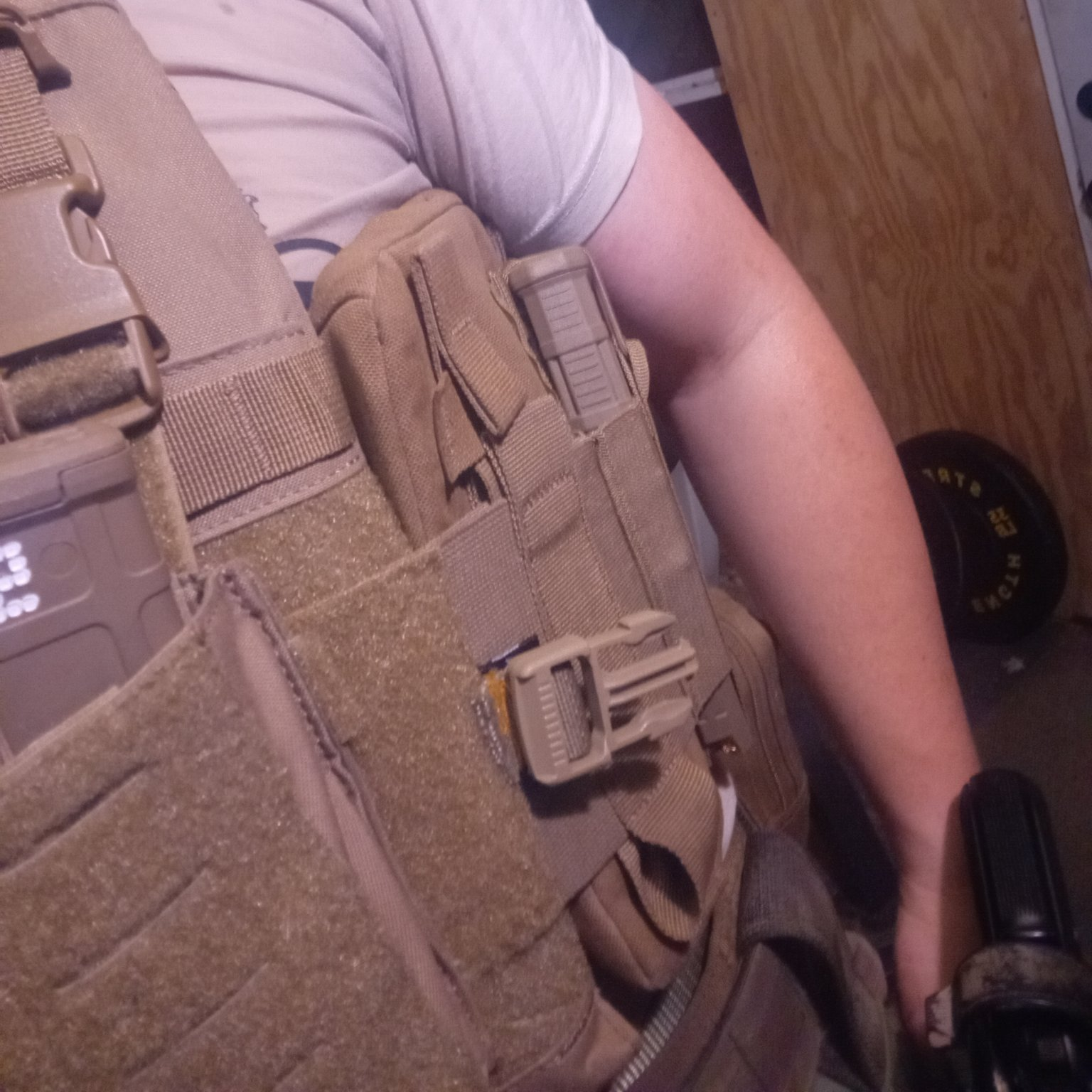
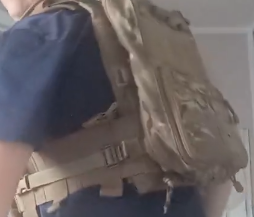
I planned to wear a flatpack-style assault pack with my gear, but wanted to avoid extra straps on my shoulders and chest. I also hate MOLLE-on assault packs because I need to be able to access it myself and have the ability to wear a main pack at times. I was going to buy a Shaw Concepts PCP for their buckle-on design, but my wife volunteered to modify a cheap Amazon flatpack to connect in the same way. She added buckles to the front of the PC and the cummerbunds and bam, I saved $285.

Admin Pouch Panel

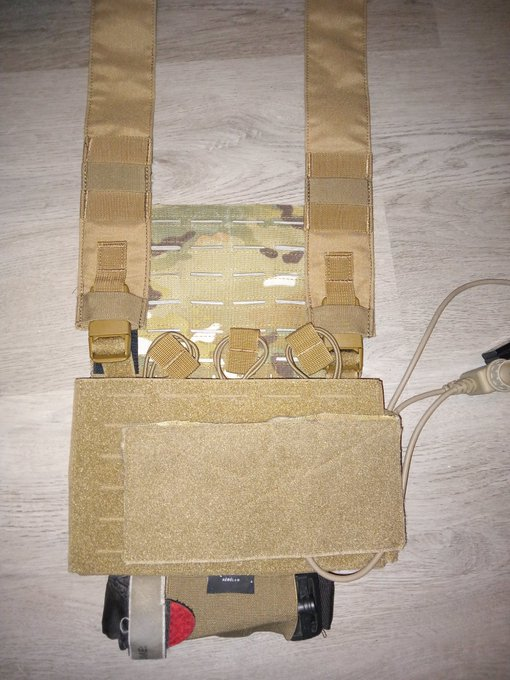
I need an admin pouch. This was simple enough to add to the PC, but I couldn’t find a good way to attach it to the chest rig. So I added a MOLLE panel to the h-harness on the front. I cut a MOLLE panel with Velcro on the bottom from my old PC. I stuck it behind the shingle and had my wife add Velcro to the backside of the harness to hold it up. This worked perfectly.

The Good

Comfort: This is very comfortable to wear as a chest rig, and as a PC it’s at least better than the PCs that I was issued in the Marine Corps. I don’t have experience with other civilian PC offerings, so I can’t say how this compares to them. I used it during my last Jäger Course earlier this month, which is 5 days long. I had this on my body for the last 48hrs straight, only removing it to add warming layers at night. The most uncomfortable thing about that experience was sleeping with my belt kit on, I barely noticed the Vakarian.

Adjustability: The velcro attachment tabs are extra long, allowing for plenty of adjustability when wearing different amounts of warming layers. During my Jäger Course it was 29 degrees at night and up to 60 degrees during the day, so I was constantly doffing and donning layers. The cummerbund seamlessly adjusted to each layer, which is why I prefer velcro cummerbunds over buckle systems. The shoulder straps also have plenty of play, so between that and the cummerbunds this appears to be a truly “one size fits all” carrier.

3-in-1 Configuration: This is my favorite feature of the Vakarian. Converting it from PC to chest rig takes about 2 minutes (2:15 for me on the first try). Even with my modified setup which requires me to move my admin pouch from one set of MOLLE to another, it only takes 12 minutes total. That is PLENTY acceptable for changes in the field between missions, and I could shorten it even further by simply purchasing a second admin pouch so I don’t need to undo MOLLE webbing. I don’t have a use for a micro chest rig, so I haven’t experimented with that configuration (though it is an option for those who want it).

Plate Compatibility: I use ESAPI Large plates, which fit snugly into the carrier with no trouble. Rebel designed it to take up to 10″x12″ plates, meaning it’s compatible with the vast majority of armor plates on the market. I’ve seen other reviews of people using medium or small plates with no issues because the excess material is naturally folded into the side by the cummerbund.

Modularity: Every component on the Vakarian is designed to be interchangeable with other companies’ products, almost nothing is proprietary. The cummerbunds, shoulder pads, placard and inserts, retention bands, harness, etc. are easily replaced with other components if you feel that the included items don’t quite fit your needs. I saw one person clip a surplus TAPS rig in place of the placard on the front, made possible by the standard 1″ buckles on the plate carrier. Almost any configuration is possible.

Price: The value you get for the money (a mere $240 all told) is incredible. You would only get a fraction of this gear if you bought similar quality stuff from anywhere else, and then it would be a constant search of “what accessories work to get this to do what I actually need”, which translates to even more money spent. With the Vakarian, you get pretty much everything you need in one affordable package deal and be done barring minor upgrades here and there, which is great for those new to tactical gear.

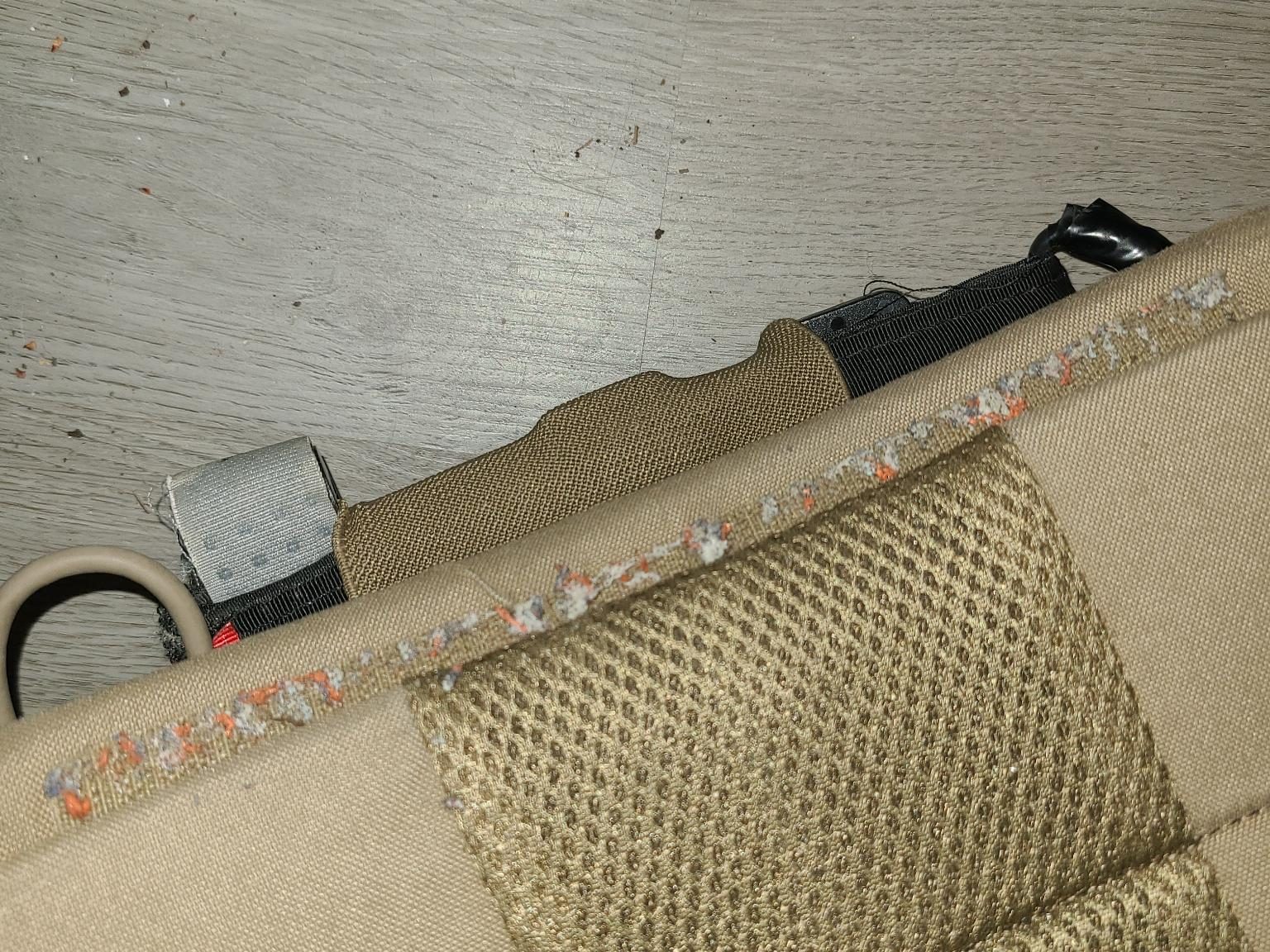
Customer service: There was a QC issue discovered on some of the Vakarians shortly after launch with loose stitching on the elastic retainer bands. Rebel SMG bent over backwards to make sure this got remedied for everyone who was affected by this hiccup. The speed and thoroughness with which he made sure every customer was taken care of was impressive, I doubt you would get better customer service anywhere.

The Bad

I have only a few reservations about the Vakarian, and they all center around the cummerbund.

Elastic Durability Concerns: I am concerned about the elastic cummerbund wearing out over time. I have seen what happens to elastic bands in the field, and they tend to wear out and become loose and baggy after months of use. Even bungee cords do this over time. I have NOT seen this happen to the Vakarian yet, but it is a concern and I will keep an eye on it. Time will tell, fortunately it will be easy enough to replace if that does happen. Every component on the Vakarian is designed to be interchangeable with other products.

No Side-Armor Compatibility: The cummerbund will not accept side armor plates or panels, which prevent its use as a duty plate carrier for anyone whose department/unit SOP mandates side armor. This is a non-factor for most people, but I felt it was worthy of mention. Again, this is easily remedied with replacement cummerbunds.

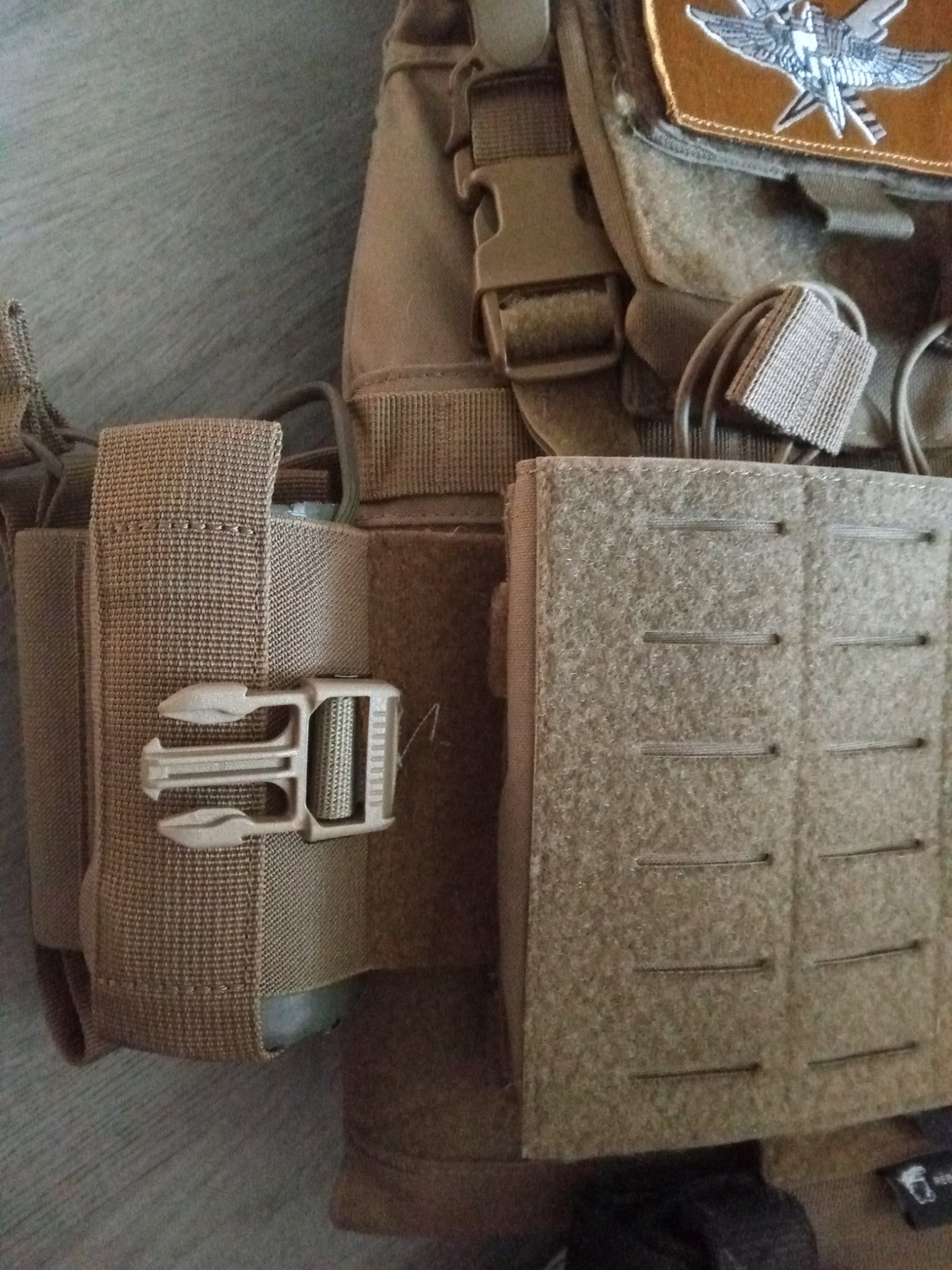
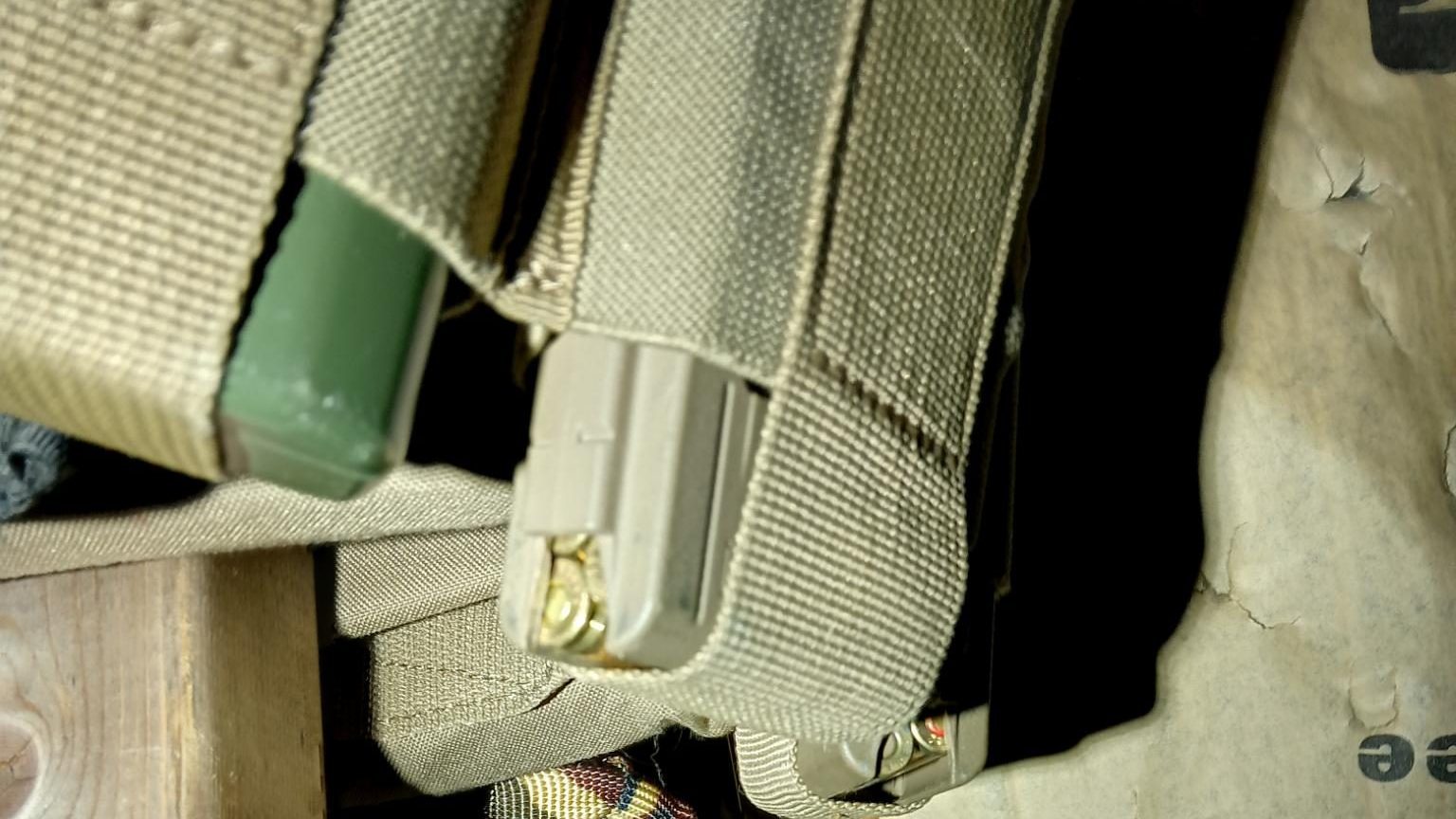
Open-Bottom Cummerbund Pouches: The elastic cummerbund has three pouches on either side, half of which I used to hold extra magazines. Unfortunately, there are gaps on the bottom of each pouch between the nylon tabs at the center of each pouch. When loaded magazines are inserted, this means that the open tops of magazines are partly exposed to dirt/sand/mud, which could cause stoppages when loading those magazines into a rifle. It also allows the feed lips to dig into my lower torso in certain shooting positions, causing slight discomfort.

Suboptimal when crawling through dirt and mud.

No MOLLE Webbing on the Cummerbund: Again, easily fixed with an aftermarket cummerbund, but I’m gonna put this here anyway. If the goal is to make a single piece of kit that you can customize at will and never need to replace components, the ability to add pouches or buckles to the cummerbund would be preferable to the 3-pocket elastic pouches.

Conclusion

Overall, I rate the Vakarian 4/5. It’s extremely comfortable, easy to set up, and highly customizable for a variety of needs. The modularity and ease of conversion from PC to chest rig and vice versa make this the perfect rig for my needs and my team’s style of operating. I recommend the Vakarian as a SOLID beginner rig or even as an upgrade for those wanting a single piece of modular LBE.

In my opinion, the cummerbund really should have just been skeletonized MOLLE webbing with the velcro tabs at either end. This would have fixed literally all of my gripes. I will be replacing the cummerbund for this reason, but not immediately, as I want to see how long it takes for the elastic to wear out. When that happens, I’ll make a note of it in an edit of this post for the record.

All that said, I must commend Rebel SMG for actively listening to what people are saying about his gear and making upgrades prior to the next batch. I had some other minor complaints, but he’s already fixed them in the next release so it’s not fair to bring them up. He’s even planning to release the Vakarian in M81 and Multicam, so you’ll have more color options to choose from.

Rebel’s Raiders is a great small company making good equipment very affordable with the goal of equipping as many good people as possible. He absolutely deserves your business and I look forward to seeing where he goes with the Vakarian moving forward.

Priorities of Purchase; Progressively Building a Rifleman’s Kit on a Budget 2024 Edition

If you probably already have at least a basic understanding of what gear you do and don’t need, I am not writing this article for you. I am writing it so you can show it to your friends who are just breaking into the realm of preparing for the coming fight, and need a little guidance. At the very least, read it so you can make recommendations to them so that they will be assets, not burdens, when you eventually strap up and take them on a patrol.
Originally posted in April 2021, I have updated this article to include things that I have learned since then. I have never and will never claim to have reached the pinnacle of knowledge on anything.  We are all constantly learning and improving ourselves, and no one is perfect.

If you’re just starting out into building up a fighting kit, all of the info out there can be pretty overwhelming. The natural tendency is to focus on the cool-looking points of your gear, but this can be counter-productive, especially when you have a fixed income. For example, it’s natural to immediately buy an AR with a bunch of accessories, and maybe splurge on a high-end plate carrier and plates because that’s what you see all the “cool guys” wearing, and you need body armor right? The problem is that you just spent a ton of money on your rig, and you haven’t invested into some other basic things you need to sustain yourself during operations, like a good pack, ammo, or even canteens.

In this article I will list the purchasing priorities for building a rifleman’s kit piece-by-piece, so that you can efficiently build up your gear and yourself to be as ready as possible for when it’s time to defend yourself and your liberties. I am trimming away all of the tacti-cool fat and unnecessary gear so you can make the most out of your limited budget and keep your priorities straight.

I must note here that this is not a post about prepping. Things such as alternate energy, homesteading, and water purification are indeed important, but are beyond the scope of this article and my expertise. I am writing purely from the perspective of someone who is gearing up for a potential civil conflict/WROL scenario looking to make themselves an asset to their family, their team, and their country. Again, everything you’re about to read is my personal opinion based off my experience, feel free to disagree with anything I say.

Full disclosure: This article contains Amazon affiliate links.

Rifleman’s Essentials

This is the bare minimum of what you need to be proficient in a firefight, and thus where you should start.

Rifle

The first step is simple, as a rifleman you need a rifle. Notice I said a rifle, not a rifle with a laser, bipod, and flashlight, those are much further down the list. I’m talking about a bare-bones rifle with a good sling AND THAT’S IT. For now.  Also note that rifle was singular.  It’s better to have one rifle and a full kit and ammo than ten empty weapons collecting dust. There’s too much that goes into weapon selection to cover here in depth, so I’ll be brief. Your rifle should meet the following criteria:

  • It should be easy to feed. 6.5 Creedmore or .300 BLK are neat cartridges, but you can’t afford to be paying over a dollar/round. These days the best choice is probably 5.56, which you can still get for about 45 cents per round. This is, however, a call you should make yourself. If magazine-fed it should use affordable, commonly available mags.
  • It should be reliable. There’s a lot of gimmicky weapons out there, try to stick with combat-proven platforms that don’t have a tendency to go click when you need them to go bang.
  • It should, if possible, be matched to your environment and mission profile. To determine this you will need to consider how you will be operating. At what distance will you most likely engage targets? Will you need to make shots through brush, or is your terrain more open? Will you be in a vehicle or mostly on foot? A quick survey of your surroundings will determine factors such as caliber, barrel length, etc.

If you have a limited selection, any rifle is better than no rifle. Even if you have a bolt-action Mosin-Nagant or a hunting rifle, you can be effective with it if you train accordingly.

You need a good sling for your rifle.  Slings are useful for saving your arms during long patrols, stabilizing the rifle in a prepared firing position, freeing your hands for other tasks, and keeping accountability of your weapon so it’s ready to go at any time. Get an easily adjustable 2-point sling, single-points are only good for CQB and in mounted vehicle operations. My personal go-to is the Blue Force Tactical Vickers Sling, but there are other good ones out there.

Ammo

Next you need the ability to feed said rifle. You should purchase 1,000 rounds of whatever caliber you are running, put it in sealed ammo cans, and DO NOT TOUCH IT. This is your emergency reserve, you only pull it out if you need it to protect life, liberty, and property in SHTF. Buy in bulk online for the cheapest prices. Any ammo you buy beyond this you can shoot in training.

Also in the realm of feeding your rifle, you need additional feeding devices (magazines, stripper clips, enblocs, etc.). For a start, you need to be able to carry at least 120 rounds on your person plus whatever’s in the gun, so at a minimum 5-6 magazines or that equivalent amount in stripper clips. If you can get more, get more. You can never have too many magazines, but for a start 5-7 will suffice.

LBE/Vest/Belt/Chest Rig

Now you need a way to carry all those magazines on your body, so you should get some kind of load-bearing gear. There’s a ton of articles, videos, and posts about different kinds of kit so I won’t go too in-depth here. Suffice to say that you don’t yet need body armor, just a way to carry your combat equipment and ammo on your body.

Medical

Medical equipment is next. You need a trauma kit to quickly mitigate life-threatening injuries so you can survive the trip to the hospital/casualty collection point. You need items like quick clot, bandages, chest seals, etc. in your IFAK somewhere on your gear. You also need tourniquets, 2-4 of them. I strongly recommend the NAR Combat Application Tourniquet (CAT). Be very careful, do NOT buy knockoffs on amazon or eBay. Get all the same type so you only need to practice one way, and then get an extra one to practice with. Make sure your IFAK is somewhere you can easily access it, i.e. NOT on your back.

Water

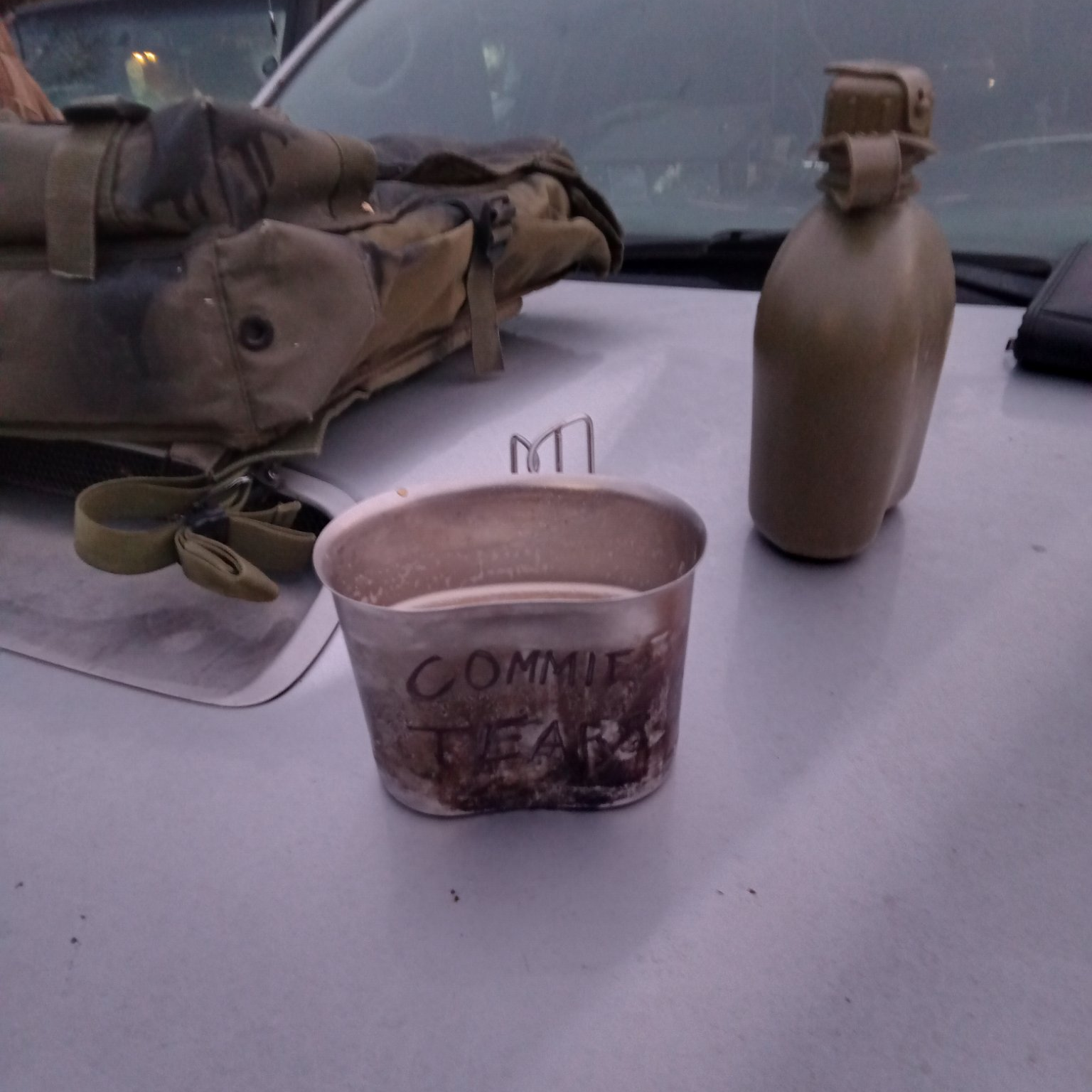
You need a way to carry water on your load-bearing kit. You won’t last long in combat operations without water, so you need to have some on your gear, at least 2 liters OR half a gallon. Camelbacks work great, but make sure you have extra bladders in case it pops. Canteens work as well.  2-quart canteens can collapse as you drink them like camelbacks do, so they don’t make slosh when half-full. However, if all you have is 1-quart canteens then you will need to get used to drinking a whole canteen all at once to prevent a half-full canteen from sloshing and making unwanted noise. It is possible, Marine Recruits do it every night in boot camp before going to bed.

Sustainment Gear

Now that you have all the Rifleman’s Essentials, you need to have the ability to sustain yourself in combat operations for a few days or even weeks. Sustainment gear satisfies basic human needs for survival such as water, food, and shelter, to keep you alive during extended periods of time in the field. For our purposes, we will assume a 1-week field stay without resupply.

Pack

First and foremost, you need a pack to carry everything. There’s a ton of great options available. To carry 3-5 days of sustainment, you need at least 35L of space. However, I recommend 55L so you have extra room for mission-specific items (radios, smoke grenades, cold weather gear, etc.). My personal recommendation is a Teton Scout 55L, which I’ve been using for 3 years now.

My Teton Scout with my assault pack strapped to the top. For a $75 pack this thing has held up nicely.

Water Treatment

The first basic human need for survival is water. You cannot carry enough water in your pack for a week’s worth of combat operations, so you need a way to purify/filter water in the field. I recommend Sawyer Mini water filters. They’re small, weigh almost nothing, re-usable for more water than you will ever drink in your life, and only cost about $20 each. If your environment is such that filtration is insufficient, you also need a purification method.  Iodine or chlorine tablets work nicely for this, and take up very little space. Reference CDC guidelines for water treatment. You should also have about half a gallon more water in your pack in addition to what’s on your gear, so two additional canteens will do nicely.

Food

The next basic human need is food. Technically, you can survive for 40 days without eating before facing any permanent harm to your body, but you’re not planning on merely “surviving” are you? We’re talking about combat operations, and whether it’s patrolling, manning an observation post, or getting into gunfights, there’s a lot of physical exertion involved and you need calories to keep going. If you can get them, military MREs are a great option that is lightweight, compact, and calorie-dense. Plan on eating 1-2 per day, field strip them, and put them in your pack. If you can’t get MREs, there are similar options on the civilian side of the house such as Mountain House. Canned chilis and soups are also decent options if you have nothing else, but they get heavy. Gas camp stoves, while nice and compact, are luxury items. Up to you if you want to spend your money on one, but if we’re trimming all the fat, save your money.

Shelter

The final basic human need is shelter, or protection from the elements. This will vary greatly depending on your environment. If you live where it gets chilly at night, you will need a compact sleeping bag. If you’re further north you will need two sleeping bags, a lightweight one for summer and a heavier one that can stand freezing temperatures. If you live further south, you can probably get away with just a light blanket or even no warming layers at all in summer. If you live in mosquito country, you may choose to invest in a bug net for sleeping in just your clothes.

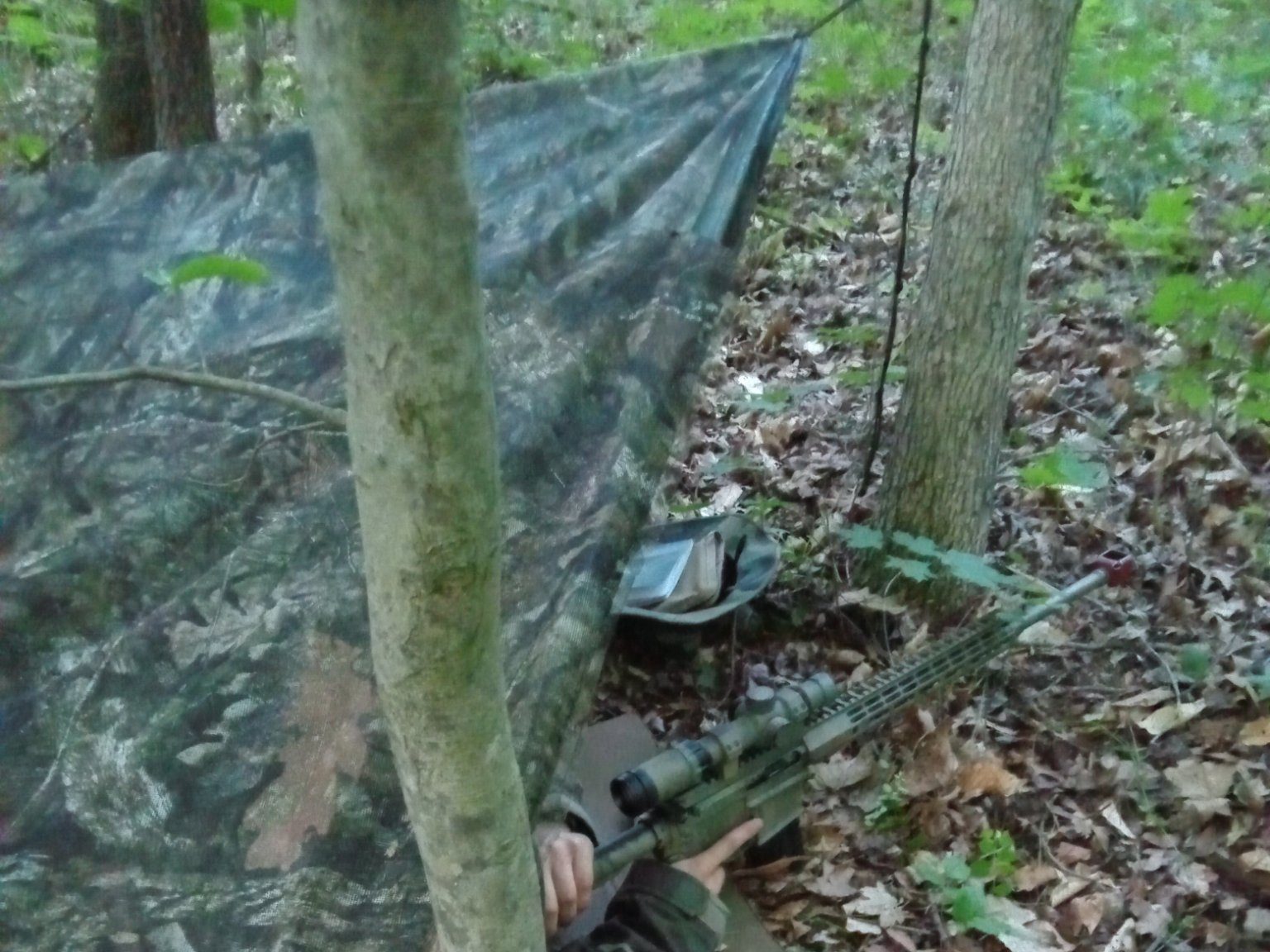
Unless you live in an arid climate, you will have to contend with rain at some point. During the daytime this may not be an issue, but being wet and cold at night trying to sleep is miserable, and could be lethal if you get hypothermia. Invest in a military surplus GI poncho or tarp, and learn how to make a shelter with it. Also get a GI Casualty Blanket and make a Jäger Rig so you can hide from thermal drones. Sleeping under a tarp may not be appealing to many, but it is well worth it not to carry around a tent everywhere. You will probably also want a sleeping pad, both for comfort and to keep your sleeping bag dry and out of the mud. Sleeping pads are also a lifesaver when you’re resting on your elbows for hours in an observation post.

A student during the Jäger Course

Rain Gear

Speaking of rain and mud, you will need some kind of rain gear to wear with your kit. Rain jackets, like Gore-Tex, are great options for colder environments, not so much in hot climates because they make you sweat a LOT.  Ponchos work great and are excellent multi-purpose items, but don’t integrate well with all types of load-bearing gear.

Boots

You need a solid pair of boots to protect your feet.  This is another topic that is far too vast to do justice in one paragraph, and there are many videos and articles on this topic if you just do a quick search.  Suffice to say that your boots should be rugged to withstand harsh treatment and heavy loads, but also comfortable so you aren’t a liability 5 miles into a 9-mile movement.  Sneakers and work shoes are insufficient, you need good hiking/combat boots.

Knife/Bayonet

A great tool to have for field living is a good fighting knife/bayonet. Besides poking the blood out of people, a large (5”-8”) fighting knife or bushcraft knife can be used for a huge number of tasks in the bush, such as building a shelter, preparing a fire (tactical situation permitting), opening cans, cleaning fish, etc. I’ve carried a simple Ka-Bar for years and it’s one of the most used items on my kit. Trust me, you need a good knife.

Students during the Support Weapons Class

Force Multipliers

Once you have the Rifleman’s Essentials and the ability to sustain yourself for up to a week during operations, then you can begin investing into force-multipliers. Force-multipliers are so called because they are tools which greatly enhance, or multiply, your lethality on the battlefield.

  • Another rifleman. Yes, that’s right, you shouldn’t be preparing and training alone, you are much more effective as a member of a team. Even if you just have one buddy working with you, it’s a huge leap in combat ability. Don’t just assume that if civil conflict breaks out the militias will come to recruit you, you are the militia. Get a buddy, then get two more, and boom you got a fire team. And if you want to learn how to train up the other members of your fire team effectively, I have a class for that.
  • Night vision. The ability to move and fight at night is a massive bonus, especially for us as civilians. Our friends at Ready Made Resources have a great selection of NVGs at pretty decent prices, so go check them out. Now, be cautious here. You will need to save up a few thousand dollars to get a good quality night vision unit, and this will take time. You will be tempted to spend your money on other things as you save up, RESIST THE URGE. If you constantly say to yourself “yeah, I need night vision, but I can buy body armor and a cool scope right now,” you will never get your NVG. This needs to be a priority, so be patient.  This is such a high priority that I’d even recommend selling any extra weapons/gear you have to get night vision sooner.  I did, and have no regrets.
  • IR laser. Once you get your NVG (yay!) you will next need a way to aim your weapon using it. The most common way to do this is with an IR laser mounted on your rifle. There are a ton of expensive lasers out there, most of which cost over $1200. I highly recommend ordering a Perst-4 out of Russia. It’s a rugged military laser with great ergonomics, with the added bonus that it’s a full power class 3 laser.  They’re not as dirt cheap as they were before 2022, but at $825 it’s still great value for a military grade laser that beats the bricks off of every civilian laser I’ve seen so far.
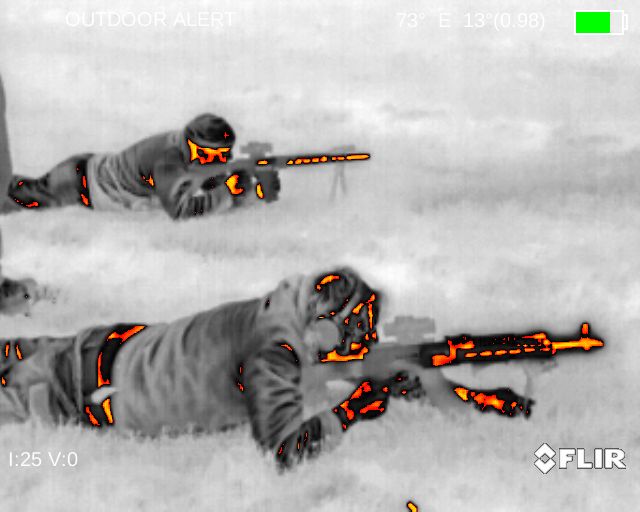
  • Thermal optics. Not cheap at all, but increasingly common on the modern battlefield. Thermals aren’t the all seeing eye, but they offer a significant advantage day and night. I currently have a Flir Breach, which is small and fits in a grenade pouch on my chest rig. There are many options at many price points, but you really should get at least some form of thermal optic after night vision.
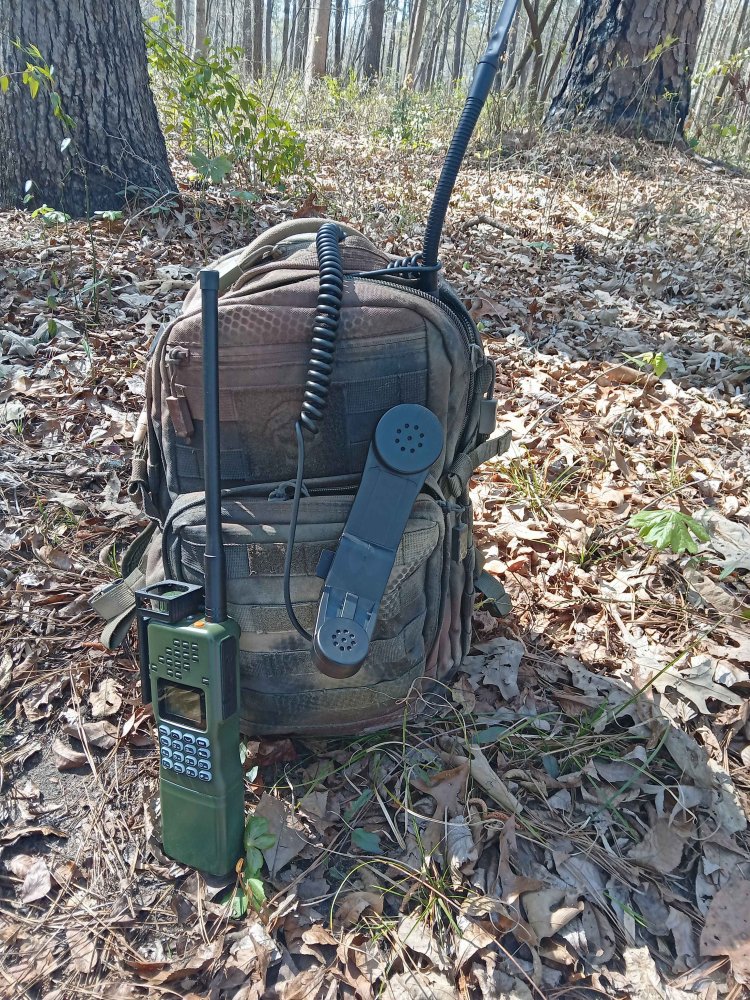
  • Radios. Absolutely necessary if you plan to coordinate a large squad, or work alongside another team. With radios you can call for medevac, send tactical reports, and coordinate with an extraction team. My personal recommendation for a radio that lives on your kit is the Baofeng UV-9R. Get a couple of them so you have somebody to talk to. Eventually you may choose to get a more advanced radio, but keep the Baofengs for your friends and teammates to borrow.

Once you have these investments out of the way, you can begin to add little bits and pieces to your gear as you train and find out what works for you and what doesn’t. Get to a training course where you can experience running your kit and find out what changes you need to make. Grab your sustainment pack and go camping with it for a couple days, see how it works for you. The more you train and practice using your gear, the more context you get for how to make practical investments in equipment that is useful and not just “cool looking.”

Radios are important… if you have someone to talk to.

Additional Investments

I would like to add a few final notes on some other pieces of kit that you will at least consider buying during your journey, to put them into context as to their actual utility.

  • Body armor: Good kit, will stop incoming rounds to vital areas of your body. However, this must be weighed against the fact that it is heavy and uncomfortable, so you should do a realistic evaluation of your level of physical fitness as well as your mission profile. If you plan to wear body armor, plan to do a lot of workouts with it on. Don’t just look at yourself in the mirror and take it off, wear it for a couple hours walking around the house. Go for a run with it on. If you can’t run/jog 3 miles with your armor on without stopping, you’re not ready to use it as your main kit.
  • Ballistic helmet: Same deal as with body armor, protection at the cost of added weight. This time the weight is on your head. If you’re not used to wearing a kevlar helmet on your head for a few hours, I can tell you right now that it sucks. Your neck gets tired, parts of your skull get more pressure than others and start to hurt, and it makes you sweat. The new helmets aren’t immune to this either. I’ve worn LWHs, ECHs, OPS-Core high cuts, and MICH helmets, they all suck. Still a good thing to have, but if you’re gonna plan to use it for the real thing, make sure you use it in training a lot.
  • Optics: Red dots, LPVOs, fixed magnification scopes, etc. Whatever you get you should get for a purpose to enhance your existing skill.  Magnification helps with target ID and longer ranges, illuminated reticles assist with aiming in low-light situations. Don’t buy cheap scopes, you get what you pay for with optics. I’ve seen amazon/wal-mart red dots randomly shut off due to recoil and even snap off the rifle during shooting.
  • Fore-grips: There is no objective “best option” here, it is merely user preference for comfort and has little to no effect on your shooting.
  • Weapon lights: Lights are useful primarily in urban environments to illuminate dark rooms.  However, the risk of accidentally hitting the on switch and getting you or your teammates killed is significant in a rural patrolling situation. If you do get a tac-light for the event that you enter and clear a dark structure, get a light with a QD mount that allows you to keep it in your pack until you need it, and take it off when you’re done.
  • Other rifle accessories: Before you put anything on your weapon, ask yourself, “does this make me more effective?” If the answer is yes, buy it. If the answer is no or probably not, save your money.
  • Handguns: You don’t need a handgun when you’re carrying a rifle unless you’re alone. The reason is that there is nothing your handgun can do that your rifle can’t do better. The myth that “a transition is faster than a reload” is only true if you suck at reloads. Transitions ARE faster than clearing a stoppage, but you can do that from cover while your teammates keep you covered. You can better use the weight and space that a holster takes up by holding extra rifle mags, your night vision, or a fighting knife.
  • Assault Packs: These are actually great for carrying stuff that you’d use on a 1-day patrol when you don’t need everything from your sustainment gear. Ideally, you’d get one that either fits inside or clips onto your sustainment pack. Use your assault pack to hold 1 day’s worth of chow, extra ammo/batteries, and anything else that your specific mission requires. Avoid the ones that strap directly to your plate carrier/vest, as you need to remove your fighting equipment to get anything out of it.
  • Magazines and ammo: This is never a bad idea. You can always use more mags and ammo, and so can your buddies if they’re running the same caliber as you (they should be).
  • Camouflage fatigues: Get a pattern that matches your environment and helps you blend in. If working within a team, try to have everyone wear the same pattern to avoid friendly fire. Keep in mind, however, wearing a “uniform” makes it easier for an enemy to PID you as hostile, but if you’re wearing a bunch of tactical gear with a rifle they can probably PID you anyway.

I hope this helps someone. As I stated at the beginning, everything here is simply my humble opinion, you are welcome to disagree with me in the comments.  For the curious, the following article is how I set up my gear (in 2023, it’s changed since then and I need to write an updated one).

Semper Paratus, Semper Discens, Semper Fidelis.

Hurricane Helene Response Part 3: Equipment AAR

This is the third (and likely final) part of my team’s AAR following our operation supporting the relief efforts for Hurricane Helene in Western NC. If you haven’t already, check out Part 1, my interview with Tacticon Armament, and Part 2, the general AAR for how we conducted the operation. Otherwise you may be a bit confused as to what we were doing with this equipment.

Full disclosure: I am an Amazon affiliate, and some of the equipment that I list here has affiliate hyperlinks embedded. If you click on these links and buy the gear, I may make a small commission on the sale. You pay exactly the same price as you otherwise would, but by using my links you are supporting VSTAC at Amazon’s expense.

One might look at the equipment we used and think of it as a “bug out” setup, but we actually entered this operation with more of a maneuver warfare mindset. The “bug out” concept is leaving someplace with enough sustainment to get to another place away from the disaster. The “maneuver warfare” mindset we brought was the intention to bring enough sustainment to get into the disaster, do what we planned on doing, and then get out.

We expected resupply along the route, but knew that we couldn’t count on it once we entered the AO (nor did we want to drain the local resources while we were there). It wasn’t clear exactly where our “supply lines” would end, so we took every opportunity to top off our sustainment.

  • Fuel: every time our fuel tanks read ¾, we topped off at the next open gas station.
  • Food: We ate fast food en route to avoid dipping into our food stocks.
  • Water: We topped off our canteens every time we stopped somewhere that we could do so.
  • Power: We made one overnight stop in Spartanburg SC. We made sure to fully charge all electronics while we were there.

We kept this up until we left Spartanburg, SC on Thursday morning. From then on, we had to rely on the supplies that we brought with us.

Vehicles

I drove my 2d Gen Tacoma and my other driver took his jeep. Both vehicles performed well, but I’d say that my Tacoma was more useful on account of the carrying capacity in the bed. I could carry more supplies in my truck than the jeep could, which was a more efficient use of our fuel in convoys.

I brought 25 gallons of gasoline in 5 metal NATO jerry cans. These cans were fantastic as they are very rugged and have a good seal. Twice in other vehicles we saw plastic gas cans leak at the seams. This amount of fuel was enough combined with the 15 gallons in my tank to get me into the area, conduct all our convoys, and get me out of the area comfortably with three untouched jerry cans remaining.

Either get unissued surplus or new Wavian cans. Don’t buy used, you never know if some knucklehead put water in it once and now your fuel is contaminated by rust. Be wary of fakes.
  • IMPROVE by bringing a small, highly mobile vehicle like a dirt bike for route reconnaissance and wellness checks to save fuel.
  • IMPROVE by using a siphon kit to discretely refuel from jerry cans without drawing attention. We got some hard stares from folks while refueling, and once were asked to share gas. Fortunately we were at a POD that had extra fuel and we were able to send them over there. A siphon kit would have allowed us to fill our tanks without removing the jerry cans from the bed.
    • It turns out that the jeep had one of these all along and I didn’t know or ask for it. IMPROVE standardizing our vehicle equipment so everyone knows what is in each vehicle.
  • SUSTAIN bringing a small air compressor and a full-sized spare tire. It would not have been good if we’d had to drive 100+ miles out of the area on a donut because we got a flat tire. We didn’t have to use it, but it brought peace of mind.
  • SUSTAIN the amount of fuel brought. Recommend planning to bring 5 gallons of extra fuel per day as a general guideline. This does not include travel into the operating area.
  • IMPROVE carrying access tools. We had bolt cutters, but no chainsaw. We didn’t need to use either, but heard several accounts of others moving through the area who needed tools to clear paths for them to get around.
  • IMPROVE our skill with tire repair kits. We had them, but were not 100% confident that we could employ them properly. We will practice on junk tires at a future meeting.

Planning/Battle Tracking

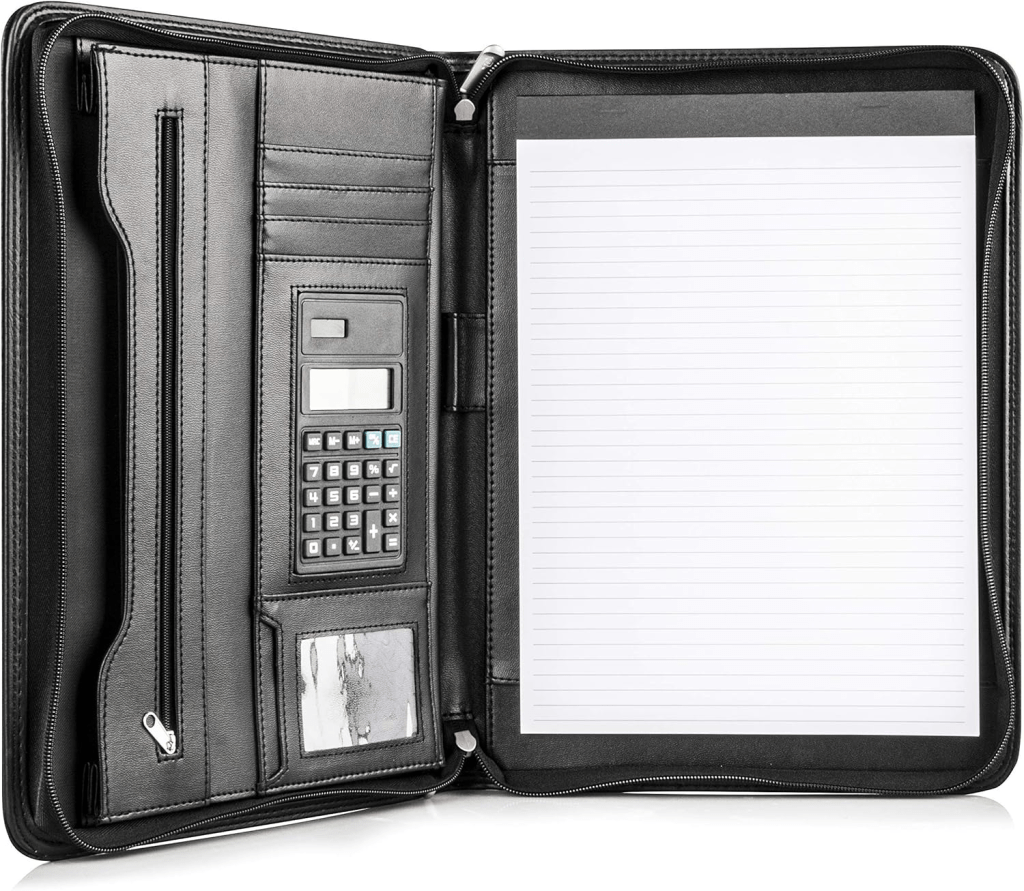
Once on the ground I carried a large notepad with me everywhere in a leather portfolio. This contributed greatly to my professional appearance when working with the locals, but wasn’t necessarily the best way for me to track what was happening in the area. I had a tablet with ATAK on it, which would have been incredibly useful if I knew how to use it properly.

  • IMPROVE skill with ATAK and find an easy way to carry the tablet around and charge it. Mounting a tablet in my leather portfolio would have been perfect.
  • SUSTAIN the use of a large, full-sized notepad for leaders operating out of vehicles. It is much better than trying to cram information on small rite-in-the-rain pages, although that can work in a pinch.
I used something very similar to this (minus the calculator).
Affiliate link: https://amzn.to/4dPHUK1
  • IMPROVE by bringing more detailed maps of the area and using a good map case. This would allow battle tracking independent of power supply and is a solid alternative to ATAK.
  • IMPROVE maps by finding a way to print reliable and detailed topographical and road maps at a more zoomed-in scale (1:25,000 or better). Have these maps printed in advance for our local area and be able to print them on demand for expeditionary operations like this one where there is not enough time to order them.

Strategic Communications

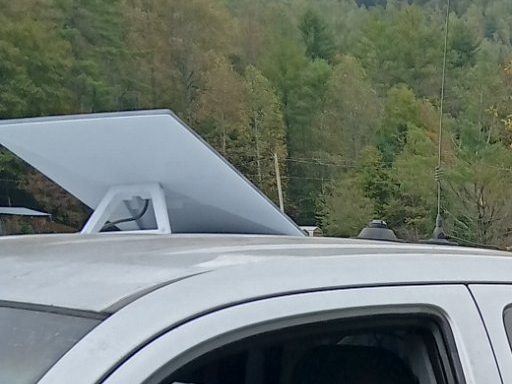
We wanted to communicate with our intelligence section back in coastal North Carolina. This was well outside the range of any of our current radio capabilities, although it was theoretically possible using an HF NVIS setup. We had to rely on existing LTE networks and a borrowed Starlink system that was donated to us for the duration of this mission. LTE worked until we entered the AO, at which point we had to rely on Starlink alone.

We used Starlink only at the halt, as we lacked a way to use it on the move. This still worked well for us, as we could just set the antenna on our roof and have service in 5 minutes.
  • SUSTAIN the use of Starlink and IMPROVE by buying our own system. It was critical not just for communications home but also for posting updates about our progress online to direct other volunteers and resources where they were needed most. Recommend one per small unit (Platoon/MAG or lower). It is NOT necessary to have one per vehicle or household.
  • IMPROVE our radio capabilities by investing more into HF systems so that we can extend our communications range without needing to rely on outside infrastructure.
  • SUSTAIN the practice of keeping all electronic devices on chargers anytime the vehicles were running to keep their batteries topped off.
  • SUSTAIN the use of solar panels to recharge devices without burning precious fuel by idling vehicle engines. If there’s enough interest, I can do a separate article on my solar power “go bag”.
My Solar Power “go kit” in a PRC-150 manpack. I may do a separate article on this.

Tactical Communications

On the ground, we needed to communicate from vehicle-to-vehicle during convoys, and person-to-person when dismounted. Not everyone needs a radio, but everyone who goes somewhere by themselves needs a radio. I had a Baofeng AR-152 in my truck hooked up to a magnetic roof antenna with a “trucker mic”. When dismounted, I disconnected the radio from the cable, mounted a short antenna to the BNC connector on the antenna port, and placed it in a pouch on my hip. The Jeep had a 25W mini-mobile radio properly installed, and my Jeep driver had a UV-5R for when he dismounted.

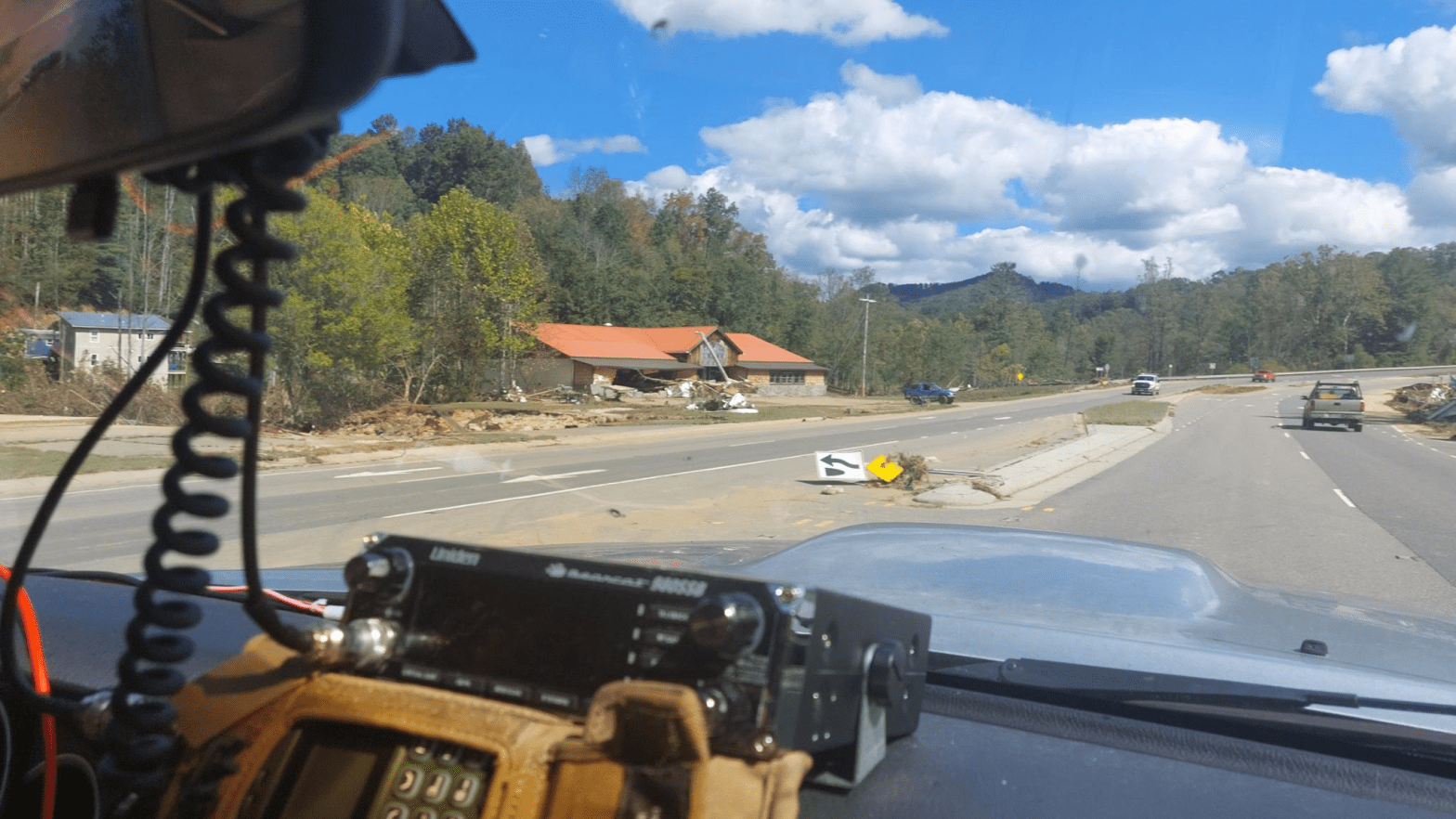
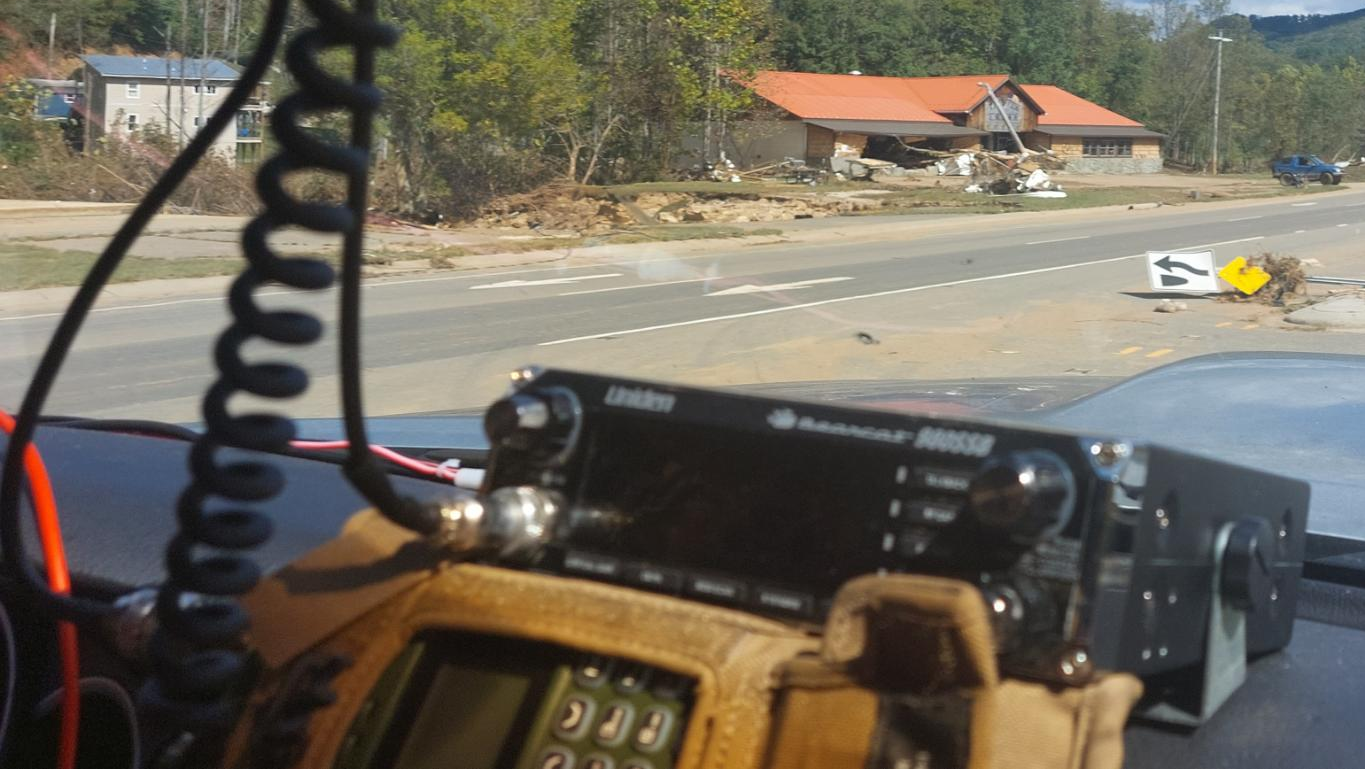
I also had a CB radio (Bearcat 980 SSB) installed in my truck. This was useful for SIGINT on the highway, but was almost useless from Thursday on because A: nobody else had a CB for me to talk to, and B: the tall Wilson antenna on my roof kept hitting low power lines once we started running convoys off of the main highways. I had to remove the antenna and toss it in my truck for the rest of the week.

We occasionally had unaffiliated volunteers help us on convoys. These volunteers either had no radios or FRS walkie-talkies, which we could reprogram our radios to talk to.

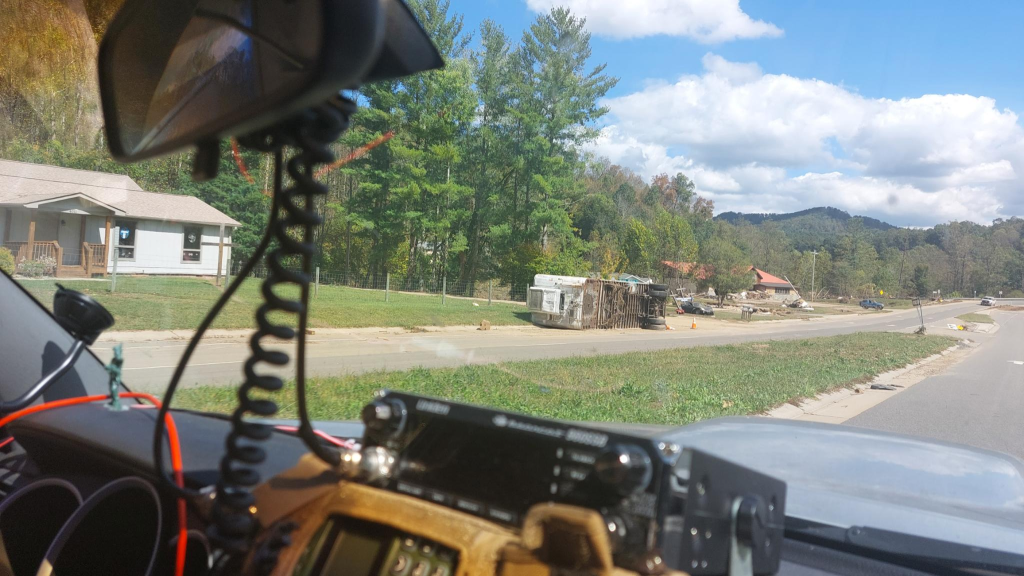
My dashboard radio setup during this operation. Not the prettiest, but it worked.
  • SUSTAIN the AR-152/magnetic roof antenna as a reliable way to install communications in a vehicle without permanently modifying it. My exact setup is below:
  • IMPROVE by getting a shorter CB antenna, preferably one that screws into the same Wilson base.
  • IMPROVE by having a dedicated, separate radio to use while dismounted to avoid needing to constantly switch one AR-152 from my hip to the dash of my truck.
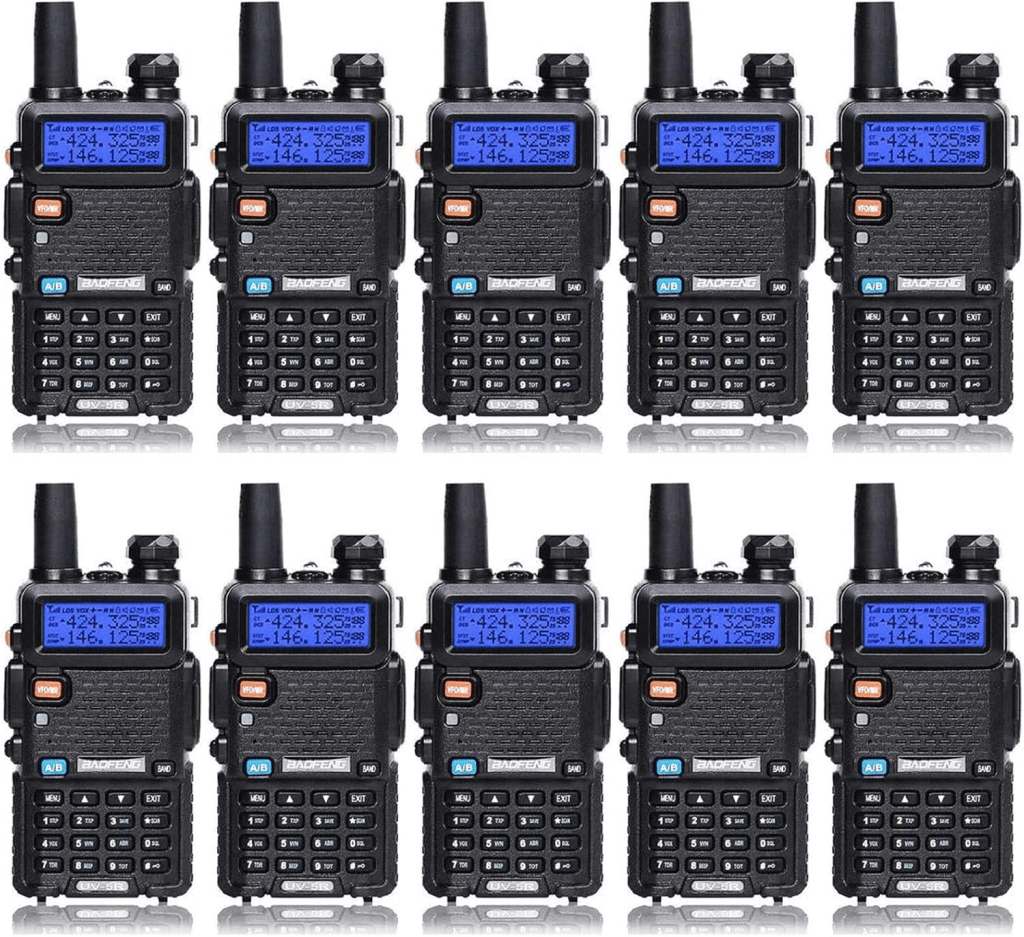
  • IMPROVE convoys with unaffiliated volunteers by bringing a 10-pack of either UV-5Rs or UV-9Rs to hand out one to each vehicle. These radios should already be pre-programmed with all FRS and MURS frequencies. Recommend leaving the RGR beep on for the “extra” radios to identify when someone untrained is transmitting. They also need the belt clips attached.
I just ordered this 10-pack so I have spares to hand out. I’ll probably get a big charger too.
Affiliate link: https://amzn.to/3BLuOjH
  • SUSTAIN positioning trained personnel spaced out throughout the convoy to help control it.
  • SUSTAIN having extra radios for dismounts. Recommend having one “dismount radio” per vehicle, excluding handout radios.
  • IMPROVE interoperability by making FRS/MURS/GMRS “cheat sheet” cards. These cards should be printed, laminated, and taped to the back of each radio. We didn’t do this and had to use the Starlink to look up FRS frequencies.
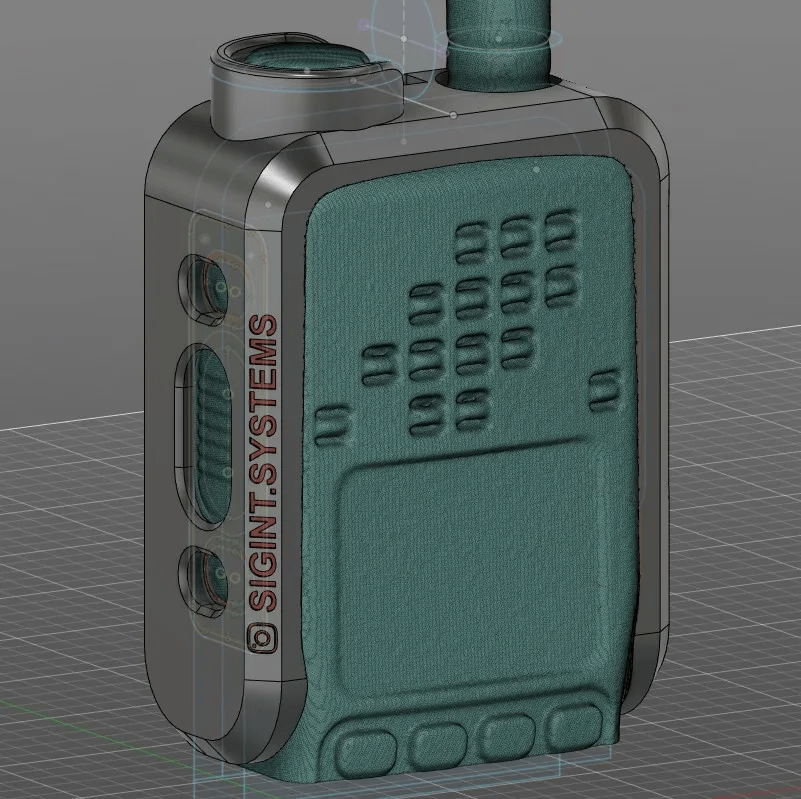
  • SUSTAIN using this 3d-printed exoskeleton with a ranger band to hold the accessory plug in place. Without this exact setup, accessories with the AR-152 (PTTs, headsets, etc.) are unreliable. Knob protectors that do not extend down the sides of the radio will not work as well because the ranger band will slide and hold down the PTT button.

Weapons

We brought handguns and rifles, although as mentioned above we (thankfully) didn’t need the rifles. We were glad that we had them, though, just in case the security situation deteriorated further.

I was carrying a Sig P365. This is my EDC handgun, and I typically appendix carry it. To avoid bringing two handguns, I brought an OWB paddle holster and an extended magazine. That way, when we elevated our security posture from concealed to open carry, I was able to carry it more comfortably on my hip. It being a compact handgun wasn’t a concern, as I train with it regularly and am confident in my skill as a pistoleer.

My rifle choice/setup was irrelevant since it wasn’t really used.

  • SUSTAIN using a handheld tactical flashlight instead of (or in addition to) a weapon-mounted light. This allowed us to illuminate shadowed areas while on guard duty at night without drawing a weapon.
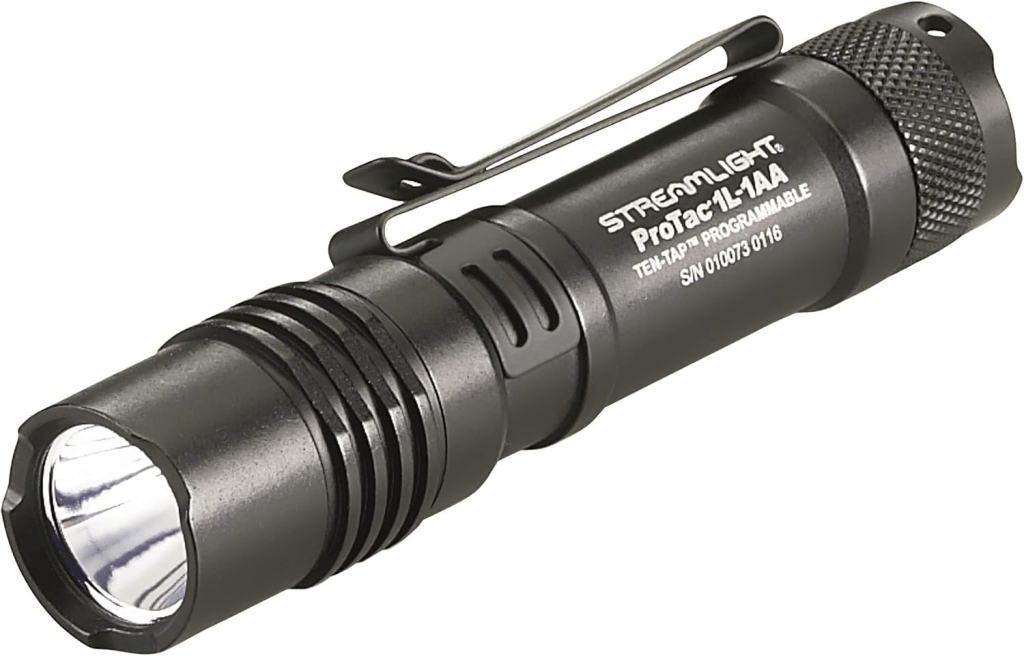
This is my EDC flashlight, a Streamlight ProTac. Mine is only 350 Lumens. More powerful models exist, but they heat up quickly.
Affiliate link: https://amzn.to/3zQLypb
  • SUSTAIN bringing a second holster and extended magazine instead of a second handgun.
  • SUSTAIN training at 100yds with my handgun, as that eliminated any uncertainty regarding my capabilities with it. I know that I have a 25% hit rate at 100yds and about a 90% hit rate at 50yds with my EDC handgun because I run it at competitions.

Conclusion

There were several other things that we brought/used on this trip. Food, water, clothing, etc. But I didn’t include them in this AAR because those things are mostly common sense. If I omitted something that you have a question about, feel free to leave a comment and I will do my best to answer your questions.

In all, this mission was a success because we realistically evaluated our capabilities as a team and didn’t try to go beyond them. We’re not a trained SAR team, so we didn’t go to do SAR. We are just a bunch of men with trucks and gear, so we conducted logistics support in the form of convoy operations and wellness checks. And we were effective in that role.

Do the same for your team. Know your people and their capabilities so you can employ them within their capabilities. Continue to seek training to expand your skillset and capabilities as a team.

Semper Discens.

Hurricane Helene Response Part 2: Execution AAR

After Hurricane Helene hit the mountainous region of Western NC and Eastern TN, my team and I deployed to the region to support the relief efforts from Wednesday, 10/3, to Sunday, 10/6. The details of where we went and what we did are well documented on my twitter/X page, as well as my interview on the 2A_Procast by Tacticon Armament. I will, however, briefly sum up what we did before we hit the After-Action Review (AAR).

  • Monday: Identified the possibility of a mission occurring, began intelligence preparation of the battlespace (IPB)
  • Tuesday: Committed to the mission, issued a warning order, focused IPB
  • Wednesday: Left for the AO, arrived in Spartanburg SC, linked up with a supply convoy coordinated by the 118th, and spent the night
  • Thursday: Recon into NC, established patrol base, began running convoys
  • Friday-Saturday: Continued resupply convoy operations and wellness checks
  • Sunday: Departed the AO

The following is my team’s After-Action Review (AAR) for this operation, where we evaluated our lessons learned about what worked, what didn’t work, and how we intend to improve. The best lessons learned are lessons shared, so I present it here for you to learn from our experience and possibly replicate what we did.

Not all operations are combat operations, but the planning and intelligence practices are universally applicable. Training for one makes you better at the other.

Intelligence Support

As shown in the above timeline, we conducted 2 full days of IPB before departing. The intelligence work that we did was absolutely critical to the success of this mission. By the time we left, we had the following resources:

  • Primary and alternate routes planned and marked on maps
  • Basic information about crime reports, roadblocks, and curfews
  • Repeater frequencies in the planned Area of Opertions (AO)

The intelligence collection never stopped, and the guys who couldn’t make the trip continued to work the intel picture remotely. If I was going to move into a new area, I would send up a request for information (RFI) and would normally have relevant information within an hour.

  • SUSTAIN intelligence-driven operations. We didn’t commit to the operation until we had done 24hrs of IPB, at which point I believed that I had enough information to make an informed decision.
  • SUSTAIN remote intelligence support whenever possible during expeditionary operations.
  • IMPROVE our skill with the Android Team Awareness Kit (ATAK). This was my first time trying to use ATAK, and I regret not getting into it sooner. It is clearly an excellent tool for spatial awareness, but we simply lacked the skill to employ it effectively. It would also have been incredibly useful if the intelligence section could have updated my map remotely, saving me time.
  • IMPROVE the content of intelligence reports with standardized templates. I would occasionally ask for an analysis and get mostly useless conjecture instead. Having templates for answering RFIs would help with this. At a minimum we will standardize templates for terrain analysis, SIGINT opportunities, and strategic assessments of how certain events impact operations.
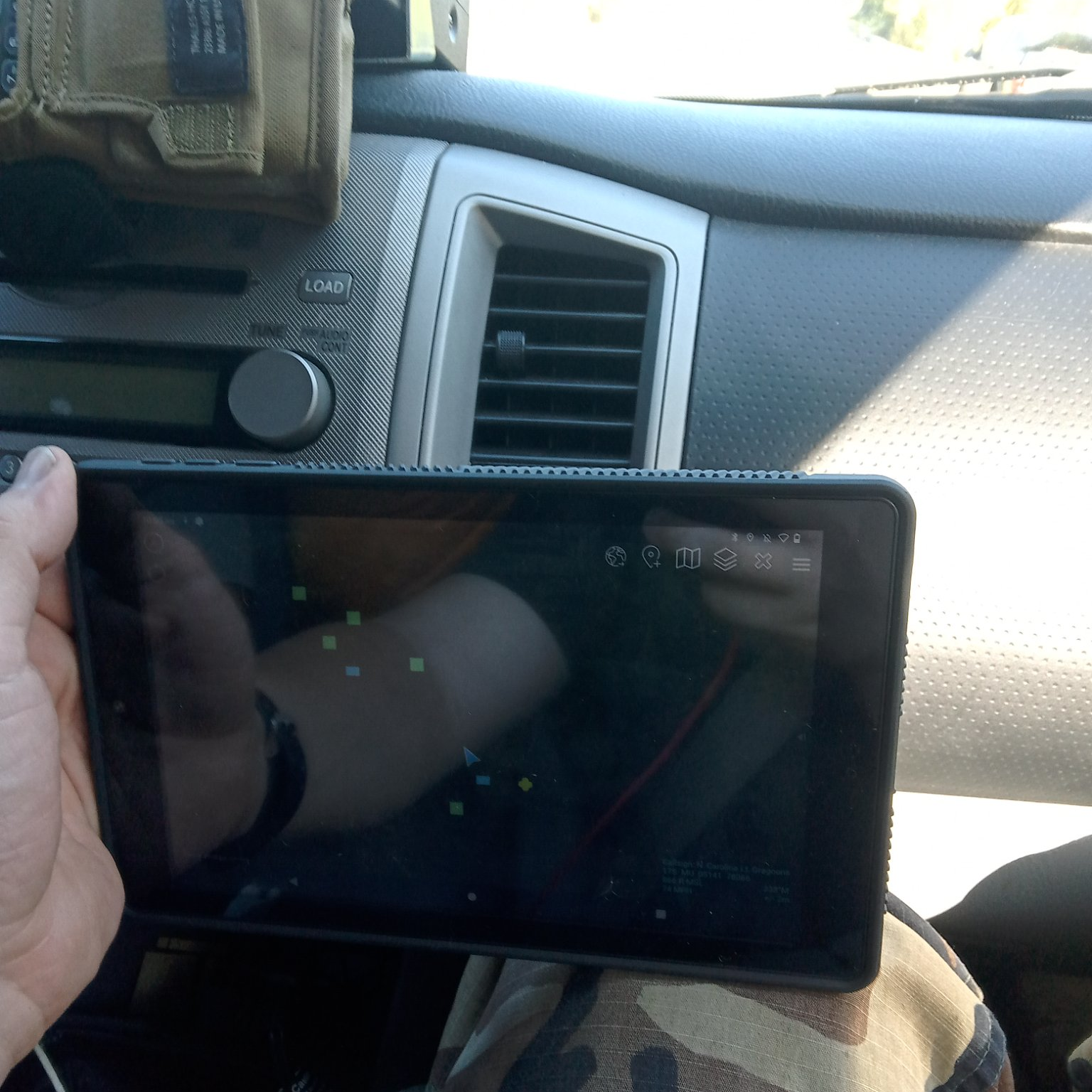
ATAK would have been incredibly useful if I had known how to use it properly. We’re working to correct that now.

Reconnaissance

Once in the AO, we had to do a significant amount of human intelligence (HUMINT) work asking people for information. As time went on, we relied more and more on locally produced HUMINT until it replaced our remote intelligence section’s work entirely.

We also listened to local HAM repeaters and CB channels for SIGINT.

We brought a drone but were unable to employ it due to airspace restrictions (there was a TON of helicopter activity).

  • SUSTAIN the use of HUMINT and SIGINT during reconnaissance to save time and fuel physically scouting locations ourselves.
  • IMPROVE by bringing a small, lightweight mobility option for local reconnaissance to save on fuel. Possible options include ATVs, motorcycles/dirt bikes, and E-bikes.
  • IMPROVE aerial reconnaissance ability by having a sub-250gr non-DJI drone in addition to the larger drone for more options and fewer flight restrictions.
  • IMPROVE OSINT collection by including some means of tracking aircraft beacons. Helicopters were the primary means of moving supplies into cut off areas. Tracking aircraft could have helped us to earlier identify areas that needed assistance by noting where helicopters were going.
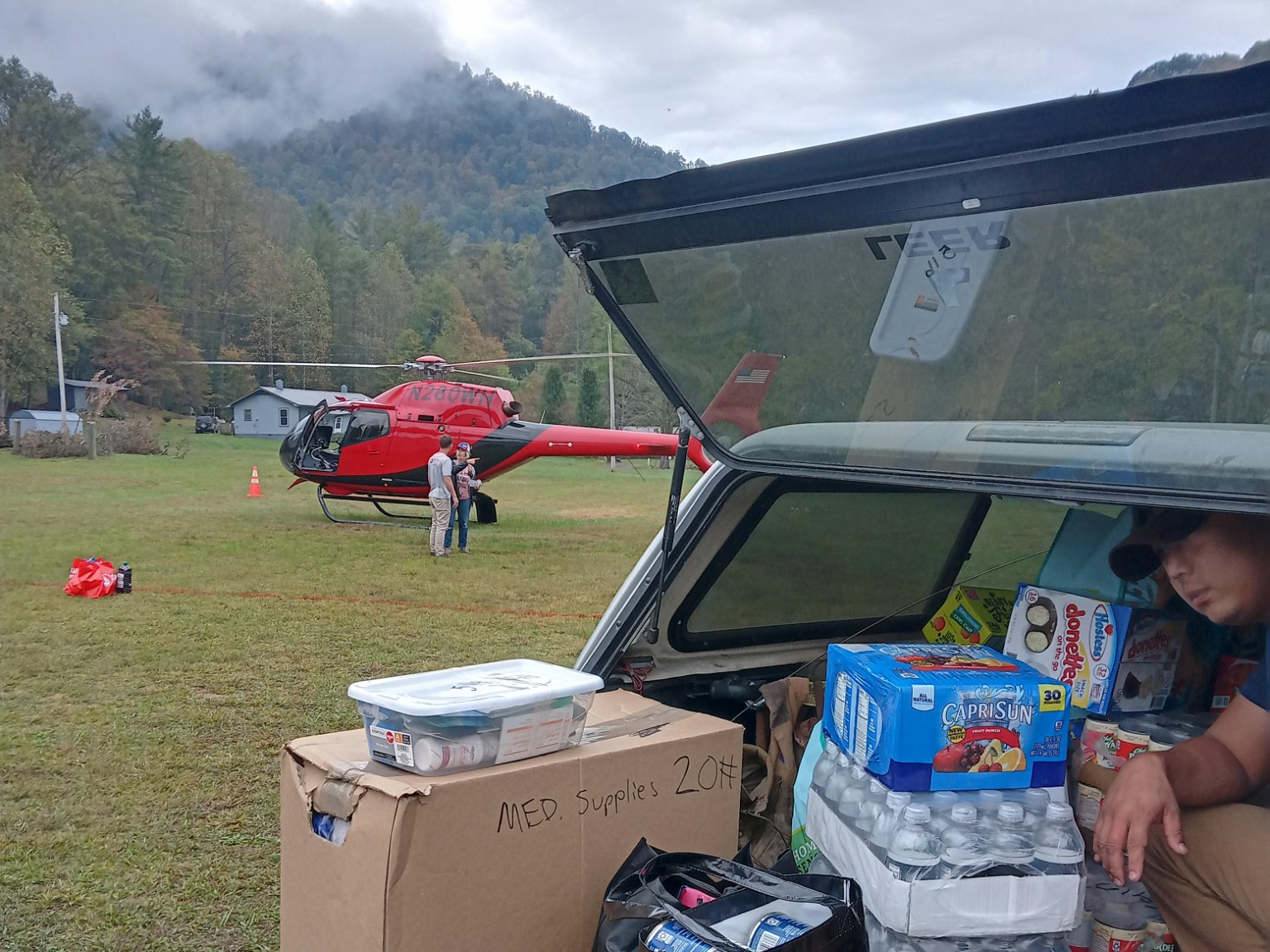
Helicopters did most of the work in the early days, going where nobody else could go. We had to wait for roads to be cleared (and in some cases partially rebuilt) to get into these places with our convoys.

Liaison and Convoy Operations

We set up our “patrol base” at a large point of distribution (POD) located in a church. We ran all our missions in direct support of that church’s relief efforts. This included wellness checks, recon patrols, and resupply convoys to homes and smaller PODs.

  • SUSTAIN coordinating efforts through supporting a local church that was already distributing supplies. I believe that we would not have achieved nearly as much if we had gone elsewhere or tried to operate completely independently.
  • SUSTAIN conducting resupply convoys, this was by far the most efficient and safe way to move supplies where cell coverage was nonexistent and road conditions were difficult to straight-up treacherous. It also mitigated the threat of ambush, which was a very real concern. Locals told stories about cars getting surrounded and the occupants getting robbed at gunpoint.
  • SUSTAIN radio coordination between vehicles during convoys.
  • IMPROVE communications within convoys by bringing extra radios to hand out to other vehicles as necessary. Said radios should be pre-programmed with FRS and MURS frequencies.
  • SUSTAIN the use of a local guide to lead convoys and get us through checkpoints.
  • SUSTAIN the use of a “recon pull” concept whereby we conducted reconnaissance, located a suitable location to run operations from, and “pulled” other resources and volunteers behind us to where they were needed. This was mainly done via Twitter/X and direct contact with the 118th.
  • IMPROVE identification of vehicles in our convoys. This being a semi-permissive environment, I would have been comfortable marking our vehicles in some way to make it easier to identify who was and who wasn’t part of our convoy. This would have greatly helped us not to lose people in the chaotic environment we found ourselves operating in. Colored streamers tied to mirrors is one possible option.
We open-carried handguns pretty much the whole time, as did most of the locals.

Security

Security was a concern entering this operation. We had heard reports of some looting prior to our departure, though we never witnessed any ourselves. We didn’t want to be vulnerable, but we also didn’t want to roll into the AO in full battle rattle looking like a bunch of wannabe SF weirdos. We found balance by scaling our security posture to the level of threat that we faced at any given time. In a nutshell, we generally matched the security posture adopted by the locals. Almost everyone was openly or concealed carrying handguns, so we pretty much just did that the whole time, leaving our rifles and kit in the trucks.

I only pulled my rifle out of my truck and slung it one time. It was in an area where we’d heard firsthand accounts of robberies/burglaries, and we had already seen locals openly carrying rifles there. I pulled it out when my vehicle was parked and isolated from the rest of our convoy for a short time, and put it back when other elements of our convoy joined us.

  • SUSTAIN matching our security posture to that of the locals.
  • SUSTAIN bringing enough security options to allow us to remain flexible. Another group didn’t bring rifles at all and mentioned that they regretted it in that area.
  • SUSTAIN posting an armed guard during the night. We split this duty into shifts a few hours long so that everyone got some sleep.
  • SUSTAIN never leaving vehicles unguarded. Our vehicles were our lifelines, so we couldn’t afford to risk having them looted while we were away.
  • IMPROVE nighttime security by using perimeter alert devices. This would have been a great help if we had been forced to bivouac in a more remote location than a church parking lot. Motion sensors, tripwires with shotgun blanks or other noisemakers are possible solutions.
  • IMPROVE future operations by having SOPs for staging vehicles in remote bivouac areas. We will experiment with this in our future training exercises.
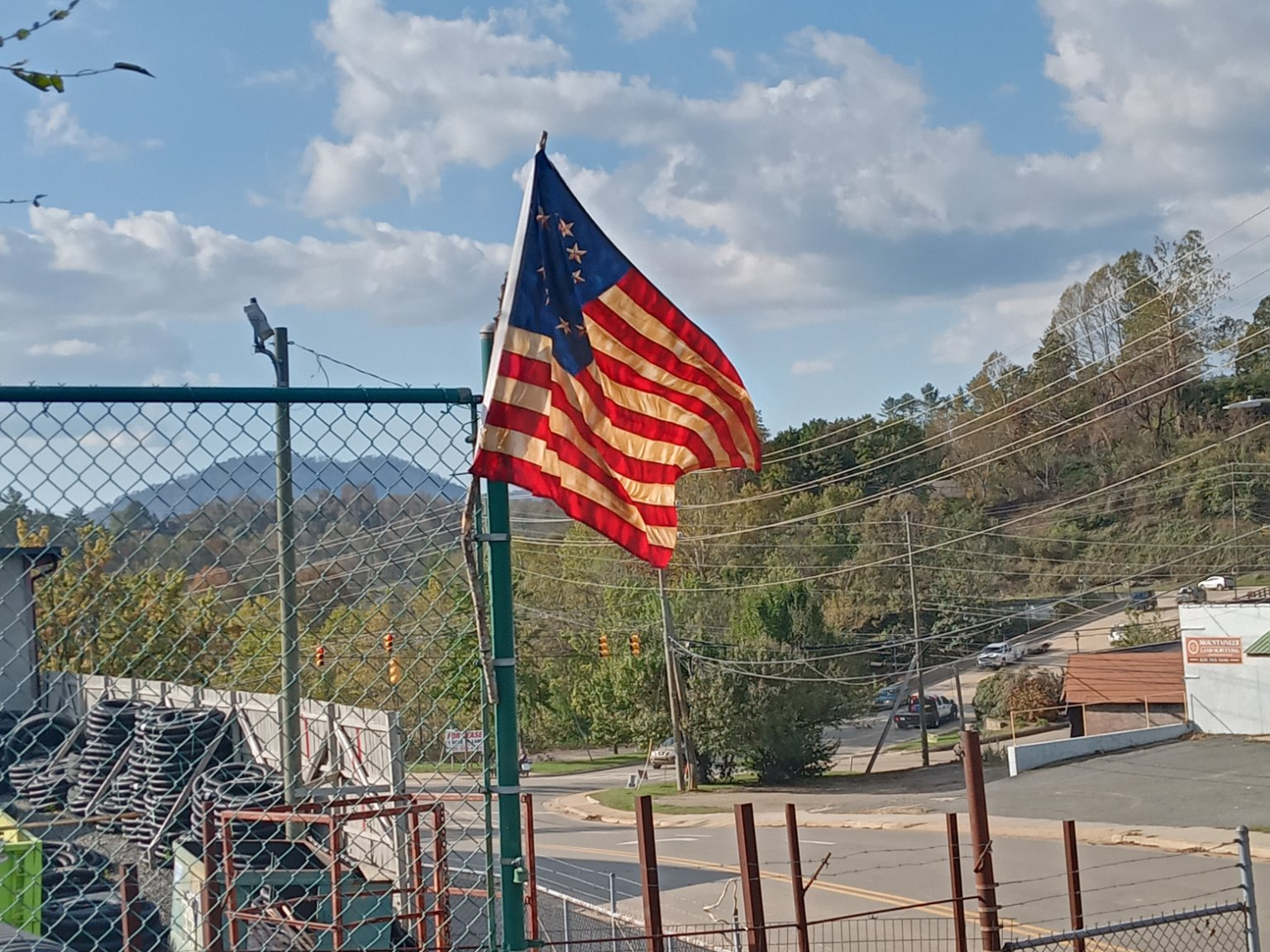
We flew “Old” Old Glory (Betsy Ross flag) over our staging area. It raised morale and helped folks find us when they needed our help.

If you have questions about anything that we did, what did/didn’t work, comment below and I’ll answer what I can. The next part of this AAR will cover the equipment that we used. Stay tuned!

Hurricane Helene Response Part 1: Interview with Tacticon Armament

Two weeks ago my team and I decided to travel to Western NC to assist with the relief efforts for Hurricane Helene. After two days of conducting an area study, we left our homes in Coastal NC and spent 5 days in Yancey and Mitchell Counties doing what we could. We supported the relief effort by conducting reconnaissance and logistics support, working with local churches and another training group called the 118th. In that time, we accomplished the following:

  • Recon Patrols: 2
  • Neighborhoods scouted: 3
  • Convoys run: 6
  • Loads delivered to Distribution centers: 9
  • Loads delivered to homes: 9
  • Helicopters unloaded: 1
  • Wellness checks: 39

Last Tuesday I had the great pleasure of being interviewed by the gentlemen over at Tacticon Armament for their podcast, the 2A Procast. During this podcast I discussed how my team operated, what we were doing and how the situation developed on the ground, and how others can replicate what we did. The episode went live on Saturday, and is embedded below. A special thank-you to Nolan, Jake, and Tackett for having me on. I’m glad that I could share my experience with others who can learn from how my team managed to be so effective during the short time that we were in the AO.

Over the next few days I’ll be posting my team’s AAR points to share lessons learned about what worked, what didn’t, and how we intend to improve for future operations. This operations was a bit of a paradigm shift for us, as we’ve never planned to operate this far away from our local area before. Much learning occurred, and therefore much learning shall be shared. Stay tuned for the AARs!

Custom MAG Training Summary and AAR Sep 2024

Over this past weekend I had the pleasure of teaching a 3-day training course to a private group. One unique trait of VSTAC is that I can tailor curriculum to meet the specific training needs of a private group. This group requested the following training modules:

  • Day 1: Operations Center and Observation Posts
  • Day 2: Patrolling refresher and a 3-hour day/night patrol exercise
  • Day 3: Mounted Operations

Training modules available for custom training events can be found on the Custom Training tab.

This is a summary of what we did as well as some After-Action Review (AAR) points to share lessons learned.

Day 1: Operations Center

This was my first time teaching this custom training module, but I had everything prepared and the class went smoothly. Students learned about the purpose of a Tactical Operations Center (TOC), what critical functions are required, and how to do each one. The morning was spent in the classroom with students learning the following skills:

  • Manning a radio watch
  • Battle tracking bad guys and good guys using various types of map boards
  • Coordinating/deconflicting support for subordinate units in the field.

In the afternoon students put all these skills to the test in two Command Post Exercises (CPXs), semi-scripted scenarios where students simulated running a TOC. I had roleplayer support for this exercise, so they had real radio reports coming in from simulated scout teams keeping them informed of the developing situation so they could battle track it and make decisions. They even launched a real drone at one point, flew it to where the “action” was, and I told them what it “saw” when it got there. It was basically a live-action TDG, and it really helped the students get a feel for how all the pieces of a TOC work together.

Battle tracking using a map board, route overlay, and radio message book pages. Magnetic pins are great because you don’t have to poke holes in your expensive maps like with pushpins.

For the first time running this training module, I think it went very well. The group had several women participate in this day of the training, and they all seemed to enjoy the experience. My AAR points from this day are as follows:

  • SUSTAIN running this class in this order. Increase the estimated time of this module to 8 hours and lengthen the CPX exercises to maximize knowledge retention of the material.
  • SUSTAIN allowing the students to actually launch and fly a drone during the CPX exercise to give them a clear understanding of its capabilities and limitations.
  • SUSTAIN using women and your less physically fit personnel to run a TOC during operations. That may not be very PC, but I don’t care. In a crisis, you need to efficiently use all of your resources, and that includes human resources. You need your most physically fit guys out in the field, whether that’s a security patrol or clearing fallen trees from roadways after a tornado. Also, women are just good at radio watch. Walk into any dispatch center in America and you’ll see that they’re 90% staffed by women.

Day 2: Patrolling Refresher and Exercise

Most of the students in this class had attended some kind of patrolling course in the past. This group had requested a realistic patrolling exercise, day and night, on a realistic timeline to get a feel for how a patrol really goes. We spent the morning doing some basic patrolling refreshers and drill rehearsals to ensure that everyone was on the same page.

In the afternoon, I taught the Patrol Route Planning class from day 3 of the Jäger Course. Students learned about considerations for patrol routes and practiced sketching route overlays.

Route overlay sheet with patrol planning card, filled out by a student.

When that class ended, I gave them a rough scheme of maneuver for the evening: a security patrol around the training property. I gave the students a “road to war” scenario, a general concept of the route, a rough timeline for start-to-finish, and turned them loose to plan the patrol themselves. I stayed in the room to answer questions and give recommendations when asked, but for the most part I let them plan the whole patrol using what they’d learned. It was quite a sight to see the student leadership get right to work planning every aspect of the patrol. They even made a route overlay for the TOC, which was actually operating during the exercise.

Students planned the entire patrol, including the timeline.

We stepped on the patrol about an hour before sunset. I chose to embed with the patrol as a “rifleman” so as not to break the immersion of the patrol experience by just walking alongside them. I fell in with their second fire team and stuck close to the patrol leader so I could observe and evaluate his decisions.

They encountered my “civilian refugee” roleplayers first and halted the patrol to observe. There was immediately a breakdown in communication, as the Team Leader who spotted the civilians and halted the patrol failed to inform the patrol leader of why we had stopped. After several minutes, I gave the patrol leader a “nudge” to find out what was going on. Since the civilians weren’t doing anything suspicious and didn’t appear to be a threat, the patrol leader chose to bypass them and continue the patrol.

Eventually the patrol reached an open danger area (field) that they could not bypass. Fortunately they had identified this hazard during planning and had accounted for it. They set 360-degree security and launched a small drone to scout the far side of the field for hostile activity, which found nothing. Once the pilot recovered and stowed the drone, the patrol quickly crossed the danger area using a squad wedge and traveling overwatch.

Once across, we set into a Patrol Base (PB) right at sunset and mounted our night vision while we waited for darkness. Once we passed the end of nautical twilight (when it actually gets dark), we evacuated the PB and began our return. OPFOR ambushed us on the way back right as half the patrol moved across an open danger area.

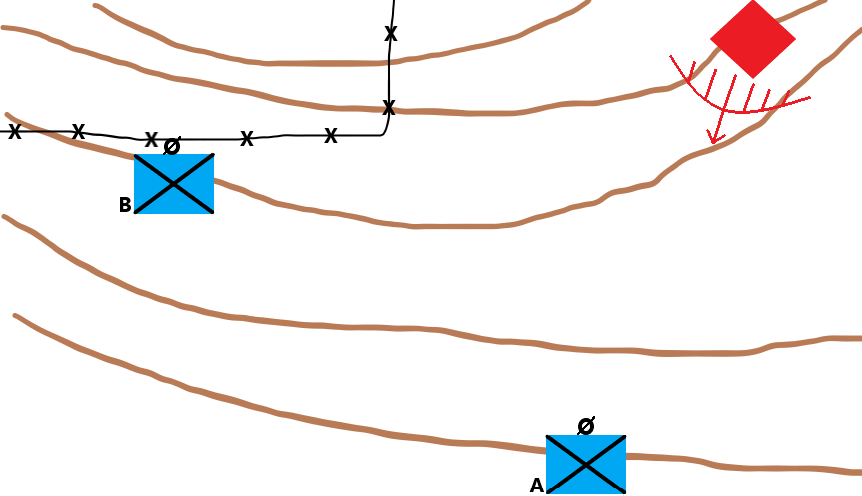
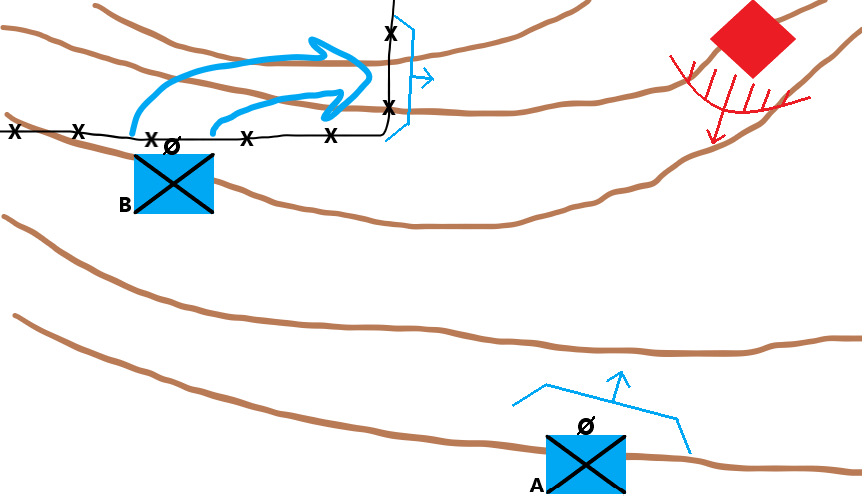
If these symbols are new to you, just know that blue = good guys and red = bad guys.

Alpha team was caught in the open and immediately took a casualty. Bravo team turned and attempted to return fire on the ambushers, but the curvature of the hill denied them a good line of sight. Bravo team leader made a snap judgement call and ordered his men to dump their packs and crawl under the barbed wire fence next to them so they could get to higher ground and flank the attackers.

Vegetation not pictured. B team was under tree cover, OPFOR in tall grass, A team in the open.

This move caught OPFOR by surprise and forced them to break contact, ending the ambush and saving Alpha team from taking further casualties. Now that the initial threat was over, it was time to focus on consolidating the patrol.

The patrol leader had been located with Bravo team. Alpha’s casualty was their team leader with the radio, so the patrol leader couldn’t get in touch with them. He ran over to their position and was informed that they had taken a casualty. The patrol leader immediately called the TOC and requested a CASEVAC, which was available in the form of a small OHV with a stretcher.

When we heard the blacked out CASEVAC vehicle approaching, the patrol leader signaled our location using an “IR buzz saw” (an IR chemlight on a string swung in circles to make a large bullseye only visible through NV). This group had previously trained CASEVAC loading on their own, and it was impressive to watch how quickly they worked stabilizing and loading up the casualty. When the CASEVAC vehicle departed, we returned to the TOC and ended the patrol.

I can’t take credit for everything these guys did, many of them had already done a good bit of work training together prior to this class. What I had taught them was the planning aspect of this patrol, which they executed nearly flawlessly. From there, all I did was provide a scenario with some semi-scripted events, coordinated roleplayers to execute these events, and controlled the scenario to maximize the training value (and fun) of the experience. They had a LOT of great observations and lessons learned during their AAR before going to bed. Below are a few of my own.

  • IMPROVE communication between key leaders on the patrol. The hang-up with the civilians early on caused a delay of several minutes. Team leaders should quickly pass information up to the patrol leader and the patrol leader should quickly disseminate what he knows down to the teams. If the patrol leader doesn’t know what is going on, he should take initiative to find out. This is corrected through repetition and naturally smooths out over time.
  • IMPROVE physical fitness of the team. We moved less than a mile through thick vegetation and mild hills, and all but 2-3 members of the patrol were exhausted when we got to the patrol base. We were only wearing LBE with rifles, and the few backpacks that were carried weighed less than 20lbs. The patrol leader chose to be a stud and wore body armor, and he was probably the least worn-out. If the team had been compelled to fight at the end of that movement, it would not have been pretty. This was a very, very short patrol with minimal equipment in mild weather, and was a wake-up call to the students. Go outside and ruck. Get fit or die.
  • IMPROVE radio setup on my personal kit. I normally use a Baofeng UV-9R as my “kit radio” that lives on my chest rig. This time I was trying to use an AR-152 to see how it performed. It “worked” when I tested it, right up until the final Pre-Combat Checks (PCCs) before the patrol. I couldn’t get the radio to transmit my voice through my headset, and at that point it was too late to switch radios. I conducted the patrol with the radio in its stock configuration, pulling it out of the pouch whenever I had to use it. I’ve had this same problem before with a different PTT. The flimsy 2-prong accessory connector is likely to blame, despite the ranger band I had holding it in place. I was disappointed, I really want to like this radio, but I can’t recommend it until I solve the reliability issue with the accessory connector.
For now, the UV-9R remains my recommendation. It’s much more reliable than my AR-152 has been so far.
Affiliate link: https://amzn.to/3BiSXxT
  • SUSTAIN/IMPROVE patrol base evacuation procedures at night. Our PB was in some pretty thick vegetation in a wooded area, and we anticipated getting hung up on thorns and such on our way out. I recommended that the patrol leader assign a 2-man team to find and mark a clear-ish path out of the brambles before it got dark. We tried using taped-up chemlights to mark the trail, the tape being to make the light shine in only one direction. This worked, but even the tiny sliver of each chemlight that we left exposed was so bright it washed out our NODs as we exited. The suggestion was made afterwards to use shorter chemlights, or even children’s glow sticks for this purpose.
  • SUSTAIN the use of the Binary Automatic Rifle (abbreviate it BAR for fun) as a SAW substitute in the fire team. One man in Alpha team had a dedicated autorifle build with a binary trigger. During the initial contact he did a great job of putting heavy suppressing fire on the ambushers when his team leader went down, keeping the OPFOR suppressed long enough for Bravo team to make their flanking maneuver.
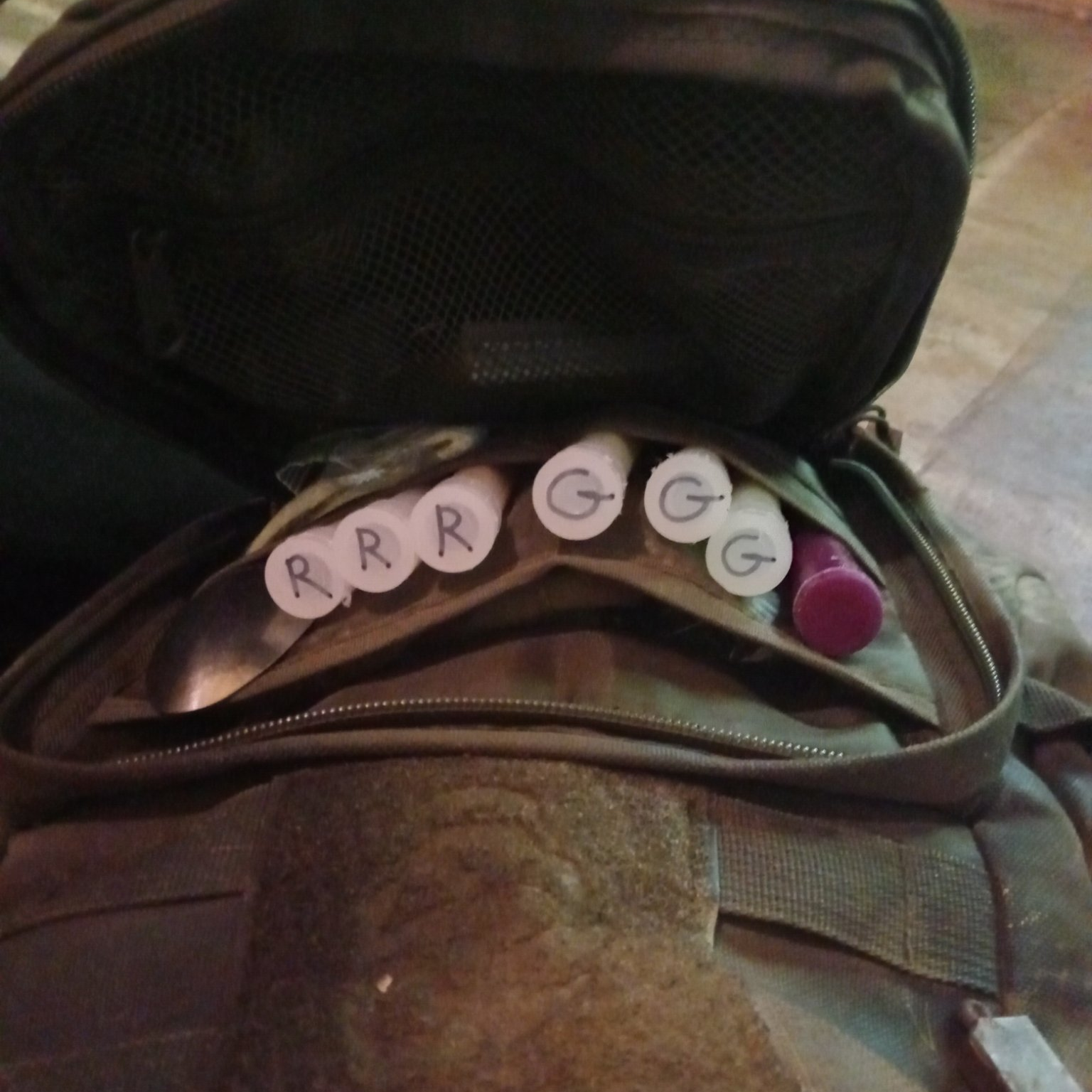
  • SUSTAIN casualty marking SOP. My training group uses a red chemlight to mark casualties, and our gear SOP requires us to carry 3 of them in our IFAK. I immediately marked the casualty during this scenario and it was very effective at showing the patrol’s medic where he needed to be.
If you pull chem lights out of the wrapper, use a sharpie to label the color. You won’t always be able to tell in the dark with night vision or a red lens headlamp.
  • SUSTAIN the use of an IR buzz saw to coordinate vehicle movement at night. Normal chemlights can be used instead of IR if the CASEVAC vehicle doesn’t have night vision.
  • IMPROVE my own group’s casualty handling procedures. Watching these guys work on stabilizing and transporting the casualty really impressed me, and highlighted an area that my own training group could improve on.

Day 3: Mounted Operations

The final day of this course was a Sunday. I make it a point that whenever a class of mine runs into a Sunday, I begin the day with an optional Bible study to give God the firstfruits of the day. This Bible study was called “Trust in the Lord” and focused on how and why we need to focus our thoughts on God and trust in him for guidance and assistance. I began with a short look at Jonathan’s spoiling attack on the Philistines in I Samuel 14, an excellent case study on how a Godly warrior properly seeks God’s assistance.

This day’s topic was Mounted Operations, an introduction to operating mounted in vehicles. After a short class on the appropriate use cases for soft-skinned civilian vehicles, we moved outside for some drills. I demonstrated how to stow, carry, and employ weapons in a vehicle and students had a chance to practice this dry (no live fire) from both sides of a car. We also covered roles within a vehicle crew, practiced some basic communication drills, and moved to tactically mounting and dismounting a vehicle while maintaining security.

After lunch, we moved to the final portion of the class: convoy operations. I taught the class how to plan and execute a convoy, and then they actually planned and executed a 6-vehicle convoy. Since this class was taught in the students’ local area, we were able to tie-in some of their real-world reconnaissance objectives into this convoy. The drone was once again utilized, this time to scout a known choke point along the route.

The convoy itself went smoothly. I sat with the convoy commander and took notes on how they communicated, moved, and handled contingencies (like a vehicle taking a wrong turn). They acted the way they were trained, and it was pretty cool to watch the students take their instruction from that afternoon and run with it. Radio communication between vehicles was a bit rough at first, but by the end of the 40-minute convoy it had gotten much smoother and more natural. When it was all over, everyone was pretty happy with how the convoy had gone. We did a brief AAR, which was more “SUSTAIN” than “IMPROVE”.

Some key points to share are below:

  • IMPROVE the route plan by using fewer checkpoints. The first part of the route was very heavy on coordination measures and the convoy commander was a bit overloaded tracking everyone’s progress. Towards the end, checkpoints were more spread out, which eased his burden and flowed much better.
  • SUSTAIN using roof-mounted antennas for radios. We were getting LC radio checks between vehicles up to 3 miles away (the furthest any element of the convoy was separated at any time) with mobile 2m VHF radios. Some vehicles had to use handheld Baofeng radios inside the cab, which worked but not nearly as far. This was accounted for during planning by ensuring that the first, last, and C2 convoy vehicles had external antennas mounted.
  • SUSTAIN using a drone to recon potential choke points along the route for hazards. This was much faster and safer than sending a scout vehicle ahead of the main body in restrictive terrain like canyons and bridges. A scout vehicle is still useful for normal travel along the route, but for known danger areas a drone is often a better choice unless the terrain/weather dictates otherwise.

Summary

Boltboy and I had a lot of fun running this course. The hosts were very gracious in opening their home to us and the team was a pleasure to work with. It’s always encouraging to come to a class like this and see like-minded men and women cheerfully training together towards a common goal. If you ever think that you’re the only one in your community who cares about preparedness and training, you’ve been psyopped. This group didn’t get to their current size and skill level by complaining about society on the internet, they went out into their community and met people. Your lack of a group to train with is your fault and yours alone. Don’t wait for the militia to come recruit you, because they won’t. Go outside, go to events in your community, and just talk to people. You will be surprised at the kind of folks you meet.

If you already have a few like-minded friends willing to train but don’t know how to get started, contact me. I am willing and able to travel almost anywhere in the continental US, and like these folks, I can tailor a training course that fits your timeline, your area of operations, and your training needs.

Semper discens.

TDG 19: Attack by Fire

A TDG is a Tactical Decision Game, a mental wargaming exercise designed to give you practice making tactically sound decisions in a hypothetical scenario.  The ability to make sound and timely decisions based off incomplete and imperfect information is a critical skill to have, especially as a team leader.

You will be given a scenario, confronted with a tactical problem, and given a time limit to think about and write out your answer.  The time limit is to simulate the pressure of a real-world tactical decision, where you must quickly assess the information you are given and come up with the best answer you can.  Then comment below with your answer so you can discuss each others’ solutions.

TDG 19: Attack by Fire

This is a continuation of the scenario from TDG 18: Anti-Materiel. I strongly recommend you complete TDG 18 before reading further.

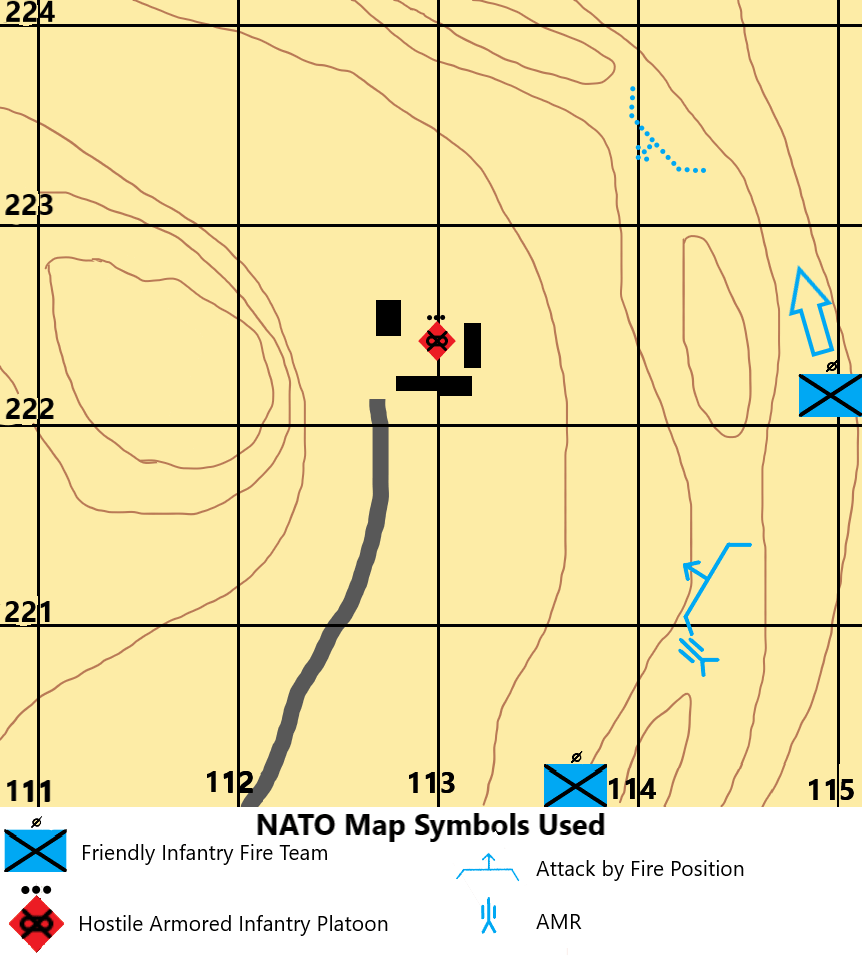
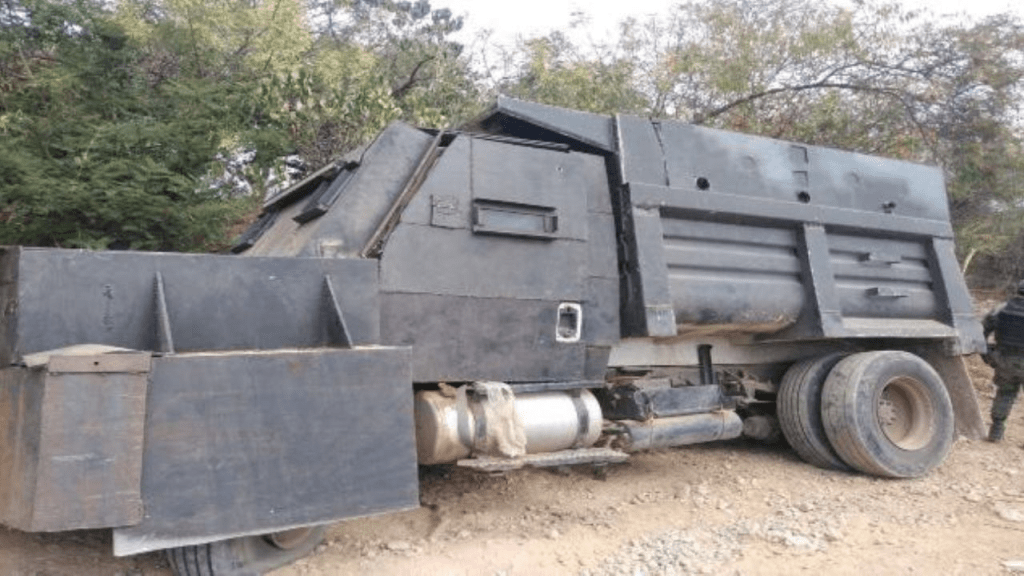
YOU are the squad leader of a border militia conducting a raid on a compound occupied by cartel soldiers. Your mission is to damage 10 enemy vehicles, including 3 “Monstruo” improvised APCs, to stop the cartel from conducting further attacks on Americans. You brief the plan to your men.

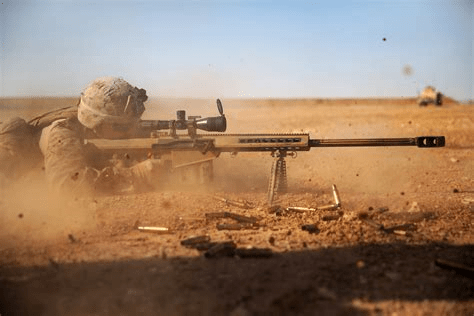
“Gentlemen, we will depart for this raid at 4pm. Enemy troops on the objective greatly outnumber and out-gun us, so we will not attempt an assault. Instead, we will conduct an Attack by Fire from 400m away. The Anti-Materiel Rifle (AMR) will disable the Monstruos with 2 API rounds to each engine, and then put 1 round into the engine block of every other vehicle that they see.”

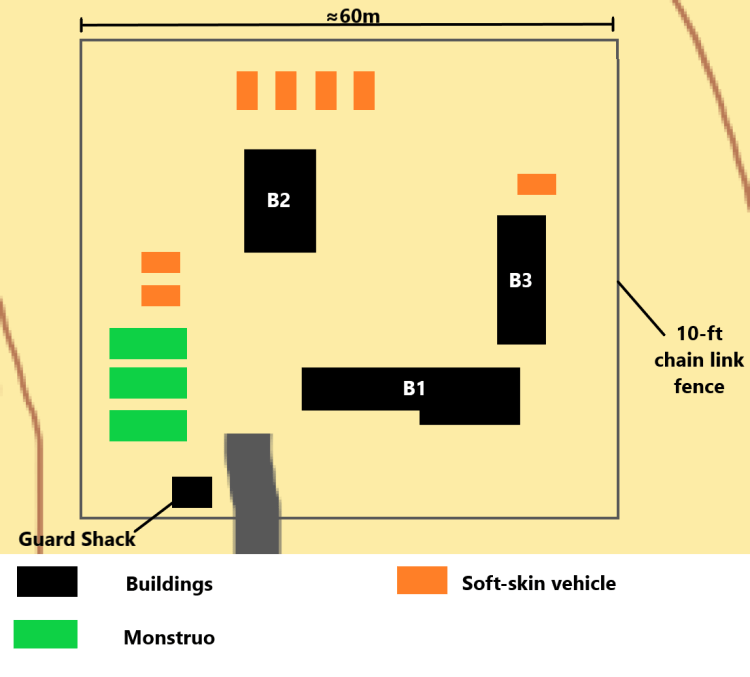
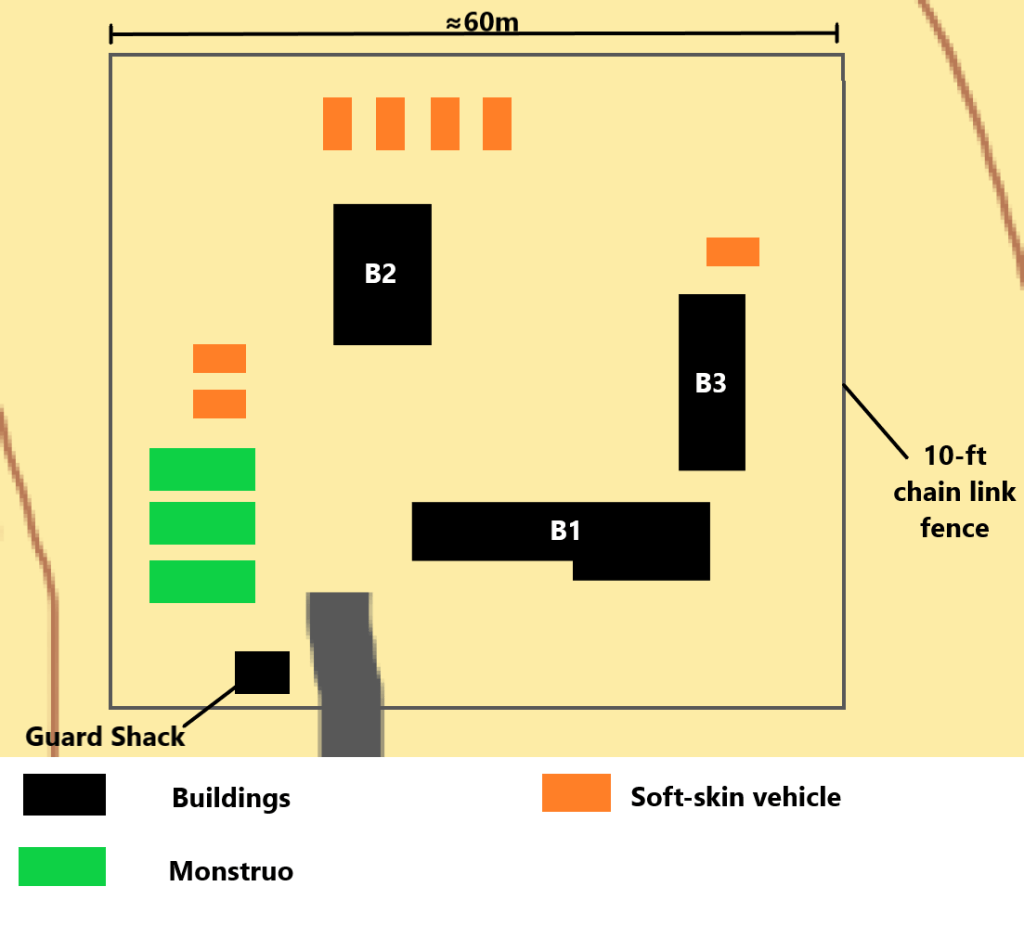
Recon team sketch of the enemy compound.

“Due to the size of the objective, we cannot hit every vehicle from a single firing point. The AMR team is the main effort and will be located South-East of the objective where they can engage the Monstruos. Team 2 will split off and take up an attack by fire position on the North-East side of the objective to engage the remaining soft-skin vehicles with their rifles. Team 1 will be our security element watching the road, located no more than 100m from the AMR team. I will be located with the AMR team where I can observe the objective.

“Both the AMR team and Team 2 will commence firing simultaneously. As soon as the AMR is finished engaging its targets, I will give the signal to withdraw. We will meet back at the Objective Rally Point (ORP), consolidate, and immediately begin our exfil to the South-East. The whole attack should take about 5 minutes from Commence Fire to Exfil.

“We will begin the attack at 6:30pm, right as the sun sets. This way we will have just enough daylight to complete the attack and then slip away into the darkness before the enemy has a chance to counter-attack. Any questions?”

You go over the communications plan and hand radios out to each team leader and supervise as they conduct pre-combat checks and inspections of their men. At 4pm everyone loads up into 3 pickup trucks and you convoy out to a location 2 miles away from the objective where you dismount, camouflage the vehicles, and infiltrate on foot to the ORP.

Infil goes smoothly and everyone arrives at the ORP undetected. You advance with Team 2’s Team Leader and the AMR sniper for a Leader’s recon. Just as your recon patrol said, there are only two men on guard in a small shack by the entrance to the compound. One of the Monstruos has moved and is now parked in front of the main building. It’s still on the south side where the AMR can engage it, so no need to change the plans at this time. You return to the ORP.

At 6pm, everyone begins movement into their attack positions. You and the AMR team get into position first, then Team 1 reports that they are in place. Team 2 still has 200m to go, advancing slowly northward using the ridgeline to conceal their movement.

As the AMR team sets up, you notice an uptick in activity on the objective. Men are scurrying around the Monstruo that was moved earlier. There are also two soft-skinned pickups staged in front and behind it being loaded up. You watch as about a dozen camo-clad men wearing body armor and carrying weapons load up into the three vehicles and start the engines. After another minute, the three vehicles start moving in a column towards the driveway that leads to the road.

The time is 6:14pm. You aren’t taking fire and there is no change in behavior from the two guards in the shack. You radio Team 2 for an update and learn that they are only halfway to their firing position.

In a time limit of 5 minutes, write down what you would do in this situation. Include any instructions that you would give to your team leaders. Provide a brief rationale for your actions.

Comment your answers below and debate each other’s solutions to get the best training value possible from this exercise.

TDG 18: Anti-Materiel

A TDG is a Tactical Decision Game, a mental wargaming exercise designed to get you practice making tactically sound decisions in a hypothetical scenario.  The ability to make sound and timely decisions based off incomplete and imperfect information is a critical skill to have, especially as a team leader.

You will be given a scenario, confronted with a tactical problem, and given a time limit to think about and write out your answer.  The time limit is to simulate the pressure of a real-world tactical decision, where you must quickly assess the information you are given and come up with the best answer you can.  Then comment below with your answer so you can discuss each others’ solutions.

TDG 18: Anti-Materiel

Cartel leadership is emboldened by weak federal policies and the overwhelming influx of migrants into the US draining law-enforcement resources. As a result, cartel soldiers have become increasingly aggressive on our side of the border. Local militias are formed by concerned citizens to attempt to protect their communities where LEOs cannot. YOU are the leader of one of these militias. Sometimes you augment the local Sherriff’s department with reconnaissance patrols, but most of the time your militia operates independently.

Cartels have begun targeting the families and homes of local law enforcement officers. They have been known to use “Monstruos”, improvised APCs made by welding armored plating onto large trucks. Their MO has been to swiftly move in with their vehicles, conduct a raid with enough firepower to keep law enforcement at bay, and drive off before SWAT or other resources can be brought to bear against them.

A “Monstruo” in use by the CJNG.

Your militia leadership receives a valuable tip, allegedly revealing the location where the cartels store the vehicles used in their raids, including the Monstruos. This prompted you to investigate it with a drone-equipped reconnaissance patrol.

You receive the following brief from your recon team leader.

“Sir, our reconnaissance has confirmed the presence of ten vehicles at the site, including three Monstruos. It appears to be a temporary site, not a permanent base.

“The location is an abandoned ranch with 3 buildings. We were observing for 13 hours and saw evidence of at least 20 individuals at the compound, possibly more. Security overall appears to be poor, with only 2-4 men on guard at any given time. Two men armed with rifles are always in the hut by the driveway, rotating out every 4 hours at 12, 4, and 8 o’clock. Other men have been seen moving between buildings, with and without weapons. All individuals observed were military aged males wearing some kind of camouflage clothing, some with body armor and helmets. We saw no evidence of patrolling outside the perimeter.

“At 4:32pm, a white panel van arrived driven by a woman wearing civilian clothes and some kind of ID card on a lanyard around her neck. The guards allowed her to drive in, offloaded several crates of what appeared to be food, and then the van left at 4:56pm. This was the only time anyone arrived at or left the compound. Here’s a map we made of the compound based on what we could see.”

For the first time, you have actionable intelligence on a cartel threat. The opportunity to seize the initiative rather than passively respond to attacks after they occur is too much to pass up. YOU must now decide what you will do to take advantage of this opportunity.

The UV-9R continues to be my recommendation for intra-patrol communications.
Affiliate link: https://amzn.to/4cGFptM

You have the following resources:

  • Manpower: 9 men
    • Yourself
    • 2x 3-man fire teams with the following:
      • 1x team leader (AR-15)
      • 1x Automatic Rifleman (Binary trigger, bipod, and 60-rd drums)
      • 1x rifleman (AR-15)
    • 2-man AMR sniper team
      • AMR sniper (.50BMG with armor-piercing ammunition)
      • Spotter (5.56 DMR)
  • Equipment:
    • 3x NVGs
    • 1x quadcopter drone with 3-mile range
    • Can Cannon 66mm launcher with M7 DPS smoke rounds
    • 4x handheld radios
    • Various civilian trucks, jeeps, and cars
    • Whatever your guys have in their garages, workshops, or backyards.
Each grid square is 100m across. Contour lines represent 50ft changes in elevation.
Areas off map do not have line of sight to the compound.

In a time limit of 15 minutes, plan what kind of action you will take. Select what resources you would use and write a basic scheme of maneuver. Provide a brief rationale for your actions.

TDG 17: Hurricane Relief

Welcome to Season 3!

A TDG is a Tactical Decision Game, a mental wargaming exercise designed to get you practice making tactically sound decisions in a hypothetical scenario.  The ability to make sound and timely decisions based off incomplete and imperfect information is a critical skill to have, especially as a team leader.

You will be given a scenario, confronted with a tactical problem, and given a time limit to think about and write out your answer.  The time limit is to simulate the pressure of a real-world tactical decision, where you must quickly assess the information you are given and come up with the best answer you can.  Then comment below with your answer so you can discuss each others’ solutions.

TDG 17: Hurricane Relief

Yesterday a hurricane smashed through your county as you hunkered down in your home in coastal North Carolina. Fortunately, you didn’t have to evacuate, and the worst you got at your home was the power and cell service going out. After the storm passes you hop onto your local emergency radio channel and check in with the other members of your Mutual Assistance Group (MAG). 7/10 families are fine, two don’t answer, but one family is trapped by flooding. Their neighborhood is under 4 feet of water and they’re stranded in the second floor of their home with no food and 1 day’s worth of water.

Waterproof bags are critical for keeping stuff dry in your pack.
Affiliate link: https://amzn.to/4cqm5AW

The MAG leadership plans a rescue mission by boat and designates a staging area, so you hook up your boat trailer and head out. Once you arrive, you see that 6 of the men have arrived for the rescue mission. The MAG leader gives everyone the updated situation.

“I just met with the Sherriff who’s coordinating the recovery efforts. Unfortunately, the first responders have their hands tied with just the people that they can drive ambulances to, so they won’t be able to help with rescues until probably tomorrow unless the National Guard arrives. However, I was able to get the fire department to send one of their drones over the area to give us an idea of what it looks like, and it’s not pretty. We’ll have to go about a mile and a half over flooded roads, and the depth varies greatly along the route. So we can’t use trucks, only a boat will work. Fortunately, the water has stopped rising.”

You brought your 12-ft jon boat. One man brought a second boat, but it’s a rubber raft. Given the amount of debris in the water, the risk of puncturing the raft is deemed too high to take it out.

YOU are the coxswain (boat driver). You bring 2 other men with a sledgehammer, crowbar, and bolt cutters in case you need to clear a path or cut the family out of their house. It’s just the 3 of you because you need space in the boat for the family. The rest of the men stay behind with the second boat and a radio so they can keep in touch with you. You also bring three trays of water bottles.

As you drive through the flooded streets, you notice that most of the houses seem empty, their owners likely evacuated days ago. Some are not empty, and you get a few cries for help from trapped residents. You hand out some bottles of water, report their locations over the radio, and promise that someone will come back to pick them up as you continue towards your objective. Your MAG leader back at the staging area passes this information to the Sherriff.

The venerable UV-9R. My team’s go-to radio.
Affiliate link: https://amzn.to/3L7QeJ5

As you press on, you are forced to pass by a series of apartment buildings about 100yds on your left. These buildings don’t look like they were in good shape even before the hurricane, and you realize that this must have been Section 8 housing apartments. You see people in them, but they aren’t waving or calling for help. They’re just watching you silently. 2 or 3 get a good look at your boat and then duck back inside.

Suddenly, one man pops back onto his balcony and starts popping off shots in your direction. None of them hit you or your boat, but a few bullets splash about 10 feet away. At this moment you suddenly regret not bringing rifles. All three of you have gun belts with handguns, and one man has a pump shotgun that he brought in case of alligators.

Your objective, the family, is one half-mile ahead of you. The shooter is on your left. To your right are a couple of 1-story houses. Here, the water is only 3-ft deep.

The time is 10:25am.

In a time limit of 5 minutes, write down what you would do in this situation. Include any instructions that you would issue to your team.  Consider what resources you have and remember what your mission is. Provide a brief rationale for your actions.

Joint MAG Training AAR

This past weekend my MAG had the opportunity to cross-train with another MAG in the mountains of Kentucky. We arranged a mutually beneficial exchange of training where they taught us how they train to fight from and around soft-skin civilian vehicles, and we taught them some radio skills. It was an OUTSTANDING weekend of training and fellowship with like-minded Christian men, and we left having learned a lot from each other. This AAR will list the type of training that we conducted and summarize the lessons learned.

Day 1: Vehicle Training

After the safety brief, we received a short class on what bullets do to different parts of cars. The instructor proceeded to shoot a car with different calibers in different places to show us what bullets ACTUALLY do to vehicles. Some key observations:

  • 124gr 9mm: punched through both doors, deflected off of the pillars and trunk area
  • 55gr 5.56 from a 16″ AR-15 actually failed to exit the vehicle, penetrating one door and stopping in the second. 62gr M855 green tips, however, punched through easily. Both were deflected by the pillars.
  • 7.62×39 doesn’t give a shit about anything in the car except the engine block and the axles. My crew uses AKs primarily, and this validated our choice quite a bit. .308 performed the same.

Next we practiced shooting positions on the outside of some cars using the few parts of the car that actually stopped or deflected bullets as cover. Some of these positions were completely new to us, and were a bit challenging to master. What was particularly interesting was maximizing cover by shooting my rifle sideways when firing over the hood. I admit that I accidently put a few rounds into the hood of the junk car I was shooting over before I got the technique down.

  • We did this with live rounds on junk cars, but you can practice these techniques using airsoft guns and your personal vehicle. If you screw up and hit your car, worst case scenario you have to wipe off a white mark from your windshield or hood.

We then practiced shooting through the windshield of a vehicle from the inside. This was a very eye-opening experience, as I knew this was possible but had never tried it before.

  • LOTS of glass bits fly when doing this. Eyepro is a MUST for mounted operations. We also zipped up the collars on our combat shirts to keep glass from going down our necks. My team will be adding shemaghs to our gear SOP to protect our necks in the future.
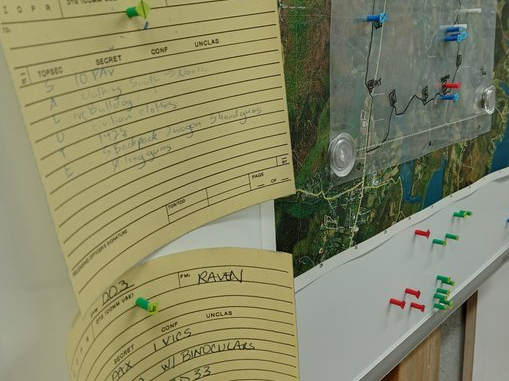
Just don’t get the white one.
Affiliate link: https://amzn.to/4ea5d2E
  • I was very surprised to see that the windshield was still very much usable after this drill. It turns out that when you shoot through (mostly) the same hole, the rest of the windshield remains intact and fit for driving.

After lunch, we practiced “react to contact” drills from mounted in the vehicles. The key to these drills was to exit the vehicle quickly, on the side opposite the contact, and peel outwards away from the vehicle to better cover. We practiced this from all directions (front, rear, left and right sides). After a few dry runs we did it with live rounds, and I gotta say that I was impressed with how well we did.

  • I did these drills with a my full Minuteman kit (plate carrier, war belt, and helmet). It added an extra challenge getting in and out of the cars, but I got used to it. It wasn’t as much of a hindrance as I thought it might be.

The day closed out with a situational exercise, with us as a 4-man vehicle team in a convoy. I was the vehicle commander (and thus Team Leader) for this exercise. The scenario was that we were the 2nd vehicle in a 2-vic convoy, and we had to catch up to the lead vehicle which had rounded a curve and temporarily went out of sight. We rounded the curve, and saw that the lead vehicle was stopped. Suddenly, the lead vehicle exploded in a cloud of dust and shattered glass. “SHIT!” I yelled, “CONTACT RIGHT!” We bailed out on the left side of our vehicle and started engaging targets.

Our objective was to recover a “VIP” (white IPSC target) from near the lead vehicle 50m to our front. After quickly assessing the situation and evaluating the terrain, I initiated a peel left using a shallow ditch as cover. My team peeled with me, continuing to engage targets as we went. Once we reached the lead vehicle, I advanced with Boltboy and covered him while he recovered the VIP. We then peeled back to our vehicle, and upon discovering that it was still drivable, I threw a smoke grenade and ordered my team to mount up. Once back in our car, we drove away while still engaging the brown cardboard enemies (whom we learned later were all very dead), shooting from our open windows.

YEET

The whole situational exercise took less than 3 minutes, and went amazingly smooth for us having not rehearsed it. It was very violent and very fast, some of the most fun I’ve had on a live fire exercise.

  • Blanks are great for Force-on-Force training, but live fire exercises build confidence and trust among teammates. It greatly helped that everyone involved had a high level of weapons proficiency, and we didn’t have a single incidence of anyone getting flagged by a muzzle.
  • Those who pooh-pooh competition shooting underestimate the training value that they provide in basic weapons handling. Boltboy and I both have extensive experience in 2-gun and run-and-gun matches, and we can credit at least some of our muscle memory for muzzle discipline to these events. These habits translated well to live fire and maneuver exercises.

Day 2: Radio Training

The next day I taught a class on radio communications. We covered the following topics:

  • Basic radio etiquette and lingo
The UV-9R PRO, my recommendation for a radio to wear on your kit.
Affiliate link: https://amzn.to/3wZM42H
  • Sending and receiving common report formats (POSREP, SALUTE, SALTA, SITREP, 9-line CASEVAC, and ZMIST)
  • Introduction to communications planning
  • Building a directional MOXON antenna for UHF

By the end of the day, I had students talking on their radios at vastly improved ranges with directional antennas that they built themselves. Everyone was stoked! That evening we went to a steakhouse, and the entire evening was spent with discussion on how to set up communications between everyones’ houses, where repeaters might be needed, how they would be employed, etc.

The next day, Sunday, we attended church together before parting ways. We worshipped the Lord together with our families and thanked God for a productive and safe weekend of training and fellowship.

Summary

This weekend was an outstanding success for both MAGs. We all learned a lot from each other, and a closer bond was built between our groups. If you know of like-minded MAGs, militias, or other groups of patriots in your area, I strongly encourage you to consider scheduling joint training events. It builds your network, improves everyone’s skills, and is an overall great way to spend a weekend. Find something that your guys are good at and offer to teach it.

And as a reminder, if you have a group and don’t know where to start with your own internal training, I can come to you to train your people in your local area. Team Leader I is a good place to start for a foundation of organizing and training a new group, or I can teach custom classes if your team is ready for the next level.

Semper discens.