I started this series, TDG (Tactical Decision Game) Tuesdays, to get you more in the mindset of how you could potentially handle a given tactical scenario with a limited amount of resources and manpower. My goal is to get you to read these scenarios and think about what resources you have available, what sort of scenarios you might encounter, and what gaps you need to fill in your equipment/training.
Previously, I started a mini-series on the six troop leading steps, abbreviated as BAMCIS.
Begin Planning Arrange Recon Make Recon Complete the Plan Issue the Order Supervise
Over the course of this mini-series, the TDGs have been a successive continuation of the same exercise in which you go over the complete planning and execution of a squad-sized raid on an objective, while following the 6 troop leading steps listed above. If you haven’t already, read TDG 9 for the orientation and scenario that this week builds on, and TDG 10 for the portion on planning and conducting your preliminary reconnaissance of the objective.
TDG 11: Complete the Plan & Issue the Order
This week’s TDG covers the fourth and fifth steps, Complete the plan and Issue the Order. Two weeks ago you came up with a rough plan of attack and a list of RFIs (requests for information) that you wanted answered before finalizing your plan. Last week you planned and conducted your reconnaissance, answering some if not all of your RFIs. This week you will finalize your assault plan and draft it into a 5-paragraph order to issue to your men.
The 5-paragraph order, also known as an “Operations Order format,” is a simple and easy way to organize a mission plan to present to your subordinates. The 5 paragraphs can be easily remembered with the acronym “SMEAC”
Situation: Disposition of all friendly, hostile, and adjacent forces. Mission: What we are trying to do. Execution: How we are going to do it. Admin & Logistics: Who/what is getting where and how. Command & Signal: Who is in charge and how they are communicating.
If this looks familiar, it should. It’s the same format I’ve used in past TDGs to present the scenario to you. This is a very, very simplified description of what can go into a 5-paragraph order, but for a small group of civilian volunteers it will suffice to organize your thoughts. If you like, you can use as much detail as you want and make a full operations order. A more thorough description of the 5-paragraph order can be found here.
Your assignment this week is to finalize your assault plan using the results of your reconnaissance. Yesterday I posted the results of Badlands Rifleman’s recon plan, you may use that as your own reconnaissance. Feel free to post your final assault plans in the comments and discuss.
In last week’s Tactical Decision Game, you were assigned to plan your reconnaissance of your objective based on the Requests for Information (RFIs) that you came up with in TDG 9. Badlands Rifleman (who has a pretty cool blog and training company of his own) submitted a very detailed reconnaissance plan which he posted on his blog. Today I will share the results of his recon.
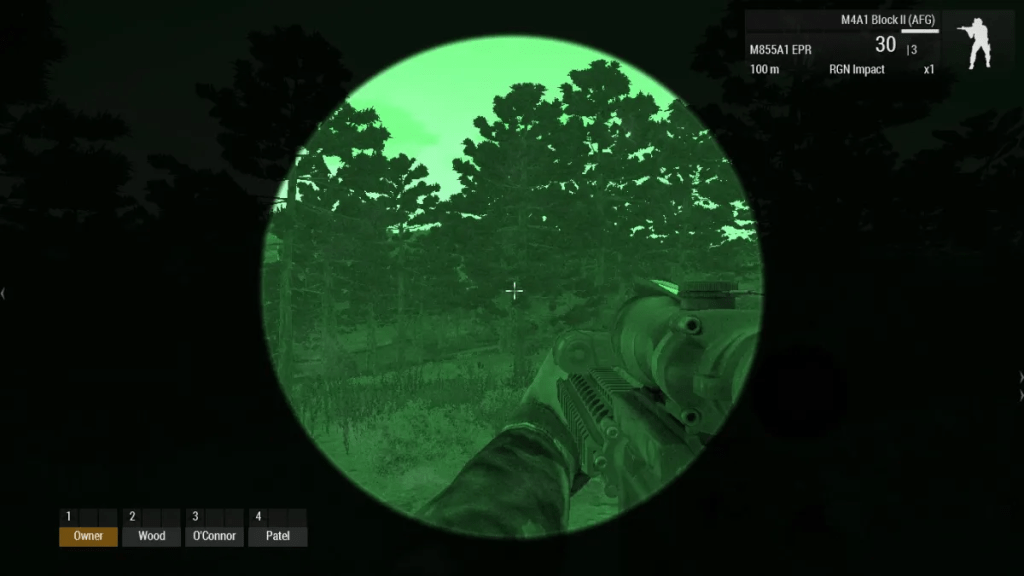
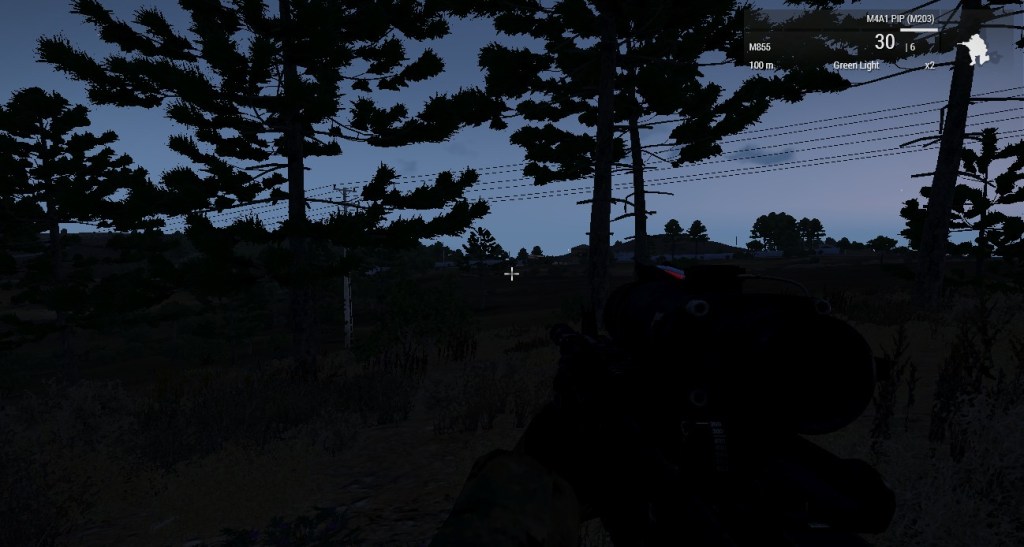
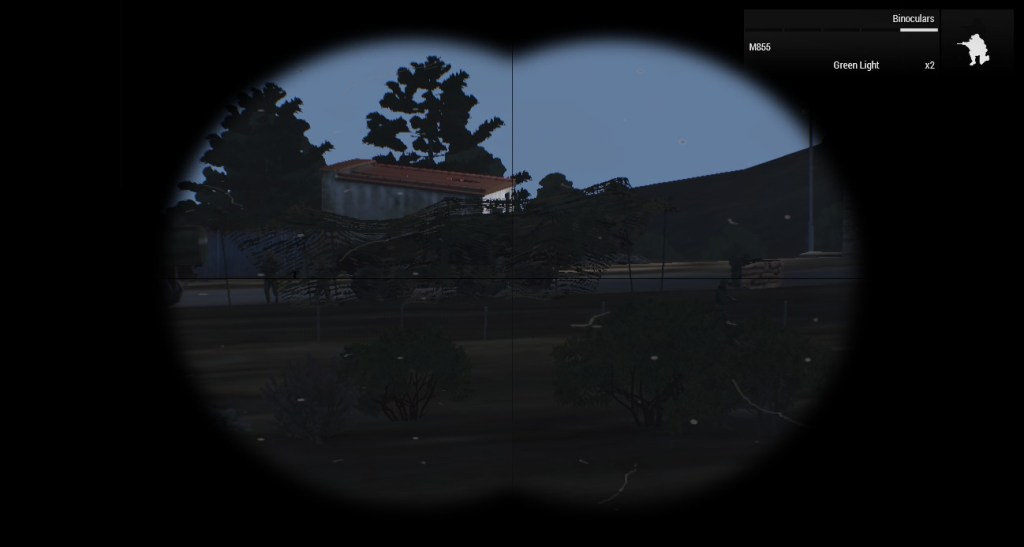
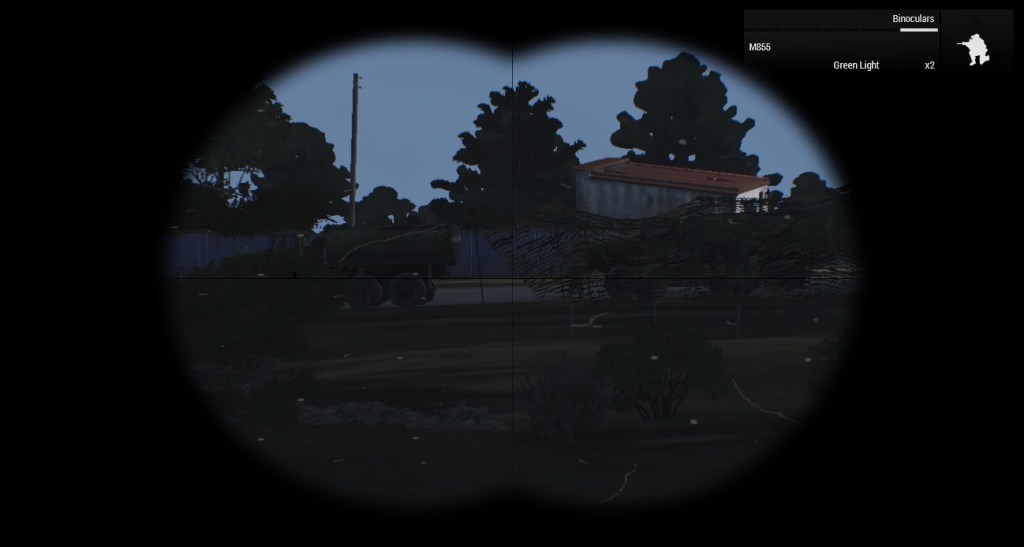
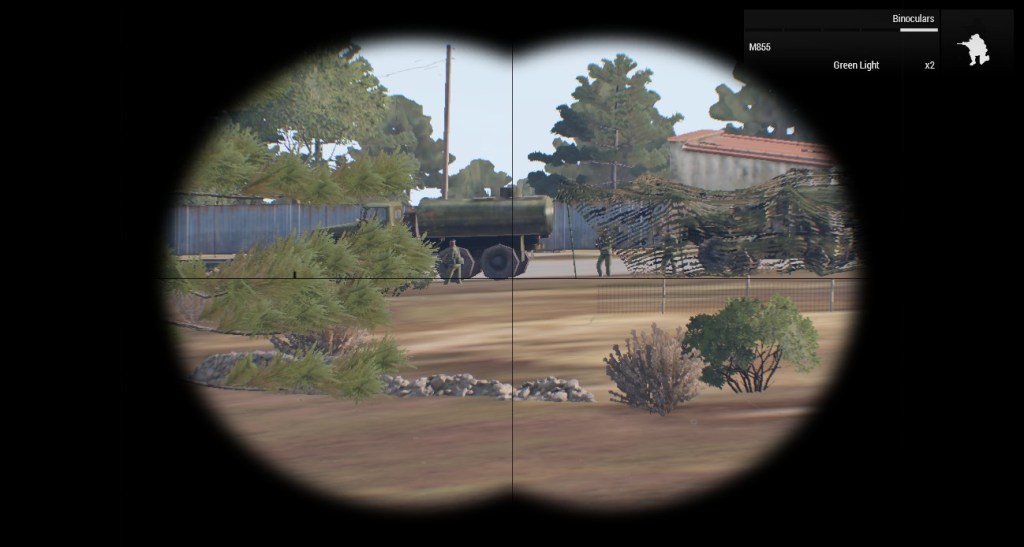
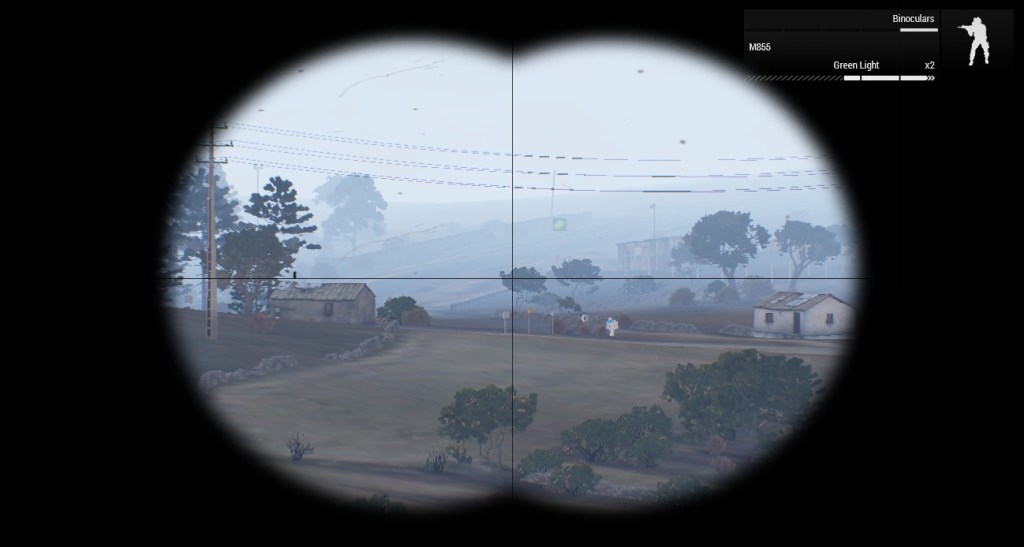
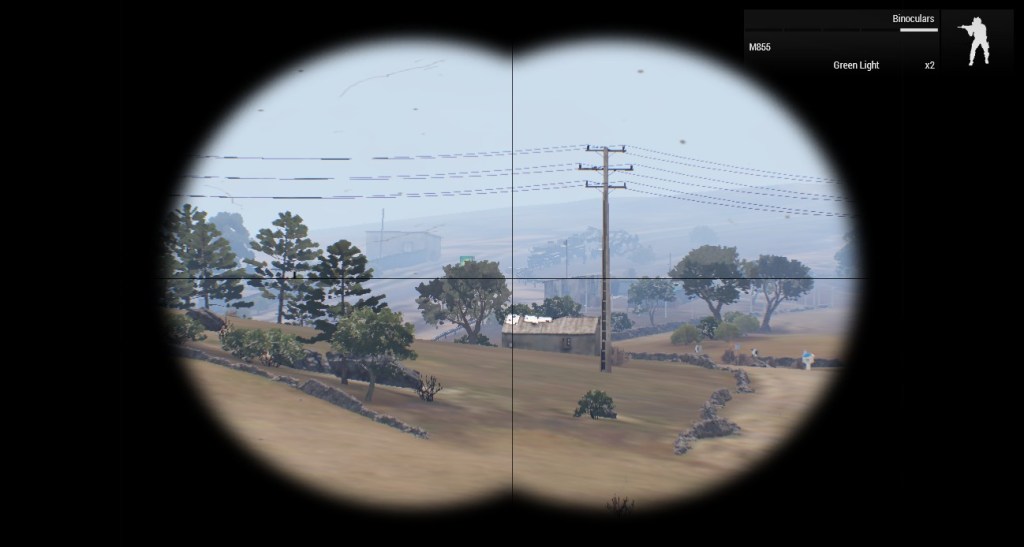
I have built a 3D mockup of the objective using the ArmA III mission editor. All images you see below are what Badlands Rifleman’s recon teams would have actually seen from their observation posts.
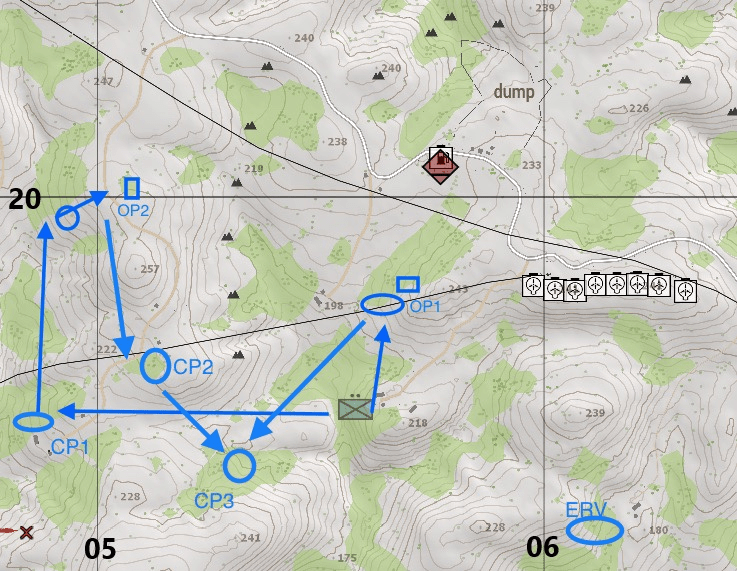
Teams 1 and 2 depart the patrol base at 0300. As Team 1 prepares to occupy their harbor site, at 0334 they hear the sounds of several vehicles driving East to West along the road in the vicinity of the objective. The convoy sounds like about a dozen or so vehicles, and is gone within 5 minutes.
As team 1 occupies OP1, they quickly discover that the position is unsuitable due to all the trees blocking their view.
Team 1 improvises, displacing NE along the ridgeline until they get a line of sight to the objective. They set up OP1 at grid 058198. The objective turns out to be about 50m East of the civilian gas station, which has several destroyed civilian vehicles littered around it. They observe the following images as the sun comes up.
You count about 5 troops. One appears to be an NCO, who walks back and forth within the position checking on the defenses and trucks. A 2-man security patrol is seen slowly walking counterclockwise around their perimeter, going at most 100m from the trucks. At 0600, the roving patrol returns to the trucks and wakes up their relief, who put their equipment on and resume the patrol. The gunner at the sandbagged position is also relieved at 0600.
There is no civilian traffic observed on the roads. You glimpsed movement in the houses next to the objective, but haven’t seen anyone outside yet.
Meanwhile, team 2 patrols to OP2, arriving around 0500. However, their position is partially obstructed by the hill in front of them, so they displace SE across the saddle. Fortunately, there are enough large rocks and boulders to conceal the new OP. They observe the image below:
The fog is a bit too dense to see much other than the gas station sign. However, it clears up a bit by 0800, resulting in this image below:
Team 2 is unable to get a count of personnel, but they do observe the 2-man patrol walking around the position. They see other shadows in the fog, but not very clearly. Again, there is no civilian vehicle traffic observed. At 0723, Team 2 observes a civilian, probably a farmer, walk up to the shed between them and the objective. The Russian patrol stopped the man, spoke to him for a few minutes, and let him go.
At 0800, as planned, both teams pack up and move to link up at the new patrol base. At 0912, both teams see and hear a flight of two Russian jets overhead flying NW towards Oreokastro. At 0944, one of the aircraft flies back over you towards the airfield. No other enemy activity was observed during this period.
Summary
I would like to thank Badlands Rifleman for all the effort he put into his answer. Any information not specified in this AAR will have to be deduced from the images that your teams see. Tomorrow, you will put this to use when making your final assault plan.
VS Training has put together a number of tactical decision games (TDG’s) and I’ve been going through them to knock the rust off of my own planning and decision making skills. If you have some extra time I’d highly suggest checking them out, the ability to thoroughly plan is a hard skill to develop (even harder than a speed reload on a square range if you can believe that!)
The following is my answer for #10 which is part of a series that started with #9 and you can read that here. I’ve identified some Requests For Information in exercise 9 as I began my planning for the raid and it’s in this exercise that we will try to answer these. As part of the leadership in this fictitious scenario it is part of our responsibility to confirm what we think we know and to learn everything we can…
Originally posted on American Partisan on April 18, 2021
I started this series, TDG (Tactical Decision Game) Tuesdays, to get you more in the mindset of how you could potentially handle a given tactical scenario with a limited amount of resources and manpower. My goal is to get you to read these scenarios and think about what resources you have available, what sort of scenarios you might encounter, and what gaps you need to fill in your equipment/training.
Last week, I started a new mini-series on the six troop leading steps, abbreviated as BAMCIS.
Begin Planning Arrange Recon Make Recon Complete the Plan Issue the Order Supervise
Over the next few weeks, the TDGs will be a successive continuation of the same exercise in which you will go over the complete planning and execution of a squad-sized raid on an objective, while following the 6 troop leading steps listed above. If you haven’t already, read TDG 9 for the orientation and scenario that this week builds on.
Once your initial plan is drawn up and you have created a list of RFIs (requests for information), you will arrange for and conduct a preliminary reconnaissance to answer as many of your RFIs as possible before you make your final plan of action.
TDG 10: Arrange & Make Reconnaissance
This week’s TDG covers the second and third steps, Arrange Recon and Make Recon. Last week you came up with a rough plan of action and a list of RFIs for your recon team. This week you will plan and conduct your recon patrol to gather intel so you can complete your assault plan.
Reconnaissance should always seek to answer specific RFIs about the enemy, terrain, and any other details relevant to your operation. Keep those in mind while you draw up your recon plan.
I’ve created a scale 3D model of the terrain and enemy position using the ArmA III mission editor. Your assignment is to make your recon plan, designed to answer your RFIs from TDG 9. You can then use the results of your reconnaissance next week to draft your final plan to accomplish your mission.
When I originally ran this TDG in 2021, I had readers submit their recon plans and I sent them pictures showing what their recon team(s) saw. Unfortunately, that level of interaction is very time consuming for me, and I cannot get to everybody’s submissions. Instead, I will post the recon photos in next week’s TDG where you finalize your plan.
In your recon plans, be sure to include the following information at a minimum:
Size & organization of recon team
RFI list from last week’s TDG (listing what questions your recon seeks to answer)
if emplacing an observation post (OP), the approximate grid location of your OP
route to and from your OP, including checkpoints
Feel free to post your answers and discuss in the comments below. If you like these TDGs and want to develop your planning skills further, come to a class and get trained.
In a previous article, I wrote about training paradigms. Basically, everybody has that one scenario in their mind that they are preparing themselves for with their gear and training. That paradigm is the lens through which we view all our tactical inputs, and shapes everything we do in training and preparation.
In my experience talking to the individuals that come to my training classes, most American patriots have a training paradigm that I can roughly classify into one of two categories. I’ll call these the “Minuteman” and the “Jäger” paradigms. Today I will discuss what these two paradigms are, how they are different, and why they are important.
The Minuteman
The “minuteman” paradigm is borne out of a mindset of community preparedness in times of hardship and danger, and stems back to the very early history of our nation. When threatened by raiding bands of Indians or bandits, frontier communities formed militias to protect themselves. These militias, however, consisted of men who had to ply their trades every day to support their families. This meant that they could not man permanent defensive positions and forts because they weren’t full-time soldiers. The solution was for every man to be ready to respond at a minute’s notice in case of a raid or other emergency. As time went on and the threat of raids lessened, the militias took on a more conventional military form. However, most counties retained a special company or so of minutemen, elite units formed from the most able-bodied men under age 30.
Throughout troubled times in history, variations of the “minuteman” model have been implemented all over the world. In Rhodesia, for example, some small farming communities had ways to alert each other when they were attacked by communist guerrillas, and all available men would respond to defend their neighbors. Similar arrangements are being used right now in South Africa, where coordinated raids on farmers are alarmingly commonplace.
The modern American version of a minuteman company is sometimes called a “Mutual Assistance Group” (MAG). Many other names are used, but the concept is by-and-large the same. People who live near each other making arrangements to come to each others’ aid during times of hardship and danger. If there is ever a time when state and local authorities cannot be counted on to “provide for the common defense”, the security of the citizenry will rest in their own hands. One need only look to the riots of 2020 for examples of just this. MAGs or similar groups will be our best solution to protect our families when that time comes again.
The Jäger
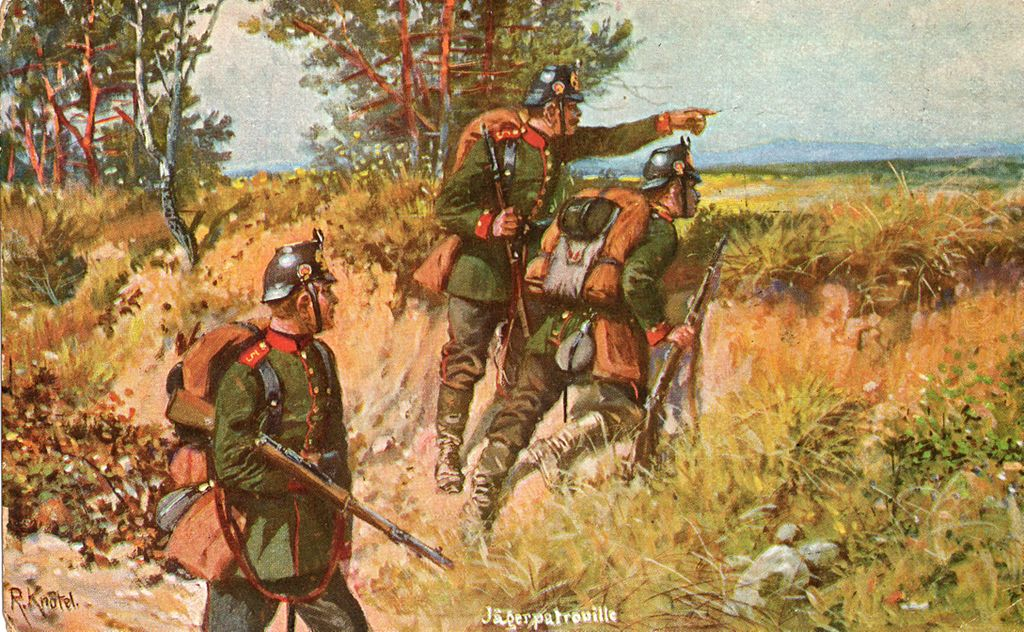
The other training paradigm I commonly encounter is more akin to that of a light infantryman. I call it the “Jäger” (pronounced YAY-ger) mindset. I have written on the history of Jägers in the past. In a nutshell, Jägers were historically a Germanic variant of light infantry with roots as far back as the 1600s. Through the 1700s and 1800s, Jägers were fielded by Prussia and Austria as elite units of skirmishers, skilled in fieldcraft and marksmanship. They were also the first conventional units to use rifles, a German invention.
Jäger regiments were often composed of civilians who had been foresters, game keepers, or some other profession that included a prior knowledge of fieldcraft skill. During the Napoleonic wars, several Prussian Jäger units were hastily formed to protect their homes from the invading French armies. Many of them brought their own weapons and equipment, hastily trained together for a few weeks, and then rushed off to ambush and harass Napoleon’s armies as they advanced Westward.
The people I’ve met with a Jäger mindset envision themselves fighting against an organized enemy some distance away from their homes and families. They plan to conduct patrols, set ambushes, and carry out reconnaissance missions to keep their enemy at arms reach. Whether that enemy is a roving gang of bandits, cartel gunmen, or Chinese “peacekeepers”, the basic tenets of this mindset are the same. Aggressively locate, observe, and destroy the enemy away from your home/security perimeter.
Differences
These two training paradigms have very different mission sets, and thus different doctrine and gear.
Doctrinal Differences
The Minuteman is essentially a Quick Reaction Force (QRF). At a minute’s notice he throws on his gear and rushes to aid his neighbors, sacrificing stealth for speed. The swiftness of his response will often require him to ride in a vehicle. His missions are short in duration, lasting only long enough to neutralize the immediate threat. As a reactionary force, he is forced to fight at a time and place of his enemy’s choosing, but makes up for it with speed, violence of action, and his prior knowledge of the terrain.
The Jäger is more of a hunter by nature. Since he operates well away from his home/base, every mission he conducts will involve infiltration into his objective area. Trading speed for stealth, he mostly works dismounted because vehicles are difficult to hide. His missions can be much longer in duration, lasting up to a week or so. Adopting a “combat hunter” mindset, the Jäger fights at a time and place of his own choosing, striking violently and then vanishing into the terrain.
Differences in Gear
Mission drives gear. Since these two training paradigms have very different mission sets, it follows that they have different requirements for combat equipment and weapons.
The Minuteman’s short mission duration means that he does not need to carry sustainment gear, and can stick with the rifleman’s essentials. Since he is often mounted and does not conduct lengthy foot patrols, he can afford the extra weight and bulk of wearing body armor for added protection. Finally, given that bad guys like to do their dirty deeds at night, he should have some kind of sights/optic that allows him to aim in the dark (red dots or illuminated reticles at a minimum).
The Jäger’s extended patrols necessitate sustainment gear to keep him fed, hydrated, and healthy. He relies heavily on stealth to surprise his enemy, and on mobility to make a swift exit. Thus, in order to remain light and mobile, he avoids wearing body armor which would add even more weight on top of everything else he must carry.
Which one is right?
At this point, you may be wondering which one of these paradigms is correct. The answer is that both of them are “correct”, and in fact they complement each other. Without the Minuteman, the Jäger cannot leave his home for fear of leaving his family vulnerable. Without the Jäger engaging the more organized and dangerous hostile groups away from home, the Minuteman will eventually find himself with big problems on his doorstep that he may not be able to handle.
In a WROL scenario, the Minutemen will be needed first to respond to sporadic attacks as they occur. If the disaster is prolonged and chaos is allowed to thrive, there will be more and more of a need for the Jägers to go forth and conduct reconnaissance, set up observation posts, and kill evil men in their holes.
Conclusion
It is my opinion that the patriot should understand and train to both of these paradigms. Since you are preparing for an uncertain future, you would be wise to maintain a flexible set of capabilities so that you are prepared for whatever situation befalls you and your community.
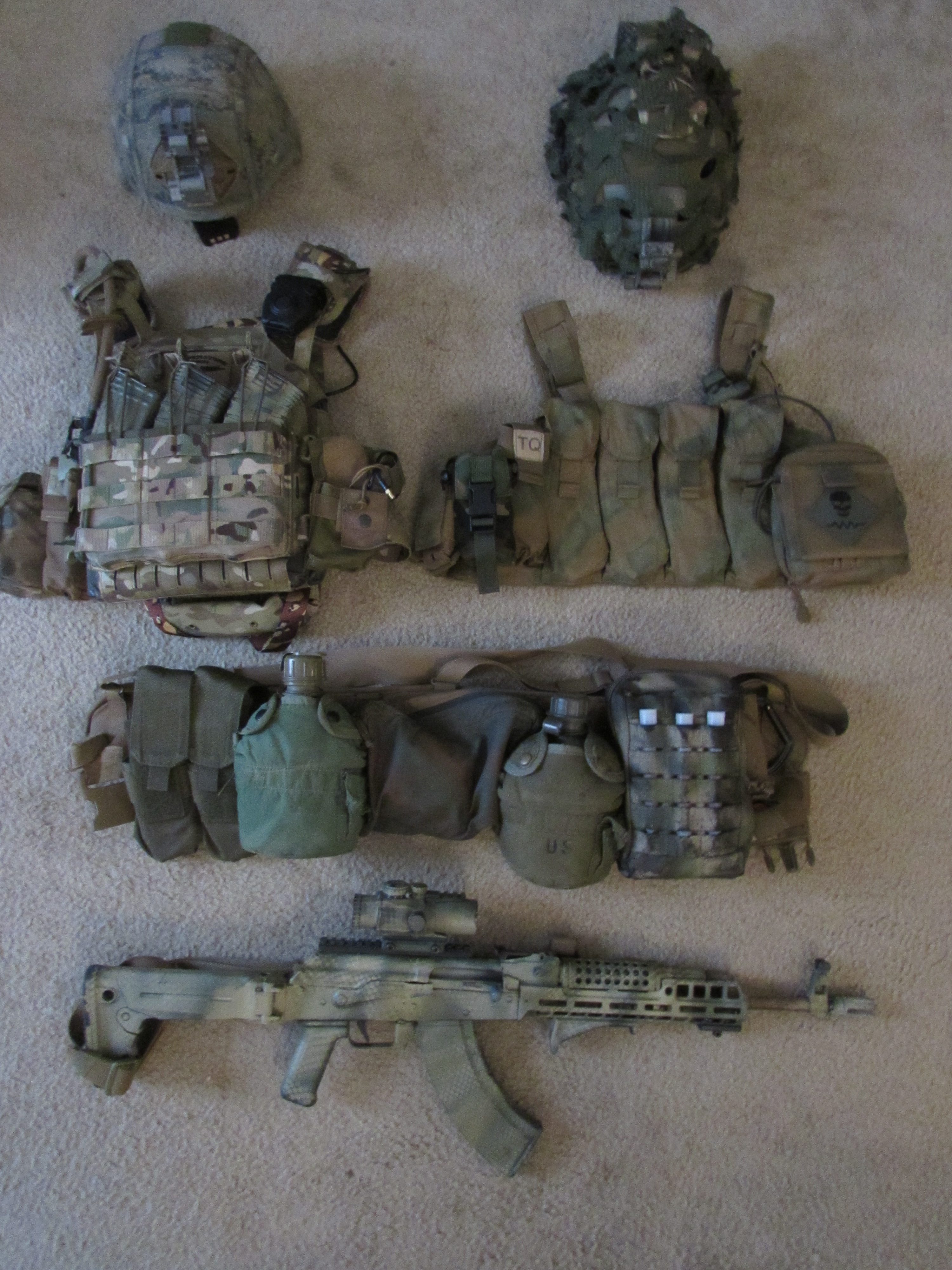
I take this a step further and have a two sets of kit prepared, one for each mission set. My “Minuteman Kit” consists of a plate carrier, ballistic helmet, and my belt with the rifleman’s essentials. My “Jäger Kit” is my belt, a chest rig, lightweight bump helmet/boonie hat, and my pack with 3-5 days sustainment.
My Minuteman kit (LEFT) and Jäger kit (RIGHT). Note that I have all the rifleman’s essentials of ammo, water, and medical gear on my belt, which is used for both loadouts.
If you are interested in learning more about either of these training paradigms, I now teach classes on both. The first Jäger Course is currently on the training schedule for May 2023, and I will be offering the 3-day Minuteman Class later this year.
Originally posted on American Partisan on May 11, 2021
I started this series, TDG (Tactical Decision Game) Tuesdays, to get you more in the mindset of how you could potentially handle a given tactical scenario with a limited amount of resources and manpower. My goal is to get you to read these scenarios and think about what resources you have available, what sort of scenarios you might encounter, and what gaps you need to fill in your equipment/training.
This week, I am starting a new mini-series on the six troop leading steps, abbreviated as BAMCIS.
Begin Planning Arrange Recon Make Recon Complete the Plan Issue the Order Supervise
Over the next few weeks, the TDGs will be a successive continuation of the same exercise in which you will go over the complete planning and execution of a squad-sized raid on an objective, while following the 6 troop leading steps listed above.
This week’s TDG covers the first step, Begin Planning.
Anytime you conduct an operation, you start by creating a tentative plan and scheme of maneuver based on your METT-TC analysis (given below). As you develop your plan, you will come up with RFIs (requests for information) that you will seek to answer with a preliminary reconnaissance of your objective.
Your assignment this week is to read the following scenario, come up with a tentative plan to accomplish your mission, and create a list of RFIs for the reconnaissance that you will plan and conduct in next week’s TDG.
TDG 9: Begin the Plan
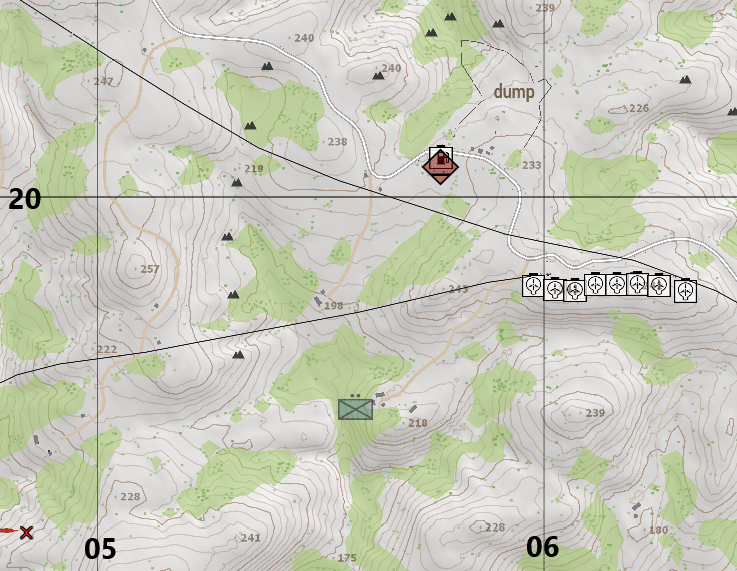
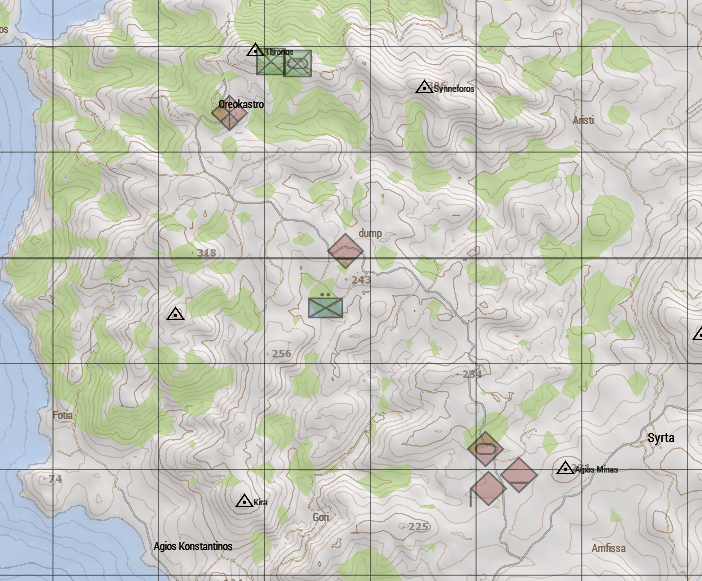
Map A
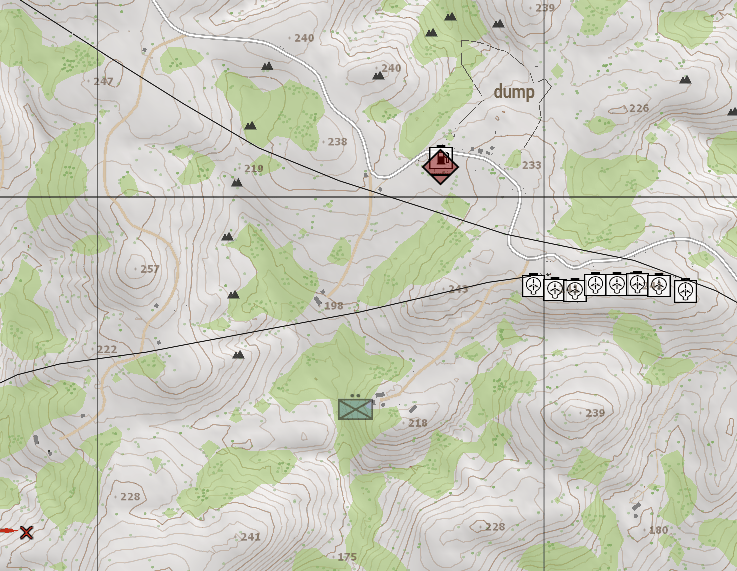
Map B
Orientation: The island nation of Altis is a small (fictional) nation in the Mediterranean Sea. The country historically has maintained neutrality in the political tensions between NATO countries and the Russian Federation, and has attempted to stay friendly to both sides. However, Russia has had their eye on the oil-rich islands for several years, and 6 months ago demanded that the Altisian government sign exclusive trade agreements for oil, which the Altisian government denied in their attempt to remain neutral. Being small, Altis has no standing army of its own, but has instead relied on locally organized militias for its defense.
Two weeks ago, Russian forces invaded Altis via amphibious landing in the South, seizing the island’s largest airstrip, and began pushing north. Altisian militias have been unable to repel the invaders, and many units have fled to the countryside to fight a guerrilla war as light infantry. NATO immediately condemned the invasion, and at the request of the Altisian Government, the United States sent the 22d Marine Expeditionary Unit (MEU) to seize a beachhead on the Northern end of the Island and hold it until follow-on forces can be mobilized and deployed to counter the Russian invasion.
At present, US Marines are holding the Thronos mountain ridgeline (see map A). A Russian motorized infantry battalion is positioned at the town of Oreokastro, awaiting reinforcements as they fly into the airfield to the South East. A battalion of tanks has been spotted at the Russian staging area West of Agios Minas, and is likely to be sent North West to reinforce the Russian infantry in Oreokastro in the next few days. They will likely need to refuel along the way in order to have enough diesel to reach Oreokastro and conduct maneuvers after they arrive.
You command a squad-sized element of Altisian Militia. You are operating independently of any higher command structure, since every attempt at establishing a command post has been immediately triangulated by Russian EW assets and wiped out by artillery.
METT-TC Analysis:
Mission: You have decided to conduct a raid on the Russian refueling station located about 600m north of your current Patrol Base (see map B) in order to destroy it. If you are successful, the Russian tank battalion will not have enough fuel to maneuver once it reaches Oreokastro, delaying a combined-arms attack on the US Marines on Thronos, giving NATO more time to reinforce the beachhead.
Enemy: You know nothing about the Russian force at the fuel depot except that they are there. While the Russians’ focus is to the north, they are aware of the presence of militia units in the countryside and may have allocated troops to protect the depot. Upon contact with the enemy, they will likely send a reaction force from Oreokastro to retake the depot. They are unlikely to call in artillery support for fear of destroying their own fuel supplies, even if they know we have taken the depot. They will most likely attempt to recapture it instead.
Terrain and Weather: Topographical data is available on Map B. A picture of the general landscape is shown below:
Troops and Support available: You have 14 men in your squad, organized as follows:
3 fire teams, each consisting of a Rifleman, a Team Leader, an Automatic Rifleman, and Assistant Automatic Rifleman.
Yourself (Squad Leader), and
A radio operator
Your squad is outfitted with western-style small arms, mostly AR-pattern rifles. Your men have evaded contact so far, and still have a full combat load of 7 magazines each, 21 mags for each automatic rifle (distributed between the gunner and assistant gunners).
You and your team leaders have night vision devices.
Time Available: You estimate that you have 48 -72 hours before the tank battalion arrives to refuel.
Civil Considerations: The militias currently have the sympathy and support of the civilian populace. The Russian fuel depot is located right next to a civilian gas station, which the locals use. Destroying it along with the Russian fuel depot could make the populace less willing to help you, plus you need to be careful not to catch any civilians in the crossfire during your raid.
Once again, your assignment this week is to read the above scenario, come up with a tentative plan to accomplish your mission, and create a list of RFIs for the reconnaissance that you will conduct in next week’s TDG. Comment your rough plan and RFIs below and discuss.
This scenario was created using the mission editor on ArmA III.
TDG 8: Retrans Raid presents us with a classic guerrilla warfare scenario. We have a rear echelon enemy position, isolated and lightly defended, that we can attack at our discretion. At the same time we are under-equipped, short on ammunition, and likely outnumbered. We can still accomplish our mission as long as we play our hand carefully.
Surprise
There are two ways to achieve surprise: speed and stealth. As guerrillas, we already have significant advantages when it comes to our stealth, so we should exploit that. At the same time, we do not have the ammunition to expend on a long drawn-out gunfight, so we should neutralize the enemy as quickly as possible.
Essentially this boils down to infiltrating as closely as possible, and then taking out the enemy quickly from close quarters. Reader “poppaalan” had this to say: “Weapons free only as a last resort. Use blades, garrottes, whatever. Just as long as it’s silent.” It makes sense to take out the enemy without gunfire if possible, as this further conserves our precious ammo and reduces the chance of the enemy calling for help.
The Mortars
On top of everything else, we have a possible mortar threat on our hands. Our intel is shoddy and unconfirmed, since all we have is our cousin’s report that he thought he saw them about 5km NW of our objective.
The question we must ask ourselves is this; If the mortars are indeed there, are they a threat to us? Reader “Ghostmann” commented: “[T]he first thing I’m going to do is assume there are mortars there because that would be the biggest threat. So we’re going in close. Dangerous, but it would eliminate any mortar fire on us because they risk killing their own guys, a la danger close.” This technique was actually employed by the Chechen rebels, they called it “hugging the enemy.”
Additionally, just because there are mortars and you are in range does not mean that they can strike you. Like any indirect fire weapon, they require a trained spotter with a radio to call in the fire mission. If we were attacking an infantry unit, we may assume that they have trained observers with them. But we’re attacking a support unit of communications soldiers with outdated vehicles. The odds of them having someone skilled enough to call for fire on us are very, very slim. The odds that they could get a danger close fire mission (within 600m) approved is pretty much zero, because those fire missions require a higher level of approval.
All this to say that the possible mortar position is more or less irrelevant, as it is most likely not a threat to us. No observer calling for the fire mission = no fire mission. The biggest threat they pose is if unseen observers in the hills spot us leaving the site and call for fire on us. It would be wise to use as much stealth leaving as we did infiltrating to avoid this.
The Aftermath
Once we’ve killed all the enemy soldiers on the objective, the next question is what to do with their stuff. Obviously we will try to capture as many weapons and as much ammunition as we can, since we need it. The radios we may either capture or destroy. The vehicles are out of the question for capture, as they’d be impossible to hide, so they should be incapacitated in some way.
Reader “popaalan” had an interesting idea. He chose to load all the bodies and equipment that we cannot capture into the BRDMs and sink them in a local pond/river, or otherwise get rid of them. His was a psychological angle.
“Nothing is more frightening than people just vanishing.”, he said. “This should demoralize their replacements, and possibly have them take troops off the front line and chase ghosts in the hills.”
Part of the mission of a guerrilla is to demoralize his enemy. Any time we have an opportunity to lower the enemy’s morale, we should take it. Low morale translates to lower combat effectiveness. It also helps the guerrilla on the political level when the enemy’s own war correspondents tour the front lines and interview a dozen depressed, scared boys who just want to go home. The sooner we eliminate the enemy’s will to fight, the sooner he leaves.
Summary
When fighting as guerrillas against a better equipped adversary, we will never have all the equipment or manpower that we want. This does not mean that we cannot hurt the enemy, just that we must be careful with how we do so. We strike at vulnerable rear areas and isolated pockets of troops. We always attack where the enemy is weak and never where he is strong. We use stealth and our knowledge of the terrain to achieve surprise, and we must be keenly aware of our enemy’s capabilities and limitations so that we can exploit them.
Finally, we wear him down mentally as well as materially, until he packs up and leaves us alone. We do not need decisive military victories, we only need to bleed him constantly and outlast his resolve with our own. It worked for the Viet Cong in the 1970s, the Chechens in the 1990s, and the Taliban in Afghanistan.
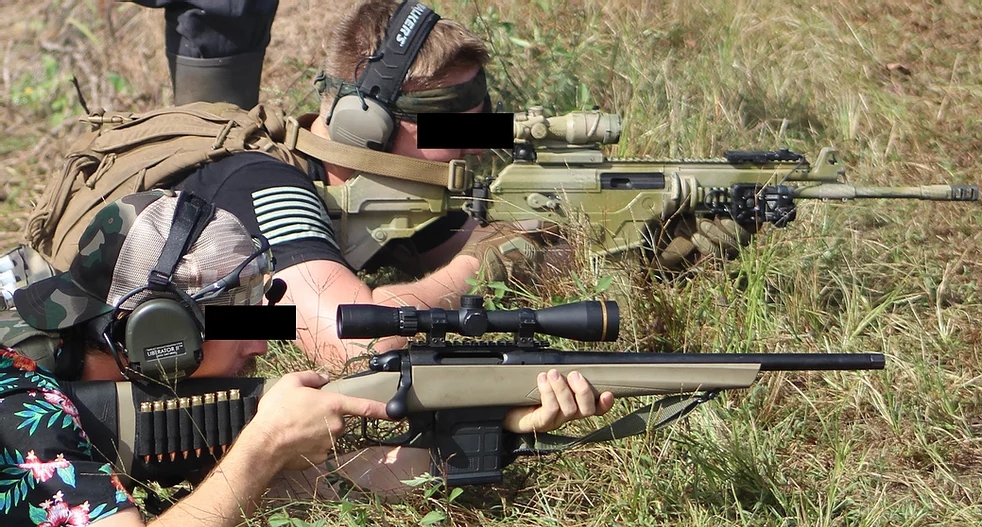
I have a good friend who goes by “BoltBoy.” Solid guy, he also designs and sells some cool Baofeng accessories. One day BoltBoy went to a precision rifle competition. Active duty and former scout snipers were among the competition, most of them sporting some very expensive weapons. One shooter even had a weather meter that was digitally slaved to an electronic DOPE card. The average shooter in this competition had sunk $3-4000 into their rifle setups.
Some of these setups are worth up to $6,000
Meanwhile, BoltBoy shows up with his trusty .308 Remington 783. With factory M80 ball ammo, a cheap .22LR scope and a few other accessories, he had invested $600 into his setup. This drew some friendly banter and jokes from the other competitors, who brushed him off as a first-timer who would eventually learn that he needed better equipment.
BoltBoy placed 2nd overall that day, stunning everyone and forever earning his nickname. He did well because he took his budget rifle and trained like hell with it. He knew the basic principles of bullet drop, wind calls, and he new how to do it with his rifle and optic. If you put in the work to get proficient, your equipment can do a lot more for you than you think.
BoltBoy’s Rifle
Realistic “Good Enough” Solutions
The social media “gun community” and “tactical community” are full of people who spend a ton of money on X item and then try to make themselves feel better by shaming everyone else with less expensive gear. This self-indulging trend is counter-productive, and I recommend avoiding these people/groups like the plague. The simple truth is that sometimes the cheaper solution is good enough to get the job done.
That said, it is possible to spend too little. You don’t want something that will break the first time you use it, and the “budget” option may not grant the capability you thought it did. Today I will briefly discuss how to find the balance between cheaping out and over-spending.
The Principle of Diminishing Returns
Too many people think that they need to buy the most expensive gear to become proficient. Unfortunately, this is reinforced by flannel-clad influencers who push whatever products their sponsors tell them to. While it’s true that the expensive gear probably works better than the cheaper options, chasing the unicorn of the “best option” can be counterproductive. This is especially true for people who are new to buying tactical gear.
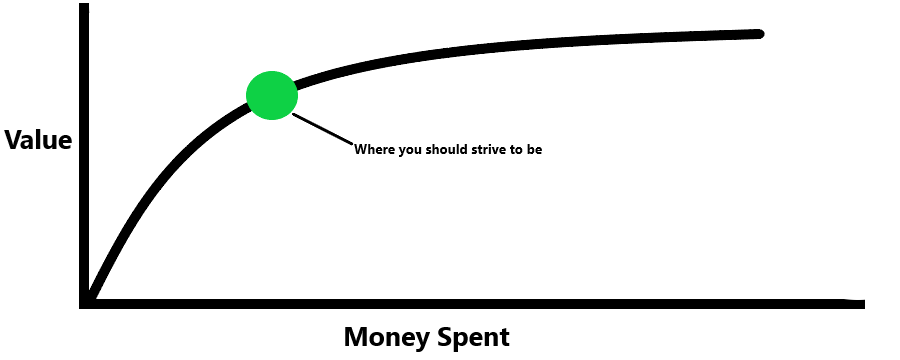
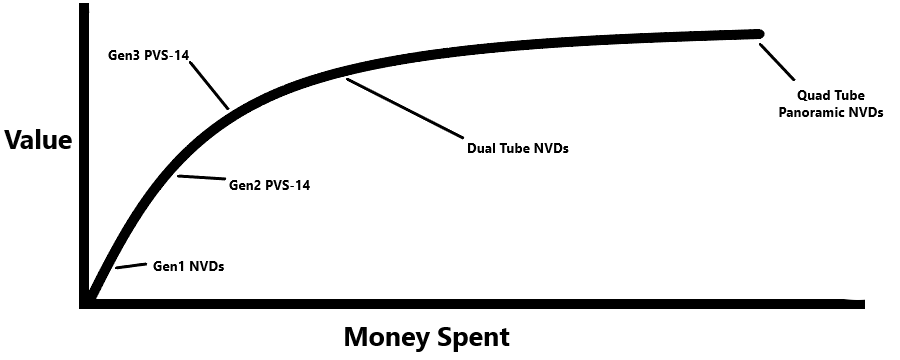
You see, as you increase the price of any type of item, the returns diminish the higher you go. Eventually you reach a point where the value gained is not worth the added price, even though there is greater value in the more expensive option. This is illustrated by the graph below.
The Principle of Diminishing Returns
Striving for Capability
I don’t look at gear in terms of what it can “do for me.” Instead, I evaluate gear based on what it can enable me to do. This keeps me from falling into the trap of thinking that I can replace skills with stuff. At the end of the day, I am the operator, and all that matters is my ability to use my stuff to accomplish my mission. The way I purchase gear is I set a goal for a capability that I want to have, and analyze exactly what equipment I need to support that capability.
Let’s take night vision for example. I approached my night vision purchase desiring the capability to see and engage targets at night up to several hundred meters away. My own eyes are not up to the task, so I recognized that I needed a device that enabled this capability.
There are a lot of night vision devices (NVDs) on the market, so I set about weighing the pros and cons of each one. Gen1 NVDs were the cheapest at around $300, but couldn’t see far enough clear enough. Gen2 PVS-14s were next up, providing acceptable clarity for $2800. Gen3 PVS-14s, however, offered an even clearer image for only $200 more. Finally, dual-tube NVGs were the last realistic option, offering the same clarity as the Gen3 PVS-14 but in both eyes for over double the price. My estimate of the value vs. return of each of these devices is reflected on the chart below:
I determined that the Gen3 PVS-14 was the best value for my money while providing the capability I desired. Would dual tubes be better? Yes, but for me the benefits of dual tube NVDs weren’t worth the price increase. My single-tube PVS-14 gives me the capability I wanted, and that choice saved me about $5,000 to spend on other things.
Conclusion
As with all things in life, there is a balance to be had. You don’t want to spend too much for minimal returns, and you don’t want to buy garbage either. The best advice I can give you is twofold. First, ignore the gear queers and the snobs who say you aren’t spending enough money. Most of them don’t even train with their gear beyond the flat range.
Second, ensure that whatever you buy gets rigorously tested. Take your ruck on a backpacking trip. Low crawl 50 yards with your chest rig. Go to a training class. If you intend to trust your life and your families’ lives to it later down the road, you should torture test it now and find its breaking point. I would rather have an expensive item fail during a realistic training event and spend more money on something better than have it fail when I need it most.
You have a finite amount of resources. Be efficient with how you spend your time and your money. Define the capabilities you seek and determine for yourself the best choice for your budget. If you would like more guidance with purchasing your rifleman’s kit, read my guide on the topic.
Originally posted on American Partisan on April 27, 2021
I started this series, TDG (Tactical Decision Game) Tuesdays, to get you more in the mindset of how you could potentially handle a given tactical scenario with a limited amount of resources and manpower. My goal is to get you to read these scenarios and think about what resources you have available, what sort of scenarios you might encounter, and what gaps you need to fill in your equipment/training.
I will use the basic 5-paragraph operations order format, or SMEAC, to present the scenario as follows;
Situation: Disposition of all friendly, hostile, and adjacent forces. Mission: What we are trying to do. Execution: How we are going to do it. Admin & Logistics: Who/what is getting where and how. Command & Signal: Who is in charge and how they are communicating.
TDG 8: Retrans Raid
Situation: Guerrilla warfare scenario. Chechnya, Spring 1995. The Russian army has successfully taken the capitol city of Grozny. Chechen rebels are retreating to the mountain areas, and the Russian army is slowly and methodically pursuing them. You are not a member of the semi-conventional rebel forces, you are part of a small “battalion” (actually squad-sized element) of local militia. You are a team leader within your “battalion.”
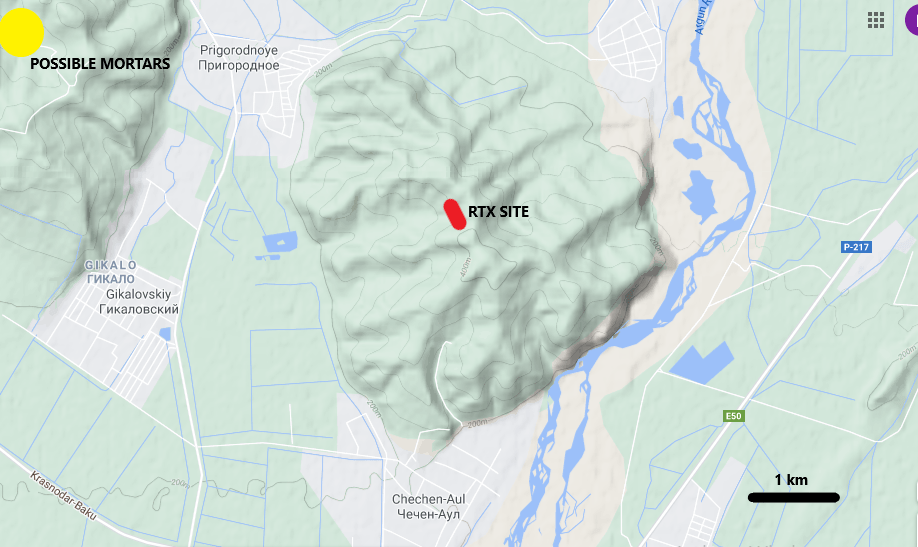
OPFOR Situation: The Russian army has pushed large amounts of its forces through your AO. However, the Russian Brigade Operations Center is still located many miles further back, beyond the range of normal VHF radios. This has forced them to set up a retransmission (“retrans” or RTX for short) site, which is a manned repeater station, to extend their communication range.
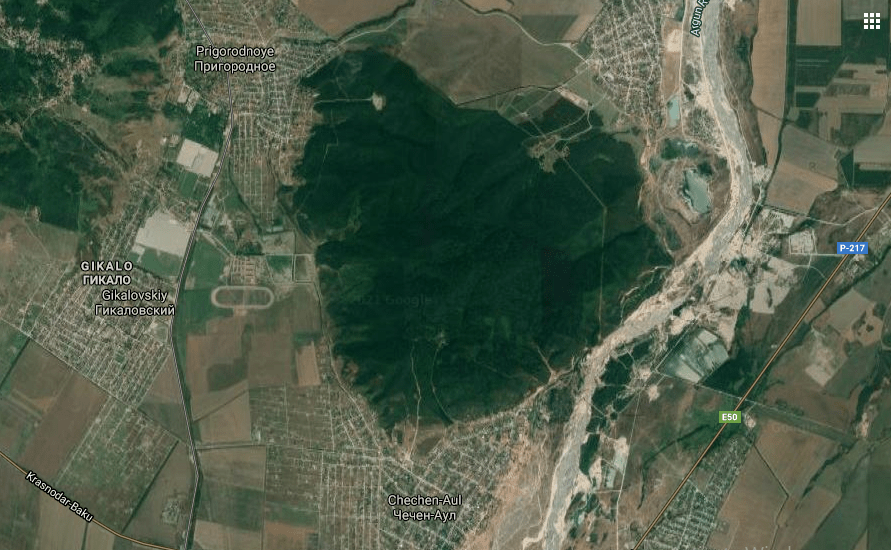
RTX Site: The site is located on the ridgeline at the location marked on the map. The antennas, which are skylined, tipped you off to its presence. Upon further observation through binoculars you can tell that they have 2x BRDM-1 armored scout cars to carry all the necessary equipment. You know that the maximum seating in a BRDM is 4, so you estimate between 6 and 8 enemy soldiers occupy the site.
Other units: The Russians have shown a lack of aggressive patrolling in the area, and you have not seen any Russians within at least 5km in the last week besides the RTX site. Your cousin Shamil says he thinks he saw some Russian mortars across the valley, but you’re not sure how accurate that is.
BLUFOR Situation: Your “battalion” has no antitank weapons, so you allowed the main Russian armored force to pass by unmolested. Rather than leave your village to fight in the mountains, your group has decided to stay in place to care for your families, while causing a nuisance for the Russians in their rear areas. You are a team leader, in charge of 4 other volunteers
Independents Situation: There are no adjacent friendly forces that you are aware of, all other rebels passed through a week ago heading for the mountains. There are no civilians near the RTX site.
Mission: Assault and neutralize the RTX site in order to hinder the Russian commander’s C2 capabilities, resupply ammunition, gain intelligence, and demoralize enemy troops.
Execution: Up to you. Your “battalion” commander has directed you to lead your team in this task.
Admin & Logistics: You have the following resources:
5 fighters, including yourself
4 AKMs with 3 magazines each
1 PKM machine gun with one 100-rd belt of ammo
1 mosin-nagant sniper rifle with 4x PU scope. You will need to take rounds from the machine gun belt to feed this rifle.
4 hand grenades
Command & Signal: You are in command of your team, operating alone. You have no electronic communication devices, so any non-verbal communication will need to be analog.
In this week’s TDG, you will notice that you have pitifully little ammunition. This was a common struggle for the Chechens, and got even worse as the war dragged on. In situations like this, you must avoid lengthy engagements at all cost. This can be accomplished with one or a combination of the following: stealth, speed, violence of action, accuracy, and fire discipline.
It is also worthwhile to note that, while you do not have night vision in this exercise, the Russians you are fighting likely don’t either. At this point in the war, Russian troops had very few night vision devices, and probably wouldn’t waste them on a RTX site.
Feel free to post your answers and discuss. Stay tuned for the recap next Monday!
In the previous Tactical Decision Game, we looked at the battlefield from the perspective of the enemy commander. In TDG 7: The Other Side of the COIN, we return to our own perspective; the guerrillas. I ran the TDGs in this order to show how considering the enemy’s perspective can help you defeat him.
Again, this being a more generalized TDG, I will cover a few of the trends and close with the learning objectives for this week’s game.
Relocate the Camp
Drawing from last week’s observations, we conclude that the enemy commander may notice our trend of operating in the NE portion of the county. Since he is likely to focus his search efforts in this area, we would be wise to pick up and move elsewhere.
Shift focus to ANTIFA
Most readers suggested targeting the PLA’s proxy militia (ANTIFA, in this case) instead of the PLA itself. This makes sense for a number of reasons.
The soft targets we’ve been attacking (convoys and checkpoints) will probably harden, and be more difficult to hit in the future.
Since the enemy is using their proxy forces to brutalize/police the civilian populace, we would likely gain reputation (and thus support) with the citizenry by providing protection from the thugs. Bonus points if we catch them in the act.
They carry less firepower and have less training than the PLA regulars.
Their knowledge of the local area and people makes them especially useful to the PLA as guides and HUMINT resources. Killing them denies the enemy this resource.
The main difference was how to conduct the attack, ambush or attacking their camp. Attacking the ANTIFA camp is probably a bad idea because it is right next to the PLA’s base of operations. An enemy QRF would be right on top of us immediately, and we would probably be annihilated. It is better to engage the enemy as far away from their FOB as possible to slow their reaction time.
Split into smaller cells
Some readers suggested splitting our platoon of guerrillas into squad/team-sized elements and dispersing throughout the county to conduct independent operations. The pros to this solution are as follows:
We don’t have “all of our eggs in one basket” so to speak. If the enemy compromises one cell of 5 guys, operations continue elsewhere in the county. This is better than the enemy discovering and destroying all 30 of us in one stroke.
A squad of 5-10 men is much easier to hide than a platoon of 30.
The con to this solution are that we can no longer conduct large attacks on sizeable enemy targets. However, since the enemy is about to improve their security posture, that may not be possible anyway. Perhaps it is better to conduct harassing sniper attacks in 3-6 different areas at once, draining enemy resources and spreading them thin across the entire county. Death by a thousand cuts is still death.
Reduce EW footprint
Given the enemy’s SIGINT capabilities, it is wise for us to reduce the amount of radio traffic we put out. This goes hand-in-hand with the possible decision to split into smaller groups that operate independently. A 5-man team doesn’t need to radio anybody to operate.
There are other ways to reduce our electronic warfare (EW) footprint to mitigate the enemy’s SIGINT assets, too many to discuss in-depth here.
Learning Objective: Wargame the other side
I wrote TDGs 6 and 7 to get you to see how putting yourself in your adversary’s shoes can give valuable insight for your decision making. Understand that you are fighting living, thinking men. Men who will adapt and change their tactics to find new ways to kill you. Once you understand this, it is clear that you cannot become set into patterns of operating. Patterns make you predictable, and being predictable is a death sentence.
Wargame the enemy’s position. Consider what their objectives are, what tools they have, and how they will try to use them. You will need to change your tactics eventually. It is better to proactively change your tactics up by anticipating the enemy’s actions than to reactively change after the enemy does. He who adapts first stays alive for the next round.
Bonus Lesson: AI on the Future Battlefield
One reader, “Silverfox”, ran this TDG through ChatGPT and posted the answer that it spat out. The resulting answer was not very specific, but it wasn’t bad either and still reflected several of the points I made here.
This leads to a somewhat disturbing question. How will AI impact future battlefields? Will it be used to advise commanders on their decisions, or will it make decisions itself? More importantly, if this sort of thing can be done with open source AI, what has already been developed behind lock and key by our military and others? We’ve already seen AI implemented in combat by an Israeli drone swarm in 2021. What else has been fielded and in what capacity?












 Von Steuben Training & Consulting