TDG 15: The Best Laid Plans

Originally posted on American Partisan on June 28, 2022

A TDG is a Tactical Decision Game, a mental wargaming exercise designed to get you practice making tactically sound decisions in a hypothetical scenario.  The ability to make sound and timely decisions based off incomplete and imperfect information is a critical skill to have, especially as a team leader.

You will be given a scenario, confronted with a tactical problem, and given a time limit to think about and write out your answer.  The time limit is to simulate the pressure of a real-world tactical decision, where you must quickly assess the information you are given and come up with the best answer you can.  Then comment below with your answer so you can discuss each others’ solutions.

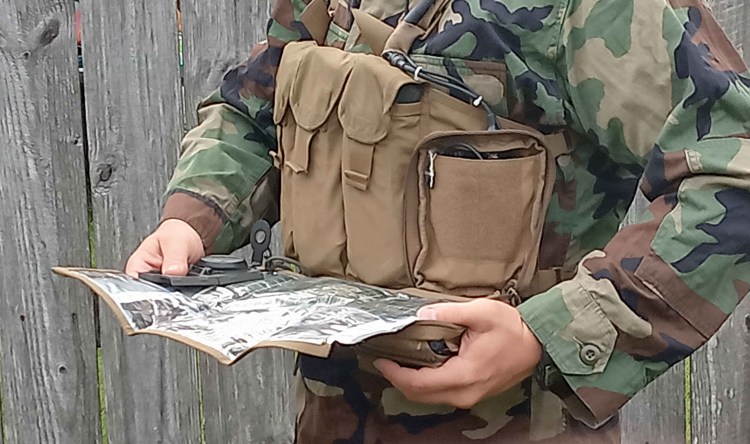
Condor map pouch, my “Team Leader Pouch”
Affiliate link: https://amzn.to/3KenfDS

TDG 15: The Best Laid Plans

2 months into foreign occupation.  The PLA (Chinese Army) have been invited in by the governors of several states as “peacekeeping” forces to restore order to the region. The National Guard and US military have been ordered to stand down and cooperate with the PLA, who came in as “UN Peacekeepers.”  From the first day that Chinese troops marched ashore they began taking sniper fire.  What followed has been a full-on guerrilla war against the occupiers conducted by militias, rogue military units, and criminal organizations.  Still, due to sheer numbers of troops and equipment, the PLA has managed to make slow, steady progress expanding their area of control.

YOU are the commander of a local Jäger force, a squad-sized element consisting of 13 men including yourself, operating just outside of the enemy’s zone of control.  The terrain in your area is mostly flat, forested with dense but navigable undergrowth.  You receive a tip from a local civilian that a PLA reconnaissance patrol is operating in your area.  The SALUTE report for the enemy is as follows:

  • Size: 10 men
  • Activity: Inserting via helicopter and patrolling on foot South towards the town of Hidalgo
  • Location: 934 385
  • Uniform: PLA Infantry
  • Time: 0709 Yesterday
  • Equipment: 9x QBZ-191 rifles, 1x Type 67 GPMG (Chinese PKM), rucksacks with entrenching tools visible, 2x ghillie suits, helmet-mounted night vision

You have good intelligence on their probable return route, so you decide to ambush them on their way back to an LZ for helicopter extraction.  You break your 13-man squad into the following teams:

  • 1x 5-man squad all armed with AR-15s and 2x NVGs
  • 1x 5-man Machine Gun squad with the following:
    • 2x M240B LMGs
    • 3x AR-15s
    • 3x NVGs
  • 1x 2-man scout team with AR-15s and 1x NVG
  • Yourself, with an AR-15 and NVG

You give the following order to your men:

“We believe the enemy will patrol North towards a likely location for an LZ for their extraction tonight around midnight.  Their most likely route is through the woods East of Cinderville, handrailing Patriot Rd.  At 2000 the Scout team will push out to 9410 3826 to establish an LP/OP for early warning of the enemy’s advance and to confirm their route.  We are going to set a baited L-shaped ambush in this clearing here.  1st Squad will open fire with a few rifle shots when the enemy enters the clearing.  They will likely form a skirmish line to assault through what they think is a small team.  When they do, 1st squad is to go to ground and cease firing.  When the enemy gets into the kill zone, 2nd Squad will open up on them with enfilading fire from the machine guns.  When the enemy is destroyed, 1st team will become the assault element and sweep through the kill zone to finish them off.  After that we will conduct TSE (Tactical Site Exploitation) and regroup.  We will occupy our positions no later than 2100”

The Plan

You issue each team leader a radio.  Since you have time you conduct plenty of rehearsals to really nail down the scheme of maneuver and all signals.  At 2000, as planned, your scout team departs to establish their LP/OP, and at 2045 your force reaches the ambush site.  Just as you are about to set in to your ambush positions, however, your scout team calls you over the radio.

Got radios? Be a lot cooler if you did.
Affiliate link: https://amzn.to/3JT5xnR

“They’re patrolling past us now!” the scout team leader whispers over the radio.  “They’re on the road, and they’re moving pretty fast in a staggered column.”

The enemy is early and moving quickly.  You had suspected that they might use the road and had a backup plan to relocate further north if that happened.  However, you weren’t expecting them to be moving this quickly.  It would take you 5 minutes to get there and the enemy will be at your position in about 2 minutes.

In a time limit of 5 minutes, draft the frag order that you would issue to your squad.  Write down any special instructions you would give to your men and explain why you chose to do what you did.

Reality

TDG 14 Recap and Analysis

Originally posted on American Partisan on June 15, 2022

Another tough situation with no perfect options, TDG 14: Personnel Recovery hit you with ethical decisions as well as tactical decisions.  We have an imperfect plan cobbled together without force multipliers, an enemy with unclear capabilities, potential compromise, and on top of all that we have something of a moral commitment to our action.

Due to the situation we have a limited set of options available to us.  It is, however, not as limited as some readers may think.

Option 1: Proceed with the attack as planned

We do not, after all, know for certain that the drone is 1: controlled by the hostile force, or 2: able to PID us.  Although the chances are high that the drone is looking down at us, it’s entirely possible that we are sufficiently covered or camouflaged enough that it hasn’t been able to identify a threat yet.  If we wait the remaining 5 minutes we may see if the enemy goes on alert.  This course of action seeks to get more information before we proceed, cautiously watching for a response from the enemy.

The only downside to this course of action is that if we are compromised, the element of surprise is lost.  We will have surrendered the initiative to the enemy and we will be forced to react to their actions rather than making them react to us.

Option 2: Begin the attack early

This course of action assumes that we are compromised and seeks to seize the initiative before the enemy can react.  We can start by sniping the lone guard, shooting the drone, maneuvering to a different position, or any combination of the three.  The point is that we take action to deny the enemy a timely response to our discovery.  Depending on what we do or how we do it, we may even get the NPT guys to help us by opening fire early.

We must be very careful here, however.  Our lack of communications is an obvious limiting factor.  We do not have radios and there is no time to send a runner.  Thus we must proceed in such a way that our actions communicate our intent to the NPT guys.  There are other ways we can communicate as well, such as smoke signals (not a joke, color-coded smoke grenades are incredibly versatile), flares, or whistle blasts.  Just because we have no radios doesn’t mean we have no comms.  Hopefully we arranged these forms of signal in advance.

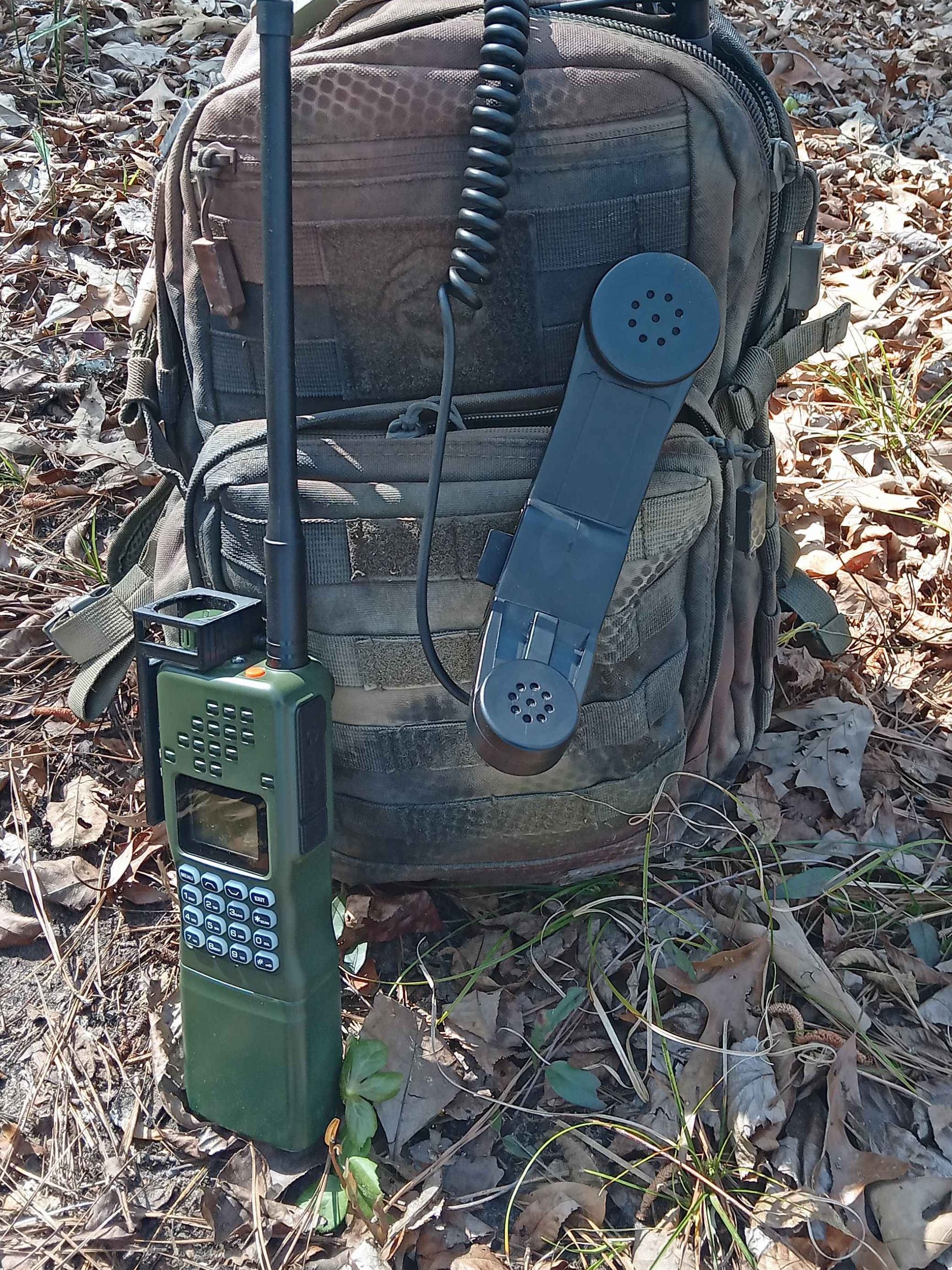
Tactical Radios would have been a great help in this scenario. Afilliate link: https://amzn.to/3Zk9HLe

Option 3: Withdraw

If we assume that we are compromised we may decide that the risk to ourselves is too great, and we pull back.  There is no need to stop the NPT from opening fire as planned; if anything they’ll be covering your retreat without knowing it.  Once you’re back at the ORP you can send a runner to the NPT to tell them to abort.

This is the safest route we can take for us.  Unfortunately, there is the problem of Kelly.  Withdrawing under observation will no doubt lessen the chances of a rescue in the future.  The enemy could use that time to strengthen their guard, dig fortifications, or relocate entirely.  Even if we are able to come back say a week later to try again, what do you suppose would happen to Kelly during that week?

Conclusion

There come times when the tactically correct decision may not be the right decision to make.  The facts of this scenario require you to make a decision that is not only tactically sound, but ethically sound.  If our ethics/morals require us to commit to this action, we may be forced to accept a greater amount of risk than we usually would.  On the other hand, emotionally accepting a ridiculous amount of risk on an action that is unlikely to succeed may be worse than doing nothing.  In the end, the best course of action depends on your assessment of the risk involved and whether it is worth the chance of success.  I was pleased to see some readers debating the moral issue, as that was mostly the point of this exercise.

A secondary point I intended to convey was that suppression by drone is a real thing.  The drone in this scenario is not armed, and yet its very presence forces us to change our plans.  Keep this in mind if you have a small drone in your inventory, it can be a psychological weapon as well as a practical tool. I cover this topic in the Jäger Course.

Affiliate link: https://amzn.to/3GhIaUn

TDG 14: Personnel Recovery

Originally posted on American Partisan on June 14, 2022

A TDG is a Tactical Decision Game, a mental wargaming exercise designed to get you practice making tactically sound decisions in a hypothetical scenario.  The ability to make sound and timely decisions based off incomplete and imperfect information is a critical skill to have, especially as a team leader.

You will be given a scenario, confronted with a tactical problem, and given a time limit to think about and write out your answer.  The time limit is to simulate the pressure of a real-world tactical decision, where you must quickly assess the information you are given and come up with the best answer you can.  Then comment below with your answer so you can discuss each others’ solutions.

TDG 14: Personnel Recovery

Week 6 into WROL.  You and your MAG have been living peacefully at your homestead, but last week “Kelly,” the wife of one of your MAG members was kidnapped when she left the homestead alone to check on her sister’s house.  Local sources and your own reconnaissance have led you to the farmhouse where she is being held in the basement, guarded by a small garrison of thugs.  Your MAG has enlisted the help of a nearby Neighborhood Protection Team (NPT) to raid the compound to recover Kelly.

Your MAG has a 6-man squad and the NPT has committed their 10-man QRF to support you.  Since none of you have night vision, you have decided to conduct the raid in daylight.  YOU are the leader of your 6-man squad, which is acting as the assault element.  The NPT is acting as your support-by-fire element for the raid.  You estimate the enemy strength at around 8-12 thugs guarding the compound, with at least 3 awake on guard duty at any given time.

You do not have radios, so you plan to synchronize your actions to a time.  The plan is for the NPT to open fire from the North at 0700 while your squad closes on the farmhouse following the treeline from the East.  After two minutes, the NPT will cease fire while your squad closes the last 50m to the farmhouse to clear it and rescue Kelly.  “Just make sure you’re in position on time,” the NPT squad leader tells you.  “If you’re not in position by the time we cease firing, your approach will be uncovered and very dangerous.”

At 0500 you begin the foot patrol towards your objective.  When you get to the objective rally point (ORP) at 0630 your groups split up and begin their final movement into attack positions.  You’re moving very slowly to avoid making noise.  About halfway to your assault position your pointman throws up a the hand/arm signal for “FREEZE!” and points up.  You look and notice a small quadcopter drone flying North to South over the objective.  Cautiously, you lead your patrol a little further into the tree line to evade the drone.

Affiliate link: https://amzn.to/3JvEbEc

You make it to your assault position and everyone gets into the prone to wait for 0700.  So far you have only observed 1 enemy outside the building on guard.  At 0655 you hear a high-pitched whine and look up.  The drone is back, but this time it’s hovering about 200ft above you.  Does it see you?  So far you don’t notice any change in behavior from the guard or any activity from the house.  What do you do?

In a time limit of 5 minutes, decide how you will handle this situation.  Write down any special instructions you would give to your men and explain why you chose to do what you did.

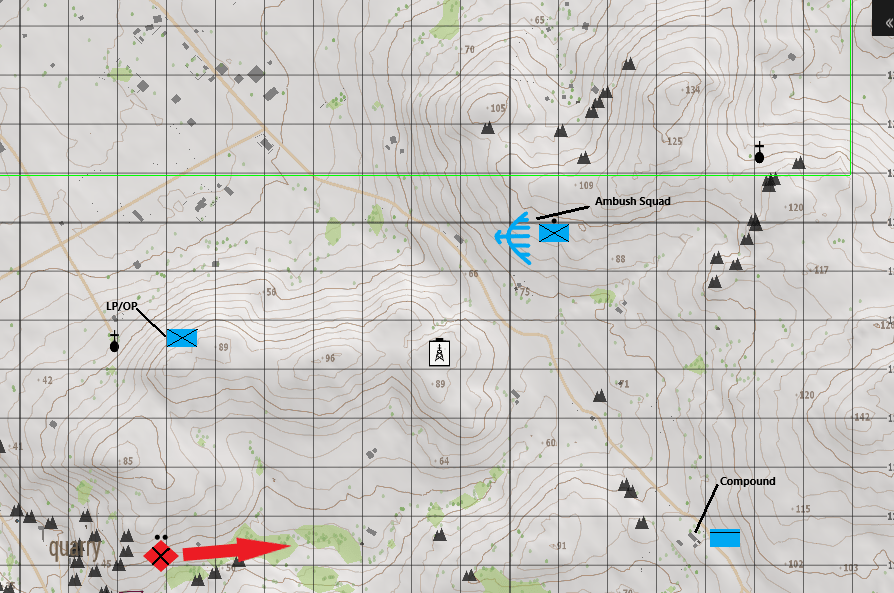
Grid squares represent 100m.  Map created using Hawg-Ops.com

TDG 13 Recap and Analysis

Originally posted on American Partisan on June 1, 2022

TDG 13: Quick Reaction Force presented an urgent scenario that still required careful planning.  There was a healthy mix of known, suspected, and unknown factors at play, which can be confusing to juggle.  Let’s start with what we do and don’t know for certain:

We KNOW that there are at least 5 enemy at the objective.  We KNOW that there is a group of 14 refugees unaccounted for somewhere in the county.  We DON’T KNOW if this is the same group.  It could be larger or smaller.  However, depending on how good our surveillance is of the county line, it could be unlikely that a group larger than 14 managed to slip through unnoticed by either our own guys or a neighbor who could report it to us.  Thus we can estimate the enemy strength to be 5-14.

The mission is clear, we need to respond to Jared’s call for help swiftly.  Our struggle is to find the solution that balances urgency with the risk to our people.  There are infinite possibilities here, so I will discuss some planning considerations for this TDG rather than list a set of possible solutions.

The drone

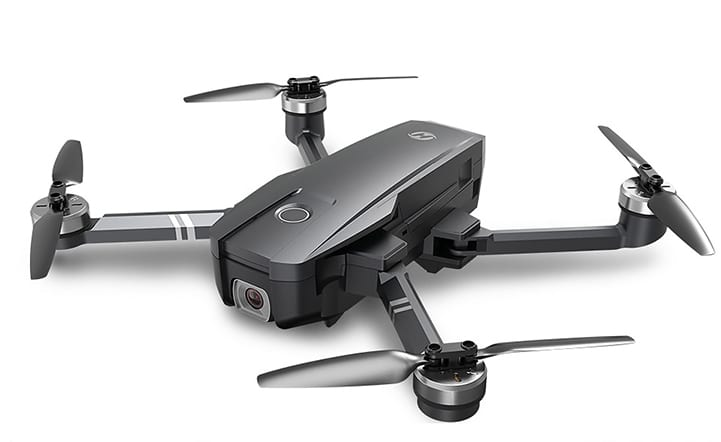
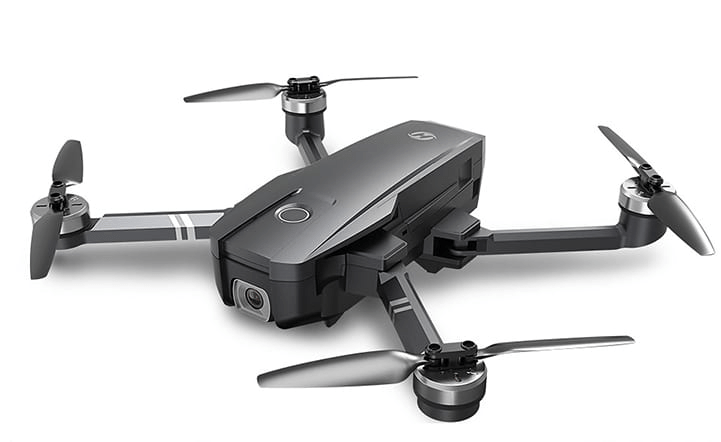
Affiliate link: https://amzn.to/3JvEbEc

While many readers proposed using the drone in some way, there were a few creative uses such as for a distraction.  There was some debate as to how to best use the drone to our advantage, with good reasoning for each possible use.  However, an argument could be made against using the drone at all.  Reader American Yeoman stated, “On the one hand I think the drone will not be very useful in these circumstances and just a distraction with limited man power. I don’t want to get ‘tech fixated’.”

One could argue with merit that since the drone won’t see very much, and even risks exposing your presence (thus losing surprise), the risk-to-reward ratio does not justify using such an asset.  It is easy to get so hung up on a force-multiplier that you’re eager to use it without stopping to ask if it’s suitable for the task at hand.  I can’t tell you how many times I have witnessed giddy officers with new toys do exactly this.  Just because I give you a resource in a TDG does not mean that you need to use it.

The enemy

We may suspect that this is the group of 14 refugees that was spotted yesterday.  If so, and we only know of 5 shooters, we are faced with the troubling question of “where are the other 9?”  Several readers suspected that they might be pulling security for the muscle at Jared’s house, maybe even waiting to ambush the QRF.  This is possible, especially if someone in the OPFOR group has a handheld CB radio and heard the call for help.  They may even be a different group that has been in our area for a while undetected, observing patterns of life.  And maybe, just maybe, they aren’t outsiders at all, just some ne’er-do-wells from within our county.

The bottom line is that we must be wary of the possibility that the OPFOR knows about the QRF and may have prepared for it.  For this reason it would be unwise to drive right up to Jared’s driveway, as we risk getting ambushed while mounted in soft-skinned civilian vehicles.  Several readers planned to dismount a ways away from the objective and finish the approach on foot.  This is smart to do.  Even if there is no ambush, you will more likely surprise the enemy if they don’t hear truck engines approaching.

One last possibility to consider is that we don’t know how many people in the group of 14 were in fighting shape.  Some could be women, children, or elderly and incapable of fighting.  Maybe the 5 Jared reported are the only military age males of the group.   They might not actually be a squad-sized group of thugs, but a roving band of desperate refugees.  Still, it is smart to err on the side of caution.

The approach

Perhaps the biggest point of variance in answers to this TDG is how we approach the objective after we dismount.  There were various schemes of maneuver planned, most of which involved multiple groups approaching from different directions to get as good a picture of the enemy situation as possible.  We must be careful here, because there is a very real danger of friendly fire in the dark.

This scenario takes place at night, and we have a very limited number of NVGs.  This is a very likely scenario.  Most “bad guys” prefer to do their dirty deeds under cover of darkness, so the likelihood of you dealing with a situation at night is pretty high.  Thankfully, there are ways to reduce the risk of friendly fire at night.  “After all,” you might say, “we have radios to communicate with each other!”  Well, as we saw in TDG 12, comms can (and often do) fail you when you need them most, so this doesn’t mitigate the risk much.   We can also mitigate risk through rigorous training as a group, but after only 5 weeks into WROL it is unlikely that our group has much practice working together.  Even if we had been training together for a while, for an impromptu mission like this with no time for rehearsals, the risk of friendly fire would still be very high if we split our forces early.

Conclusion

All told, this is a hairy situation that could go any number of ways.  The lack of intel and lack of time mean that we need to come up with a simple plan that still gives us as much flexibility as possible to account for the unexpected.  However, it is okay to take some risks if you believe that the reward justifies it.  As long as you analyzed your options and  decided that your risks were worth taking, you accomplished the intent for this exercise.

Again, thank you to everyone who played this TDG.  I won’t be able to post one of these every week due to work and training events, but I will endeavor to post one a week as often as possible.

TDG 13: Quick Reaction Force

Originally posted on American Partisan on May 31, 2022

A TDG is a Tactical Decision Game, a mental wargaming exercise designed to get you practice making tactically sound decisions in a hypothetical scenario.  The ability to make sound and timely decisions based off incomplete and imperfect information is a critical skill to have, especially as a team leader.

You will be given a scenario, confronted with a tactical problem, and given a time limit to think about and write out your answer.  The time limit is to simulate the pressure of a real-world tactical decision, where you must quickly assess the information you are given and come up with the best answer you can.  Then comment below with your answer so you can discuss each others’ solutions.

TDG 13: Quick Reaction Force

Week 5 into WROL.  You live in a very small town of 200 people in an area surrounded by forested, hilly terrain with scattered farms.  Law enforcement in your county has become non-existent with the Sherriff’s department tied up maintaining order in the county seat.  The people of your town have banded together for your security and by this time have a set schedule for everyone to take turns on guard duty.  While the town itself is not self-sufficient, your mayor has made trade agreements with neighboring farmers and similar groups with the agreement to also provide security for the area with security patrols and a Quick Reaction Force (QRF) to respond to any lawlessness that may ensue.  This is seen as an invaluable service since the Sherriff is unwilling to risk his deputies by sending them outside his secure perimeter.

A large part of your security work has been locating and intercepting groups of refugees from the state capitol and directing them to alternate routes around your area of control.  In the last week your security patrols and observation posts have reported 3 large groups of 10 or more refugees that your QRF has had to intercept and turn back.  Due to these groups being large, and some of them armed, your QRF has been increased in size recently from 10 to 20 men who can use vehicles, although you try to conserve your fuel by responding on foot to closer threats or small groups.

You are the guard shift leader standing by on QRF duty today.  When you take over the watch at 0800, the man you relieve tells you that yesterday they had tried to respond to a group of 14 people on foot that your observation post spotted, but the QRF could not locate the group when they arrived.

At 2017, just after sunset, the alarm signal sounds to summon the QRF to the town’s TOC.  Upon arrival, you are briefed that a nearby farmer, Jared Hegel, called on his CB radio to report that he and his family of 4 are under attack at his house by at least 5 men who are demanding that he give them all the food and liquor in the house.  When he refused they began firing on the house and wounded Jared’s 19 year-old son in the arm.  Although he cannot see the shooters, he does know that most of the gunfire is coming from the front of the house (East side).

The QRF is tasked by the mayor with responding to Jared’s house to save him and his family.  Your QRF consists of the following:

  • 3x 6-man squads each with:
    • 1x NVG
    • 5x assault rifles (mixed types)
    • 1x scoped .308 rifle
    • 1x handheld VHF/UHF radio
  • 3x Pickup trucks (can fit one squad each)
  • 1x drone operator (the drone has a max range of 2km, no night vision or thermals)
  • 1x command vehicle (Jeep with a CB radio)
  • Your personal AR-15, NVG, and handheld VHF/UHF radio
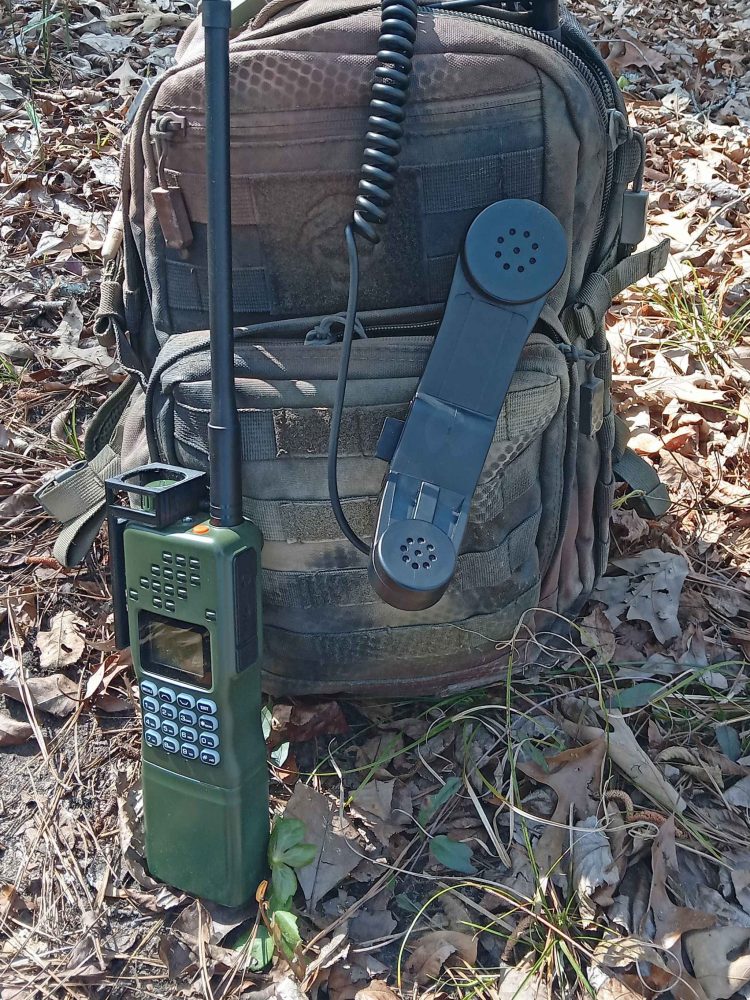
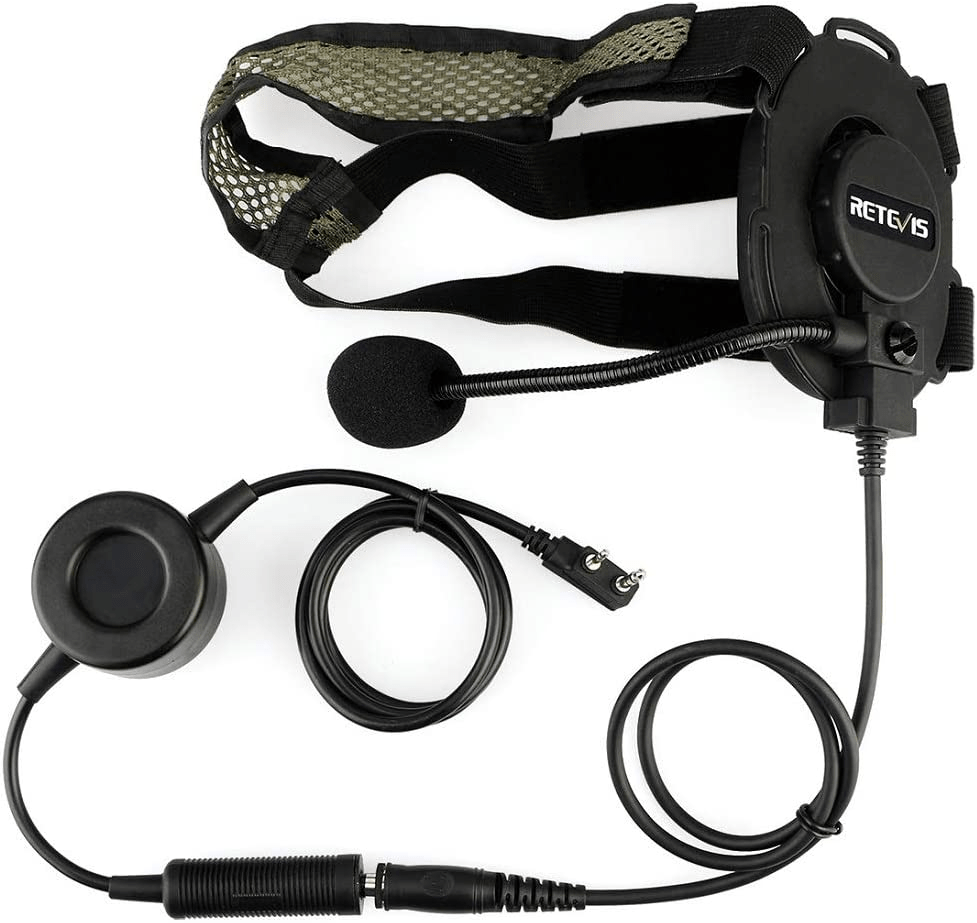
Headset and PTT for Baofeng radios.
Affiliate link: https://amzn.to/3ZyQdUd

The time is 2020.  Weather is clear but windy (10mph from the West).  The moon is a half-moon.

In a time limit of 10 minutes, create a tentative plan for how you would get to the objective and accomplish your mission.  Since there are a lot of unknowns, try to build flexibility into your plan.

The green shaded areas represent evergreen forest with thin undergrowth.

TDG 12 Recap and Analysis

Originally posted on American Partisan on May 25, 2022

In TDG 12: Rock and a Hard Place, you were faced with a pretty messy situation.  An intimidating foe appearing where you weren’t expecting them, orders that restrict your options, and communications went down when you needed them most.  Today I will analyze the situation in depth and weigh the pros and cons of some of your answers.

First, let’s look at the enemy patrol.  Their current path will eventually place them very close to the compound.  We can probably assume that this is a raiding party and not a reconnaissance patrol.  It is unclear whether the enemy knows about the ambush or just chose a more concealed route to their objective.  We must also consider that the enemy we see may not be the only enemy in play.

Obviously the enemy patrol is positioned where it poses a significant threat to not just the ambush patrol, but the compound itself which we left lightly defended.  The compound has the bulk of our supplies, it is a friend’s home, and most importantly our families are there.  We must choose a course of action that provides the best chance of stopping the enemy from taking the compound.

Option 1: Follow orders and sit tight

If there is ever a wrong answer in a TDG, it is usually to do nothing.  If we stay in place and try to sort out the communications failure where we are, odds are good that the enemy patrol will get into a very threatening position to the compound before we can begin to react effectively.  We only have a matter of minutes, and we cannot bet on fixing communications in time to make a difference.  This is a very dangerous situation that demands immediate action to rectify it, so this option is a non-starter.

Option 2: Link up with the ambush squad

Many readers planned to link up with the ambush squad and attempt to bring them south to confront the threat, or at least get them to wheel in place to face SW and engage the patrol when it comes into view.

This course of action is a bit risky.  First, it requires us to approach the ambush position from the direction that they are expecting the enemy, so we’d better have some solid recognition signals in our PACE plan to keep our own guys from shooting us.  Second, we are betting on our ability to reach the ambush squad, tell them about the patrol, and get the whole squad to relocate to better positions before the patrol reaches the compound.  If we fail, the enemy will probably commence their attack before we can intervene.

Even if we are successful, there is a chance that the enemy could still maneuver into dead space south of the hill to the west of the compound, where they are safe from our fires and can still threaten the compound.  Their attack would be interrupted, but not necessarily stopped depending on what they choose to do next.

This course of action is one we would only choose if the risk of this happening was more acceptable than the risk to our fire team if we take more aggressive action independently.

Option 3: Ambush the patrol ourselves

This is the most ballsy approach we can take, but it is not without merit.  We have a very limited amount of time to act, and attacking the patrol as far away from the compound as possible could be more desirable than letting them get closer and risking our families.

User “Greg” said it best; “Don’t worry your command and ambush teams will wake up soon enough and it will be as good a signal as you can send under the circumstances.”  A sudden firefight breaking out from an unexpected direction will immediately alert everyone else that something has gone wrong.  What they do next is out of your control, but it is assuredly better than letting them get surprised by the enemy force.

The obvious downside to this course of action is the risk to ourselves.  We are outnumbered by almost 5:1, and although we have surprise and terrain on our side, we cannot expect to take on these numbers without casualties.  It will take a few minutes for the ambush squad to come to our aid.  Eventually those 15 shooters will see your muzzle flashes and you will come under a massive hail of lead, night vision or no night vision.  Thus, while this course of action gives maximum warning to our friends, it guarantees that our team will take casualties and we could very easily all die.

Option 4: Shoot and scoot

Similar to Option 3, but with a twist.  This option has us harassing the enemy patrol with a couple volleys of rifle fire and then breaking contact over the ridge before they can react and return accurate fire on us.  This will immediately get the enemy to stop their forward movement and react to the ambush, but they are suddenly left without a target.  Realizing that their attack is now compromised, and probably with a few casualties to take care of , the enemy is very likely to abort the attack and return to their holes.

This course of action doesn’t result in the enemy being annihilated, but it does stop the attack on the compound.  As user KBYN said, “We’ll have a chance to make careful plans and slaughter them some other day.”  This course of action also incurs the least amount of risk to our team, as we only present a target for a few moments before vanishing.

Closing points

The main point here is that, in the face of the new information, your old orders were rendered obsolete.  The fact that you have the best picture of the battlefield puts you in the best position to make a decision on what happens next.  Not your squad leader, not the TOC at the compound, YOU.  Small units must empower subordinate leaders to make such important decisions on the fly in the face of new information, or they will miss out on exploiting windows of opportunity before they close.

In closing, I want to thank everybody who took the time to play this game and comment their answers.  There were too many individual answers with creative solutions for me to cover them all, so I just hit the major trends.  In the future, I encourage you to debate each others’ answers in the comments, or ask questions to see why someone else chose to do what they did.  Learning different ways to solve these problems helps us all to add tools to our tactical toolboxes.

And if you do that, you become a little bit more dangerous.

TDG 12: Rock and a Hard Place

Originally posted on American Partisan on May 24, 2022

I started this series called TDG (Tactical Decision Game) Tuesdays, to get you more in the mindset of how you could potentially handle a given tactical scenario with a limited amount of resources and manpower.  I have decided to resurrect this series and write a couple more TDGs for you guys to further hone your decision-making skills.

You will be given a scenario, confronted with a tactical problem, and given a time limit to think about and write out your answer.  The time limit is to simulate the pressure of a real-world tactical decision, where you must quickly assess the information you are given and come up with the best answer you can.  Then comment below with your answer so you can discuss the different approaches together.

TDG 12: Rock and a Hard Place

Week 3 into WROL.  You are a member of a MAG that has been holed up at a buddy’s home in the countryside where the terrain is rolling hills with farmland and patches of forest.  In the last week your security patrols have twice encountered a band of thugs aggressively patrolling the area.  You have heard reports over CB radio that this group is approximately 30 strong and has been scouting out remote farms and conducting raids.  They are equipped with a variety of small arms, and some of the thugs appear to be somewhat competent, likely prior military or LE.  They are known to wear all black clothing as a uniform, so they are easily PID’d.

Yesterday you observed a small quadcopter drone over your compound that flew away to the North when you attempted to shoot it down.  The MAG leadership suspects that you are being scouted for an attack, and decided to send out a squad-sized ambush facing the most likely avenue of approach, the road to the NW.  The ambush squad decides to emplace on the military crest of the ridge NE of the road.  5 men are left watching the compound while you’re away.

You are in charge of a 4-man LP/OP tasked with providing early warning to the ambush squad.  Before you stepped out on your patrol, the ambush squad leader briefed you on your mission.  “Let us know over the radio when you see them coming.  Don’t try to take them on yourself, wait for us to trigger the ambush.”

At 2130 you take your fire team and patrol West to your LP/OP on the ridge facing NW.  You call the ambush team on your radio to let them know you’re in position.  The radio check is broken, but readable.  While you are emplacing your OP, you pause for a second, thinking you might have heard something to your SW.  You send Greg to scout the South side of the ridge while you continue camouflaging your LP/OP.  5 minutes later, Greg comes back out of breath.  “There’s an enemy patrol of about 15 men in the valley due south of us heading East!” he says.  “They all have rifles, and at least two of them are using night vision with IR floods on their helmets.”

“Did they see you?” you ask him.

“I don’t think so, I snuck back here as fast as I could without making noise.”

You immediately grab your radio and try to tell the ambush squad about the enemy sighting.  “Roger- *static* -ready for them.  Remember, don’t shoot until- *static* -ambush.”  is the reply you get.

“Negative,” you say, but through your radio you hear the ambush squad leader talking to his men.  He must have rolled over onto his PTT.  “Hot mic, hot mic!” you try to say, but to no effect.  You attempt to radio the compound but they are closer to the ambush team than you, which means that they are getting “jammed” by the hot mic.

The time is 2240.  Weather is cloudy and the moon is a waxing crescent.  Your team is equipped with the following gear:

In a time limit of 5 minutes, write the fragmentary order that you will give to your fire team.  Comment it below and discuss each others’ responses.  

Each square represents 100 square meters.

TDG Recap: Troop Leading Steps Part IV: Supervise

Previously, I started this new mini-series on the six troop leading steps, abbreviated as BAMCIS.

Begin Planning
Arrange Recon
Make Recon
Complete the Plan
Issue the Order
Supervise

Over the course of this mini-series, the TDGs have been a successive continuation of the same exercise in which you go over the complete planning and execution of a squad-sized raid on an objective, while following the 6 troop leading steps listed above.  In TDG 9, you made an rough plan of action and created a list of Requests For Information (RFIs) that you wanted answered for your final plan.  In TDG 10, you planned and conducted your reconnaissance of the objective to answer your RFIs.  If you sent your recon plan to me, I emailed you back your results, complete with imagery.  And finally, in TDG 11, you used the information from your reconnaissance to finalize your attack plan and draft a 5-paragraph order.  This brings us to the final and most important step in the troop leading process: Supervise.

You, as a leader of troops, are responsible for the ultimate success or failure of those troops.  Therefore, it is your responsibility to ensure that any task you assign is understood and accomplished.  You do this by supervising the task you have assigned and ensuring that every man knows what he is doing and why he is doing it.

One common tool for supervising is Pre-Combat Checks and Pre-Combat Inspections (PCCs and PCIs).  PCCs involve checking your troops’ equipment and appearance before stepping off on a mission.  Check to make sure that everyone has the required equipment, that it is packed correctly, and that all weapons are loaded and serviceable.  It is important that you actually check your guys rather than taking their word for it that they have everything.  Don’t just ask Larry if he has his nvg, have him pull it out and show it to you.  Put your hands on Sean’s rifle and perform a functions check yourself to make sure it works.  This isn’t micromanagement or distrust, it’s another means of redundancy to minimize human error to save lives.

PCIs involve asking your men questions about the operations order to make sure everyone understands what’s happening and how they fit into the big picture.  Ask questions like “What is the casualty handling plan?” “Where is the objective rally point?”  “What is the primary radio frequency?”  Brent 0331 made an excellent comprehensive video about PCCs and PCIs that you should watch.

I want to thank everyone who participated in this exercise.  I was very impressed by some of the plans I received and I did my best to meet your level of effort in my responses.  A special “thank you” to Badlands Rifleman, for posting his detailed recon and assault plans. Over the next few days I will be publishing some of the “homework” that I received along with my feedback, so the rest of you can comment and discuss the plans that were submitted.  The first one will go up later today. Tomorrow we go back to the normal TDG format. 

If you’d like more practice developing skills to be an effective small unit leader, come out to a Team Leader Class.  The next one is March 24-25 in NC, see you out there.

How to Add an AK Bayonet to Your Gear

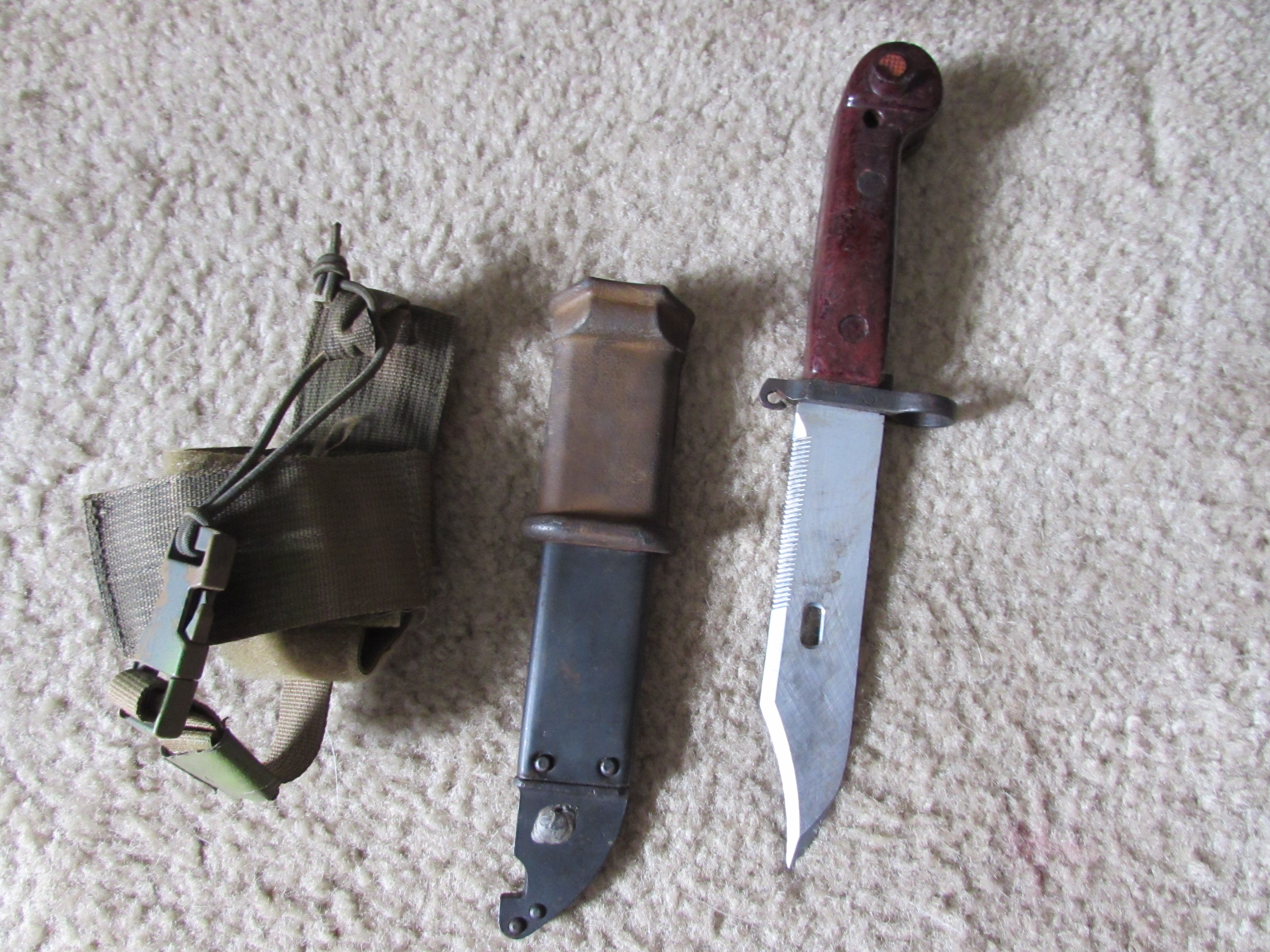
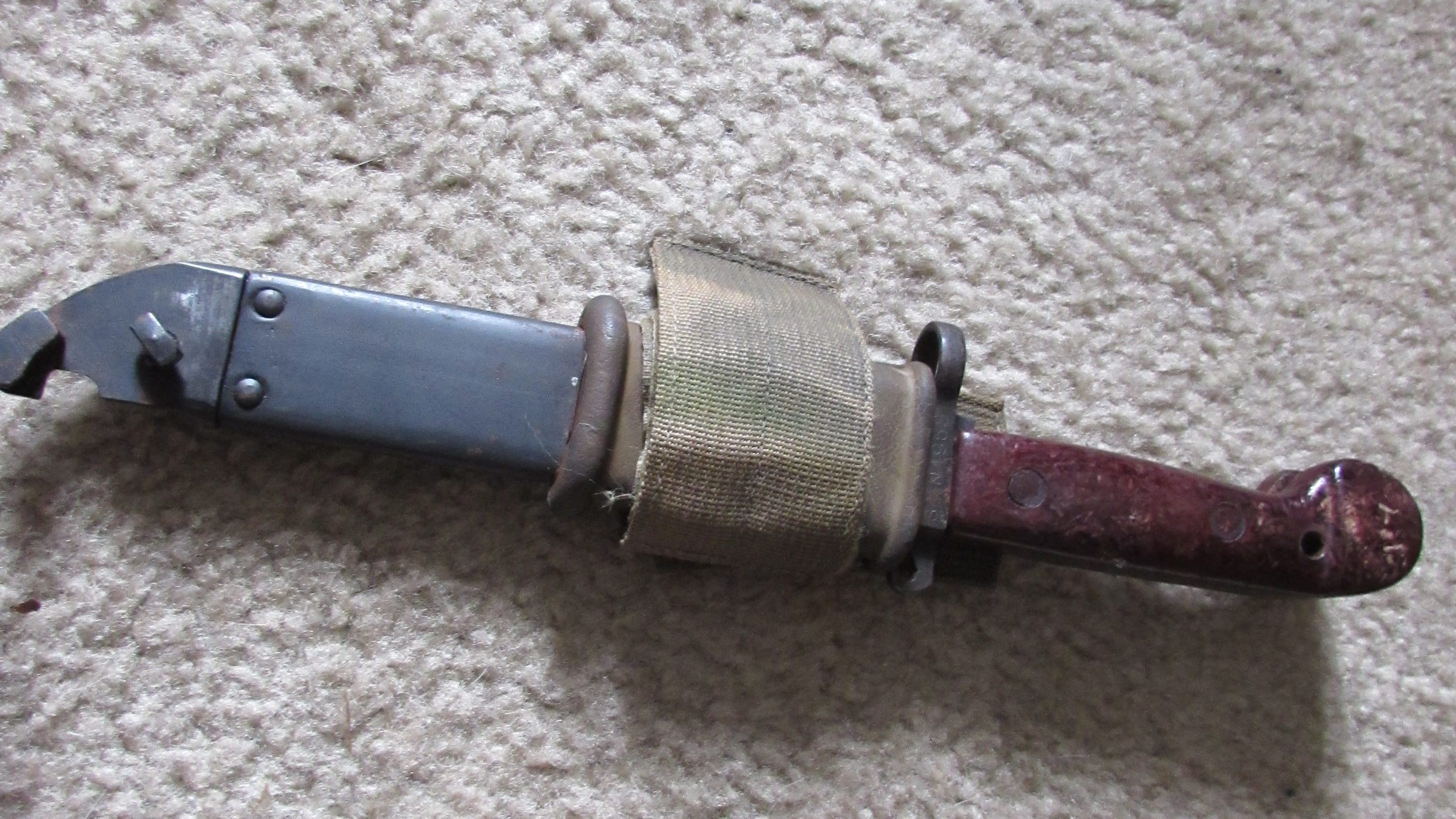
I recently purchased an AKM bayonet to replace the Ka-Bar I carry on my belt (I know, I can already feel the thousands of knife hands pointed at the screen as my jarhead brethren call me a traitor, lol). My reasons for this were as follows:

  • I want the ability to fix a bayonet on my rifle, and I use an AK.
  • I like the fact that an AK bayonet can be used as a wire cutter, among other things.
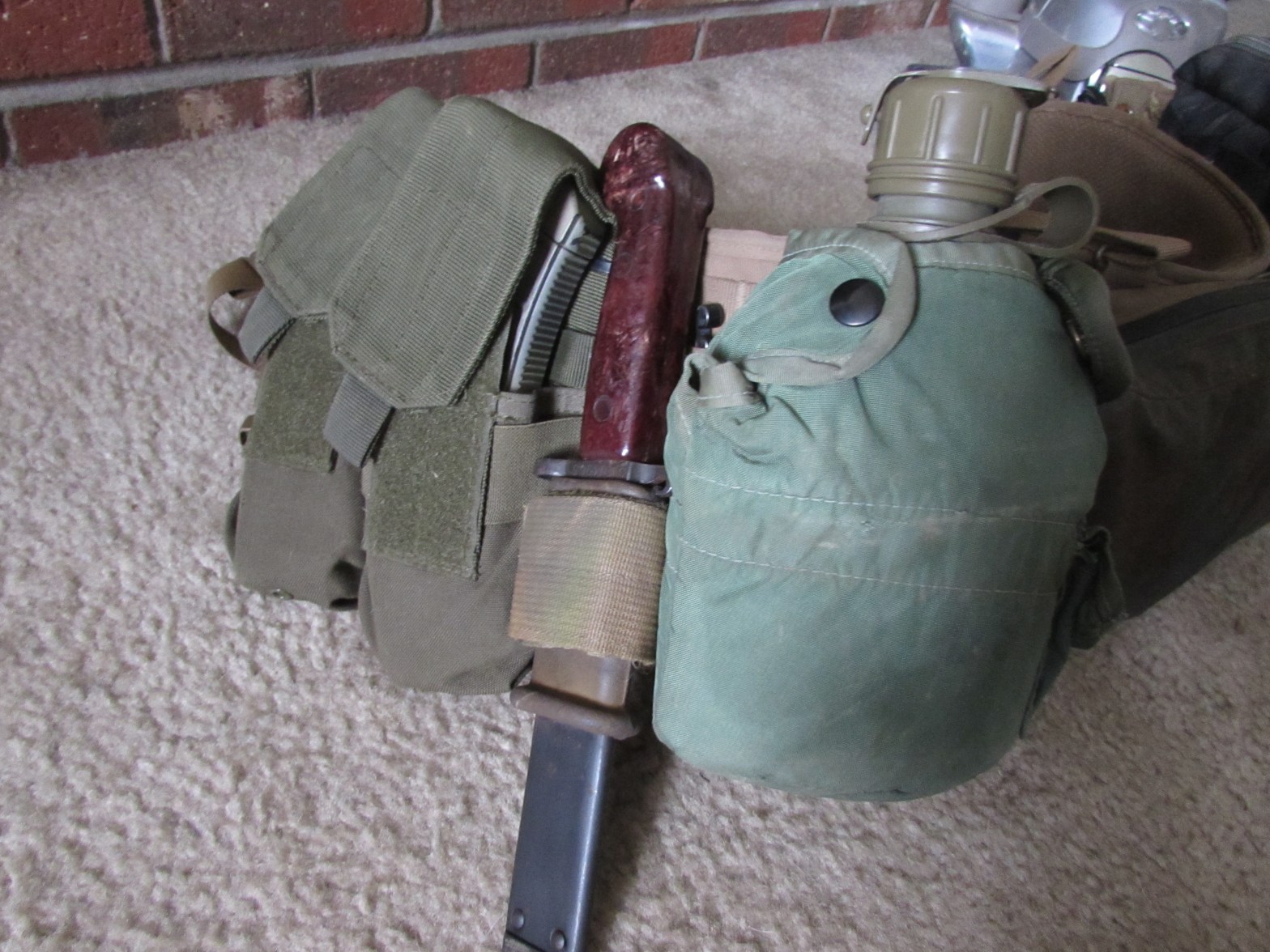
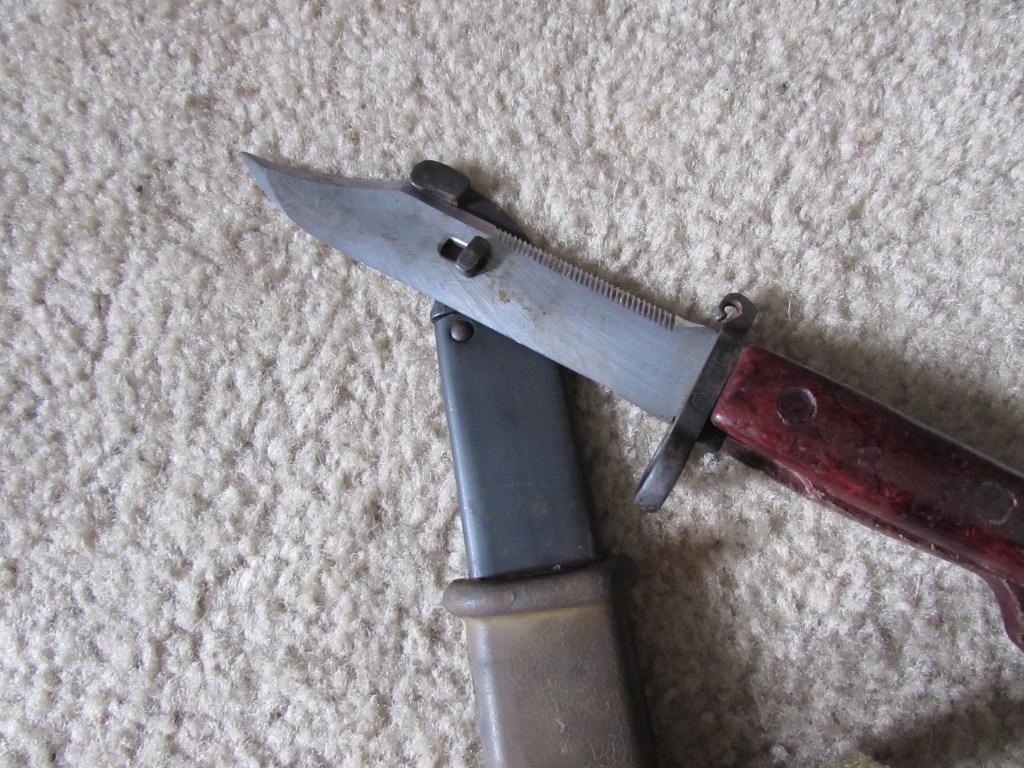
The Bayonet affixed to the sheath as a wire cutter.

However, there are no commercially available options (in stock, that I have found) to attach the bayonet sheath to modern combat equipment. The classic design utilized a leather frog, hanging from a loop on the ammunition belt. However, I wanted to hang it on my battle belt, which has MOLLE webbing.

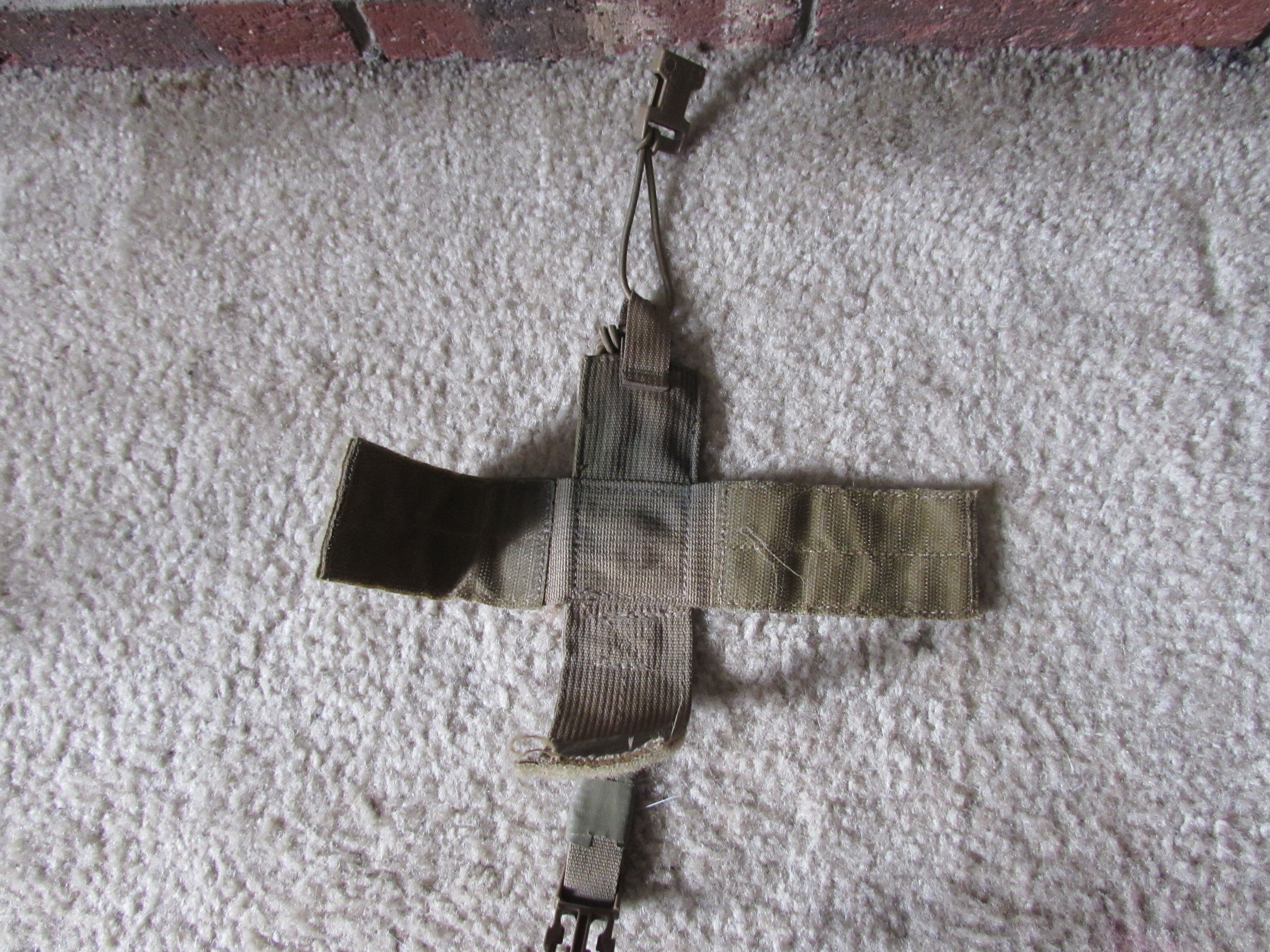
I dug around my extra gear bin for a bit and got an idea. I have a couple of Tactical Tailor PRC-153 radio pouches, and I was able to modify one to hold the bayonet.

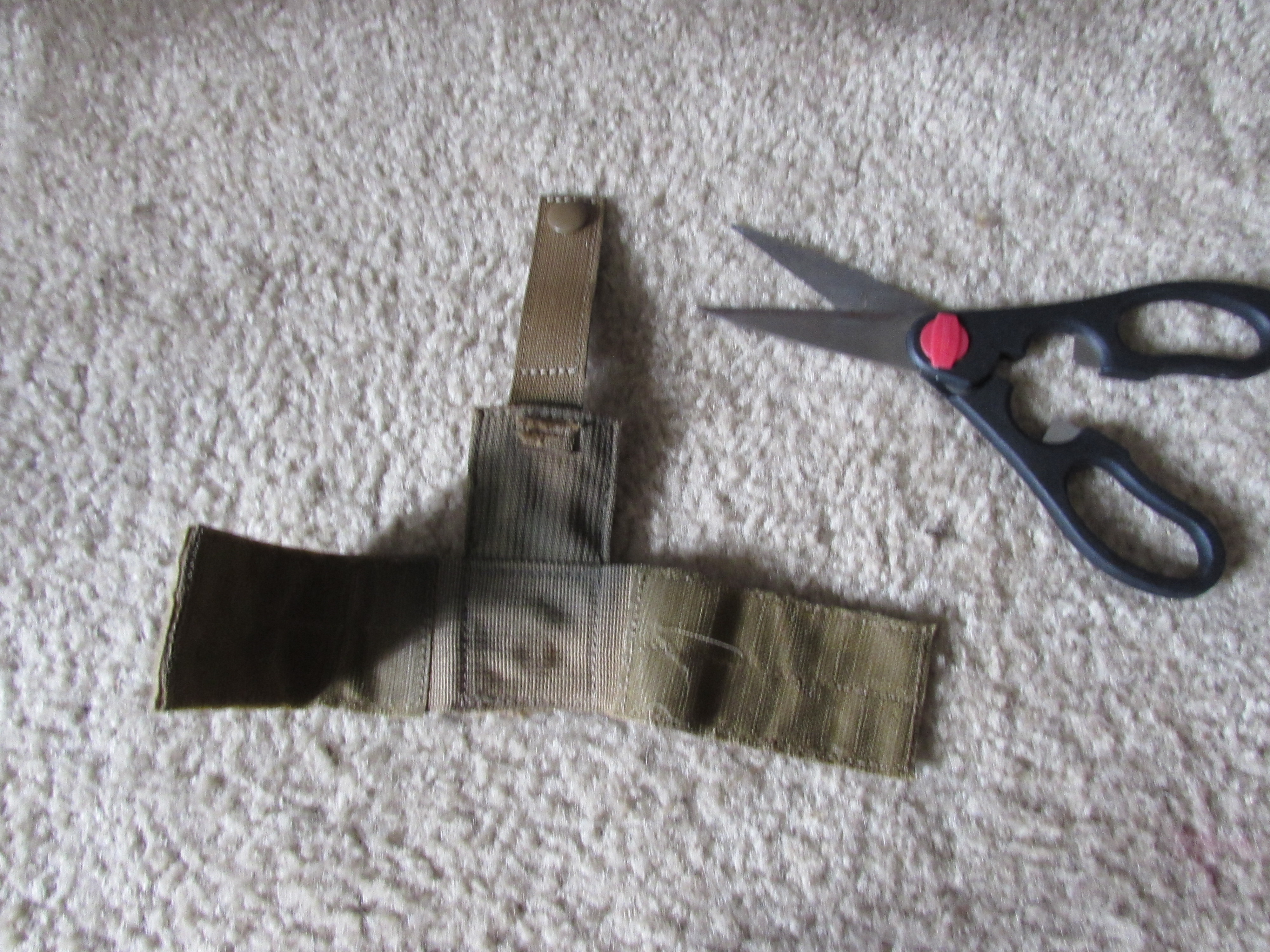
The process was remarkably simple. I opened up the pouch and made two cuts. I cut off the bungee clip first, and then the velcro strap on the bottom. Make sure you do NOT cut off the MOLLE strap on the back, or the whole thing is useless.

That was it. All I needed to do was place the sheath into the open pouch and close the velcro around it.

This allows me to draw the bayonet with ease. When I want to use the sheath as a wire cutter, I simply undo the velcro and pull it out. The whole thing works very well.

In the future, I may add a strap at the handle to hold the bayonet in. For the moment, though, it feels like the sheath has enough friction to hold it in place. I shall experiment further. If another strap is necessary, it will be a fairly simple modification to add.

That’s it. There may be better products that you can buy, but for $12 this is not a bad option. Don’t be afraid to modify your gear to fit your needs, it can save you quite a bit of money in the long run.

TDG Tuesday: Troop Leading Steps Part III: Complete the Plan & Issue the Order

I started this series, TDG (Tactical Decision Game) Tuesdays, to get you more in the mindset of how you could potentially handle a given tactical scenario with a limited amount of resources and manpower. My goal is to get you to read these scenarios and think about what resources you have available, what sort of scenarios you might encounter, and what gaps you need to fill in your equipment/training.

Previously, I started a mini-series on the six troop leading steps, abbreviated as BAMCIS.

Begin Planning
Arrange Recon
Make Recon
Complete the Plan
Issue the Order
Supervise

Over the course of this mini-series, the TDGs have been a successive continuation of the same exercise in which you go over the complete planning and execution of a squad-sized raid on an objective, while following the 6 troop leading steps listed above. If you haven’t already, read TDG 9 for the orientation and scenario that this week builds on, and TDG 10 for the portion on planning and conducting your preliminary reconnaissance of the objective.

TDG 11: Complete the Plan & Issue the Order

This week’s TDG covers the fourth and fifth steps, Complete the plan and Issue the Order. Two weeks ago you came up with a rough plan of attack and a list of RFIs (requests for information) that you wanted answered before finalizing your plan. Last week you planned and conducted your reconnaissance, answering some if not all of your RFIs. This week you will finalize your assault plan and draft it into a 5-paragraph order to issue to your men.

The 5-paragraph order, also known as an “Operations Order format,” is a simple and easy way to organize a mission plan to present to your subordinates. The 5 paragraphs can be easily remembered with the acronym “SMEAC”

Situation: Disposition of all friendly, hostile, and adjacent forces.
Mission: What we are trying to do.
Execution: How we are going to do it.
Admin & Logistics: Who/what is getting where and how.
Command & Signal: Who is in charge and how they are communicating.

If this looks familiar, it should. It’s the same format I’ve used in past TDGs to present the scenario to you. This is a very, very simplified description of what can go into a 5-paragraph order, but for a small group of civilian volunteers it will suffice to organize your thoughts. If you like, you can use as much detail as you want and make a full operations order. A more thorough description of the 5-paragraph order can be found here.

Your assignment this week is to finalize your assault plan using the results of your reconnaissance. Yesterday I posted the results of Badlands Rifleman’s recon plan, you may use that as your own reconnaissance. Feel free to post your final assault plans in the comments and discuss.

Next week we go back to the classic TDG format.