
When we hear the word “camouflage,” we think of a sniper wearing a ghillie suit or our favorite camo patterns. In reality, there is far more to the topic of camouflage than simply visual concealment. The modern battlefield is saturated with sensors of all types, and it is important to be cognizant of how vulnerable you are to each one. Today I am going to discuss these vulnerabilities in the context of their respective domains.
I must note that you will NEVER have completely zero signature across all domains. That may be your goal, but it is not a realistic one. The good news is that this is not necessary. All that is required is that we take steps to reduce our signature in each of these respective domains as appropriate for the context that we find ourselves in. That is why we call it “Signature Management” (SIGMAN) and not “signature removal”: we are simply managing our signature as appropriate for the threat we face.
I cannot hope to comprehensively cover ANY of the domains of SIGMAN in this article. Each topic deserves its’ own article, if not an entire field manual. My goal today is to simply increase your awareness of your signature so that you can take steps to mitigate your vulnerabilities.
Visual
The visual domain is the most obvious one. Our eyes provide 85% of our sensory input, so this is the most obvious avenue of approach. Traditional camouflage techniques apply to the visual spectrum to make yourself (and your equipment/vehicles) harder to visually detect. This is one of the easiest parts of your signature to manage because we all have the ability to evaluate our own visual signature to see how well we are blending in.
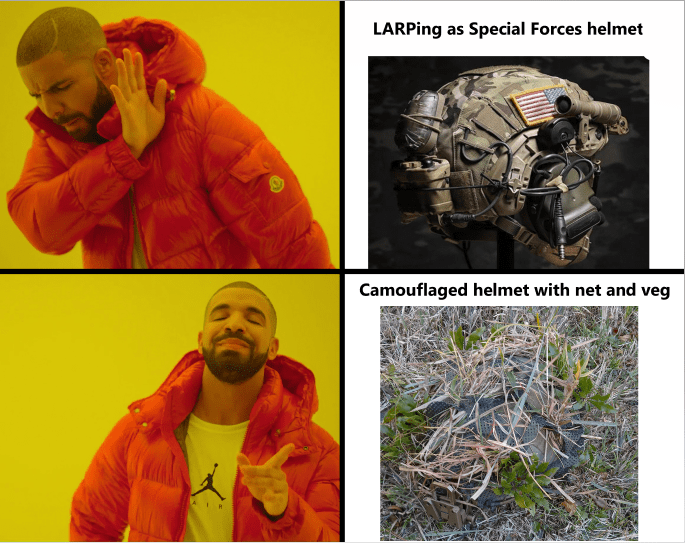
Much has been written on this topic by men with more expertise and experience than myself, and I encourage you to do your own study. For now, I will leave you with the following points.
- The battlefield is 3-dimensional. Be aware of your visual signature from above as well as on the ground.
- Use a ghillie blanket to camouflage individuals, positions, or equipment when halted.
- Natural vegetation is always better camouflage than artificial materials. Camo patterns on clothing and equipment are simply a starting point.
- Your visual signature is greatly increased when moving. Movement catches the eye. Care should be taken during route planning to use cover and concealment.
- Vehicle movement along dusty roads should be slow enough not to raise large dust clouds when speed is not a priority.
- Use buddies to evaluate the effectiveness of each others’ visual camouflage.
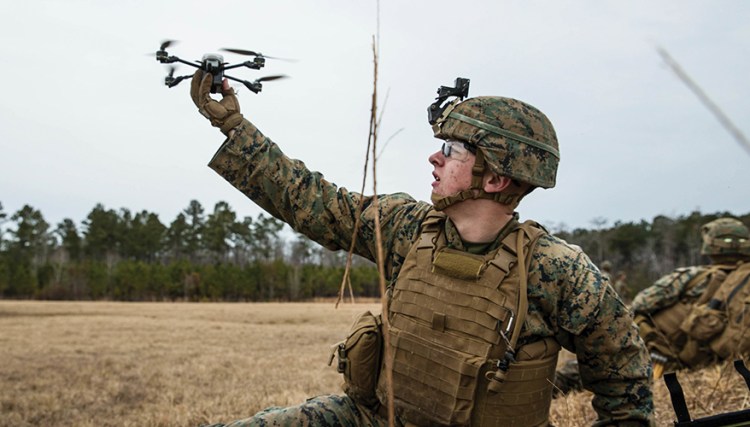
- When traveling with multiple vehicles in a convoy, travel single file when going off-road. A single set of tire tracks in a field may look normal, but several converging or parallel tracks do not. Especially when viewed from above with SUAS.
Sound
Audible noise can be a dead giveaway. Vehicle engines, loud talking, or even unnecessary movement can generate enough noise to betray a unit’s position. And depending on the tactical situation, sound alone may be enough for an opposing force to positively identify (PID) you as a hostile target.

- Noise discipline should be strictly enforced by team leaders in the field to keep troops from talking too loudly, rattling equipment, etc.
- Before a patrol, team leaders should check that their troops’ equipment does not rattle or creak as they walk. Apply tape to loose buckles, sling swivels, etc. to muffle the sound.
- Vehicle engines should not idle at the halt. Avoid using running vehicles to charge batteries on electrical equipment. Solar panels are preferred for this because they do not make any noise.
Smell
Our sense of smell is underappreciated because we haven’t needed to use it for survival in a long time. However, once our survival starts to depend on it, we rediscover our sense of smell in a way we didn’t know we could. The last century of warfare is replete with stories of troops smelling the enemy before getting attacked.
There are more obvious smells that could give away a patrol, patrol base, or observation post. Use these best practices to mitigate this:
- No smoking in the field. Tobacco smoke has a very distinctive smell that can carry quite a ways, and is a dead giveaway in the woods.
- When refueling vehicles, have absorbent pads in a drip pan on the ground below to catch any spills. Ensure all jerry cans are properly sealed.
- Refrain from cooking food outside of “safe” areas. Heating water is normally okay if using a smokeless heat source, but actual cooking creates too much aroma.

- Do not build wood fires unless absolutely necessary for survival.
NIR
Near-infrared (NIR) refers to the portion of the light spectrum that is invisible to our naked eyes but visible through the aid of Night Observation Devices (NODs, aka NVGs). This is an oversimplified definition, but it is sufficient for our purposes. When I refer to NIR signature I am talking about vulnerabilities related to the opposition’s use of NODs.

NODs work by amplifying the ambient light within an area and can also perceive NIR light. This means that ANY light sources are greatly amplified, especially light that also generates heat because heat produces IR and NIR light. The cherry on a lit cigarette, for example, looks like a floodlight through NODs.
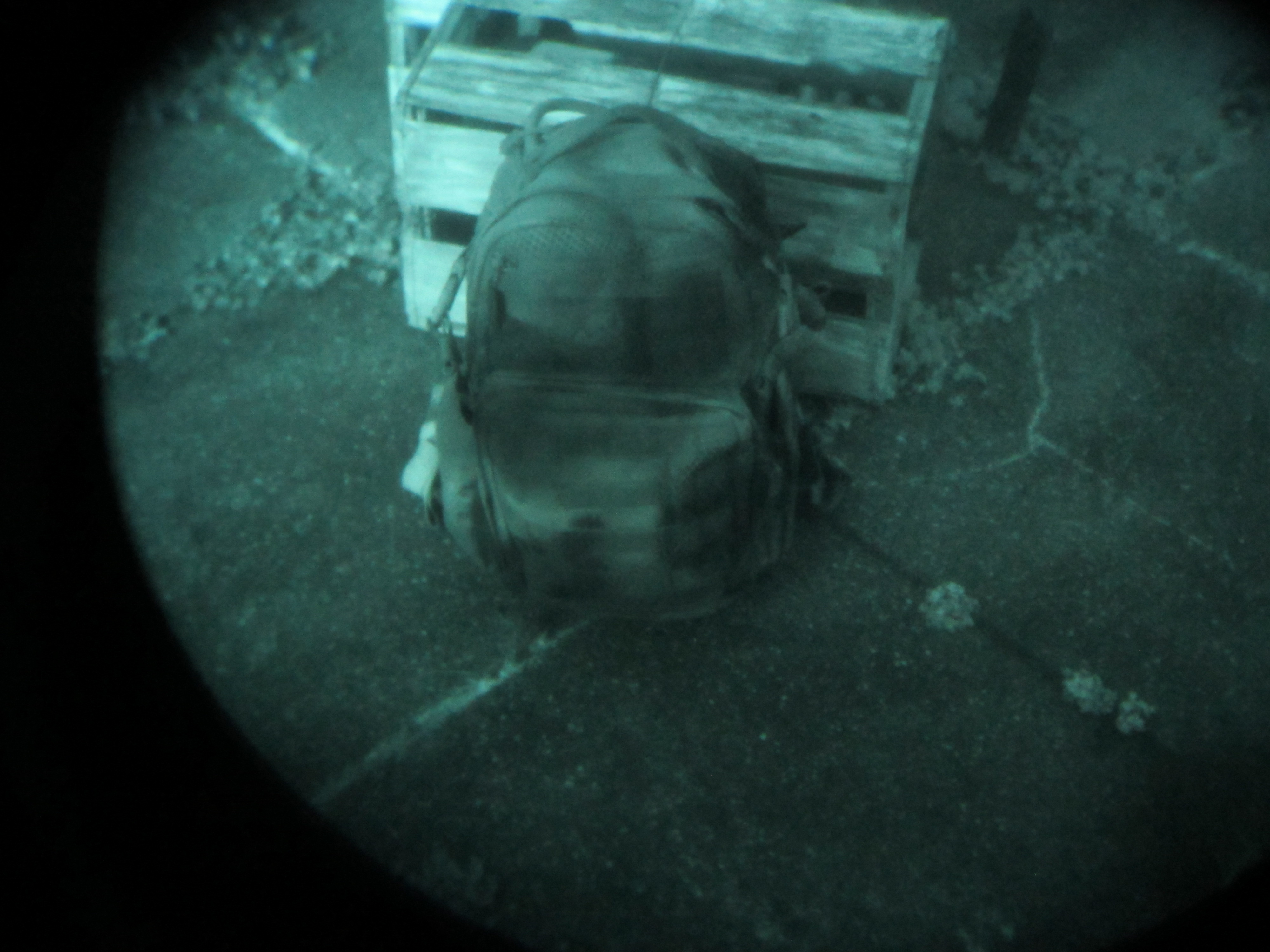
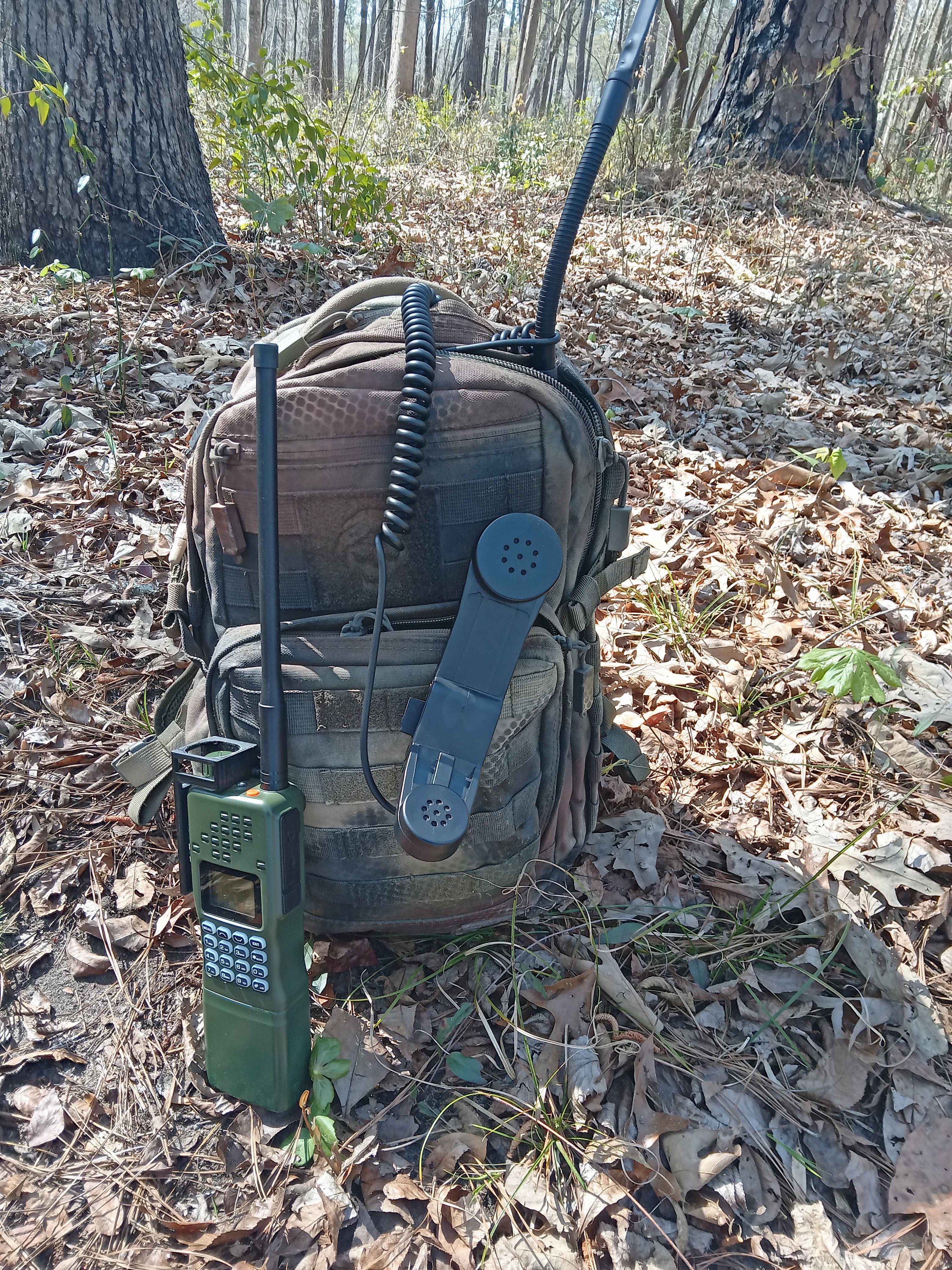
Additionally, equipment/clothing that looks visually camouflaged may actually appear as a bright white blob through NODs if the dyes are not “NIR compliant” (having passed the military’s standards for not reflecting NIR light). If you haven’t already, check your uniforms, vest/pc, and backpacks for NIR compliance by looking at them through NODs. If it is compliant, you will still see the printed camouflage pattern. Non-NIR compliant gear with MOLLE webbing looks like a white blob with horizontal black stripes.

The following are best practices to mitigate your NIR signature:
- The use of cooking fires or camp stoves should be limited to daylight hours when NODs are not in use.
- Smoking should be nonexistent in the field, especially at night.
- Check gear for NIR compliance by looking at it through NODs. All military surplus uniforms and equipment will be NIR compliant.
- Using flat camouflage spray paint colors on noncompliant items fixes them. I do this to my noncompliant backpacks to make them absorb NIR light.
Thermal
Thermal sensors are optics that read the infrared spectrum to determine the temperature of objects at distance, and translate that information into an image showing color-coded temperature differences.
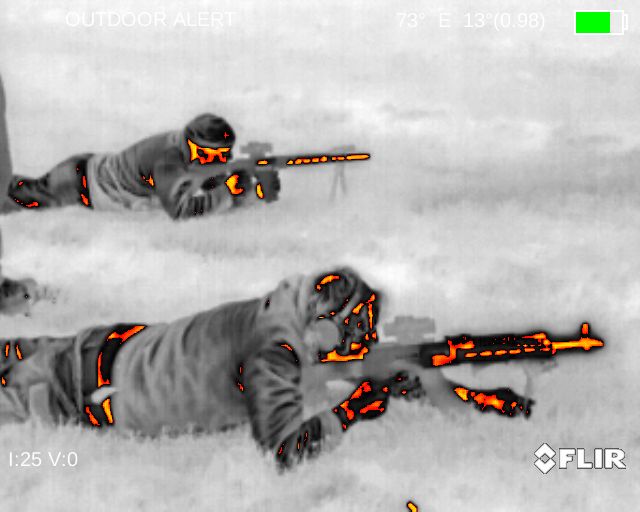
Thermal sensors can be mounted on vehicles or weapons, handheld, or on drones and aircraft. The vulnerability in the thermal spectrum is significant, but not insurmountable. See my article on this topic: The Minuteman’s Guide to Thermal Camouflage
- Train with thermal optics often in order to build familiarity with their capabilities and limitations.
- Use careful route planning to take advantage of cover and concealment, as well as times of day when thermals are less effective.
- When bivouacked, halted, or in any static position, use a Jäger Rig to make yourself invisible to airborne thermal sensors.
- When camouflaging vehicles, use cardboard boxes, tree branches, etc. to suspend camouflage net at least 8-12″ above the vehicle. This creates an air gap so that the camouflage does not absorb the heat of the vehicle, and does a better job of hiding its thermal signature.
Electronic
Electronic warfare (EW) is perhaps the most misunderstood domain of SIGMAN, and also one of the most easily exploited. Anything that transmits a signal of any kind contributes to a unit’s electronic footprint. Cell phones, radios, drones, even Bluetooth devices. I once saw a team get located in their observation post (OP) by their Peltor ComTac VI headsets which used Bluetooth to talk to each other. Sometimes, being “high speed” is a vulnerability.

Affiliate link: https://amzn.to/3StTYJq
This is not to say that every transmission will get you killed, far from it. It’s a matter of balancing your electronic footprint so that it doesn’t draw too much attention. Bluetooth signals in the middle of a forest might raise some eyebrows, but those same signals in an urban area with thousands of innocuous Bluetooth devices per square mile will probably be ignored.
Use passive listening devices like frequency counters and spectrum analyzers to find the “noise floor,” the EW baseline of what transmissions are normal in your area. Then manage your EW footprint by blending in to the noise floor. For example, I live on the coast where there are a lot of maritime frequency transmissions. Hypothetically, I may be able to blend in to the noise floor by using marine radio channels, or frequencies that are slightly off but within the same band. You get the idea.
A large part of EW SIGMAN is knowing the capabilities of your adversary. A state or state-backed actor will have access to airborne EW platforms, which are extremely dangerous. Irregular threats like gangs and cartels still have access to basic off-the-shelf jammers, but their range is limited and they might not have the knowledge of how to use their equipment for passive intelligence gathering. Other irregular threats may have enhanced Radio Direction Finding (RDF) capabilities. There is an entire sport within the Ham radio community called “foxhunting” where amateurs use RDF to locate a hidden transmitter.
This is merely scratching the surface of EW. Once you start to go down this rabbit hole, you will find that there is no end to the possibilities if you are willing to put in the time to study it. For now, I’ll just leave you with these best practices.
- Determine the noise floor and attempt to blend into it.
- Do not carry devices that constantly transmit (cell phones, smart watches, etc.) or are easily geolocated. I have successfully hunted patrols in force-on-force exercises because one goober thought he could get away with bringing his cell phone. Seriously, LEAVE THE PHONES AT HOME.

- Keep radio transmissions short, sweet, and to the point. Think about what you’re going to say before you key out to eliminate the “uhhhs” and pauses as you think of what to say while transmitting. Write down tactical reports before you send them. Push to talk, don’t push to think.
- For radios, use the lowest power level possible while still reaching the distant station. Using high power to talk to someone 100yds away is like shouting to talk to someone next to you. Yeah, they’ll hear you, but so will everyone else in the building.
- When possible, use directional antennas and terrain masking to further conceal radio signals.
- Send reports of a routine or non-urgent nature using a data burst transmission (AndFlmsg, TACCHAT, etc.) to cut down on transmission time.
- Send radio transmissions from a site that is at least 200m or 1 terrain feature from your patrol base, OP, etc. This includes piloting SUAS.
Spoor
Spoor is sign that is left behind by a patrol which enables it to be tracked. Footprints, broken twigs, tire tracks, etc. It is a signature that is left behind after the patrol has left, which separates it from the other SIGMAN domains. Spoor is not commonly included in publications on SIGMAN, but I believe that it is relevant to mention here.
A patrol that leaves a significant amount of spoor enables the adversary to collect information on what the patrol was doing. If multiple patrols do this, a clever adversary will be able to determine patterns on how you operate and use this against you.
In a hypothetical grid-down scenario, your neighborhood sets into a defensive posture to keep out looters,and sends out regular security patrols. But your inexperienced neighbors follow the same route every time they go out, which wears a path in the grass. This pattern is easily recognizable and exploited. Before long someone will evade your patrol and slip into your perimeter since they know their route. If they’re more aggressive, your patrol could be easily ambushed or the route booby-trapped.
Another example is that you send a reconnaissance patrol to check on a nearby subdivision that was burning earlier. Your patrol wasn’t as sneaky as they thought they were being, and left behind some food trash in their OP. Desperate, hungry scavengers watch your guys leave, find the trash in the OP and realize that you have a good supply of freeze-dried food. Your patrol gets followed back to your neighborhood, and now the scavengers know where to raid to get food.
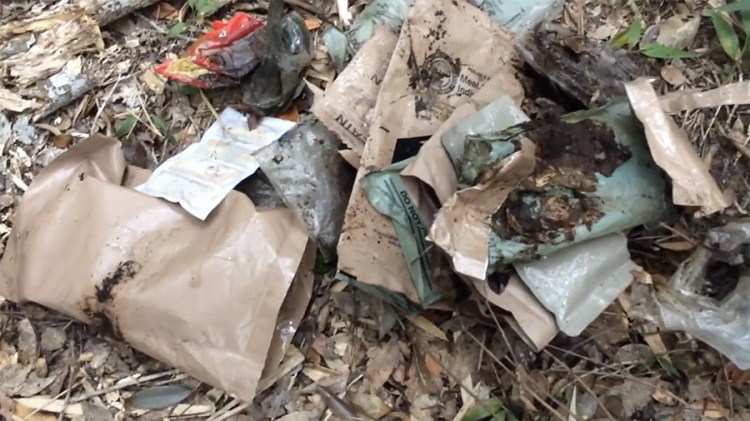
The bottom line is don’t leave any unnecessary sign that reveals information about your patrol.
- Carry out all trash that you carry in on a patrol. Have a plan to manage your personal trash. Team Leaders should enforce “trash discipline” by inspecting patrol bases and OPs before evacuating them when time permits. NEVER bury trash.
- Do not take the same route out as you took in, an ambush may be waiting for you. Always take a different route back.
- The last man in a patrol should, when possible, cover up any sign that the patrol leaves. Use pine boughs to sweep snow over footprints, cammie paint to dull the bright end of a snapped branch, etc.
- When refueling vehicles, have absorbent pads in a drip pan on the ground below to catch any spills.
- Avoid soft ground (mud, sand).
- Bury all feces in catholes or a slit latrine. If you are really dedicated and want to leave NO trace, carry out your excrement in WAG bags. We also used empty MRE bags with duct tape, but that’s not a great solution if you can get actual WAG bags.
- If you must dig for catholes or fire pits, pile your dirt onto a tarp/poncho so that you can get ALL the dirt back into the hole.
Summary
We just covered a lot of information about the different domains of SIGMAN. Hopefully you are able to incorporate some of these best practices into your team standard operating procedures (SOPs) to make yourselves harder to detect. Remember, to be detected is to be targeted, and to be targeted is to be killed.
In closing, I want to remind you that you will never achieve zero signature. In fact, some of the best practices for one domain of SIGMAN actually increase your signatures in other areas. And that’s okay. What matters is that you are managing your signature appropriately with respect to your environment, your threat, and your mission. If you can remain flexible in this way and can adapt rather than remaining fixed into one cookie cutter SOP, you will come out on top more often than not. In all forms of conflict, from chess to strategic deterrence, he who adapts quickest dominates.
Semper gumby.
 Von Steuben Training & Consulting
Wow, a lot to think about. Thank you.
LikeLike
Great post! I would love to know more on how you DF’ed that cellphone goober. Was it bluetooth, WIFI or 4G/5G that you detected? What equipment and antenna, please. Thanks and keep up the great work Mike!
LikeLike
I didn’t DF him, I found him because his snapchat updated and marked his position on the maps and one of my teammates saw it (see the picture in the article). Other times we had SIGINT specialists flying drones that could see and map out cell phone and bluetooth transmissions on a “heat map”, but I wasn’t operating the equipment myself. The SIGINT Marines told me over the radio where the patrol was and I went and ambushed them with my squad.
LikeLike
1. I NEED a set of those over-whites in the digital – that’s nice.
2. In a pinch you can put dirt on where you cut branches for observation to cover up the fresh cut.
LikeLiked by 1 person
That’s Marine Corps issue. They are very nice and also extremely lightweight, I have the trousers. Also, good point on the dirt.
LikeLike