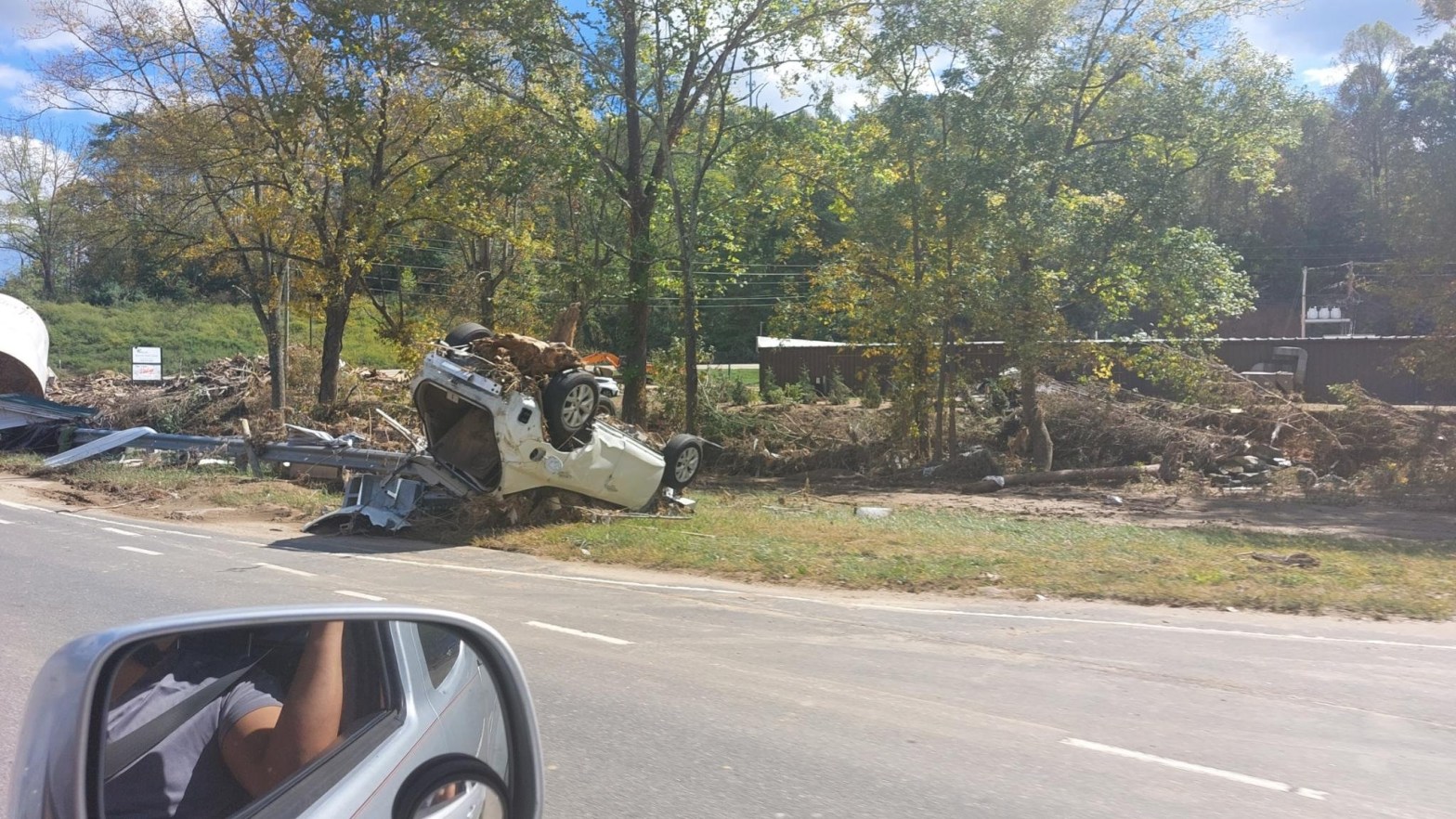
After Hurricane Helene hit the mountainous region of Western NC and Eastern TN, my team and I deployed to the region to support the relief efforts from Wednesday, 10/3, to Sunday, 10/6. The details of where we went and what we did are well documented on my twitter/X page, as well as my interview on the 2A_Procast by Tacticon Armament. I will, however, briefly sum up what we did before we hit the After-Action Review (AAR).
- Monday: Identified the possibility of a mission occurring, began intelligence preparation of the battlespace (IPB)
- Tuesday: Committed to the mission, issued a warning order, focused IPB
- Wednesday: Left for the AO, arrived in Spartanburg SC, linked up with a supply convoy coordinated by the 118th, and spent the night
- Thursday: Recon into NC, established patrol base, began running convoys
- Friday-Saturday: Continued resupply convoy operations and wellness checks
- Sunday: Departed the AO
The following is my team’s After-Action Review (AAR) for this operation, where we evaluated our lessons learned about what worked, what didn’t work, and how we intend to improve. The best lessons learned are lessons shared, so I present it here for you to learn from our experience and possibly replicate what we did.
Intelligence Support
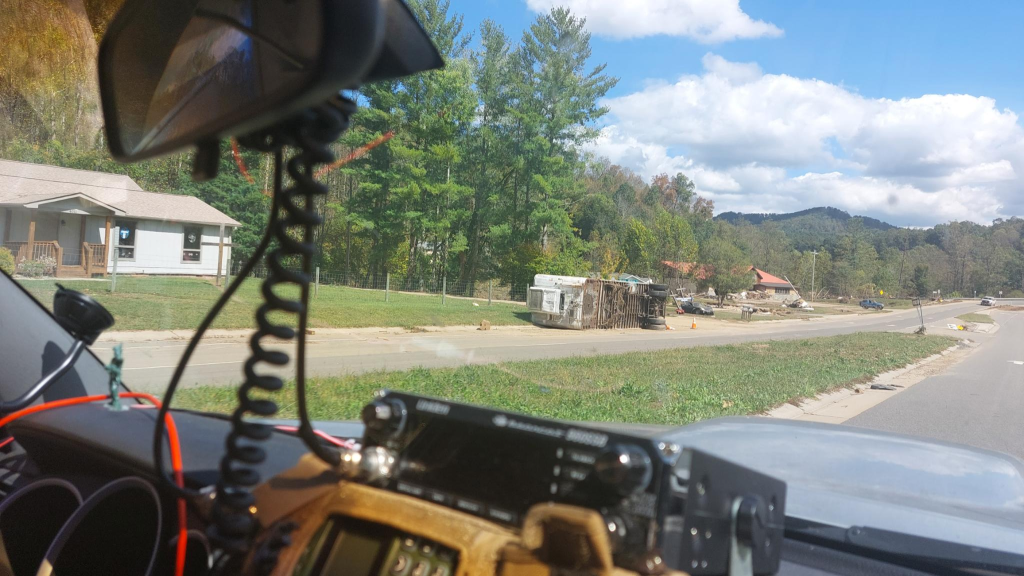
As shown in the above timeline, we conducted 2 full days of IPB before departing. The intelligence work that we did was absolutely critical to the success of this mission. By the time we left, we had the following resources:
- Primary and alternate routes planned and marked on maps
- Basic information about crime reports, roadblocks, and curfews
- Repeater frequencies in the planned Area of Opertions (AO)
The intelligence collection never stopped, and the guys who couldn’t make the trip continued to work the intel picture remotely. If I was going to move into a new area, I would send up a request for information (RFI) and would normally have relevant information within an hour.
- SUSTAIN intelligence-driven operations. We didn’t commit to the operation until we had done 24hrs of IPB, at which point I believed that I had enough information to make an informed decision.
- SUSTAIN remote intelligence support whenever possible during expeditionary operations.
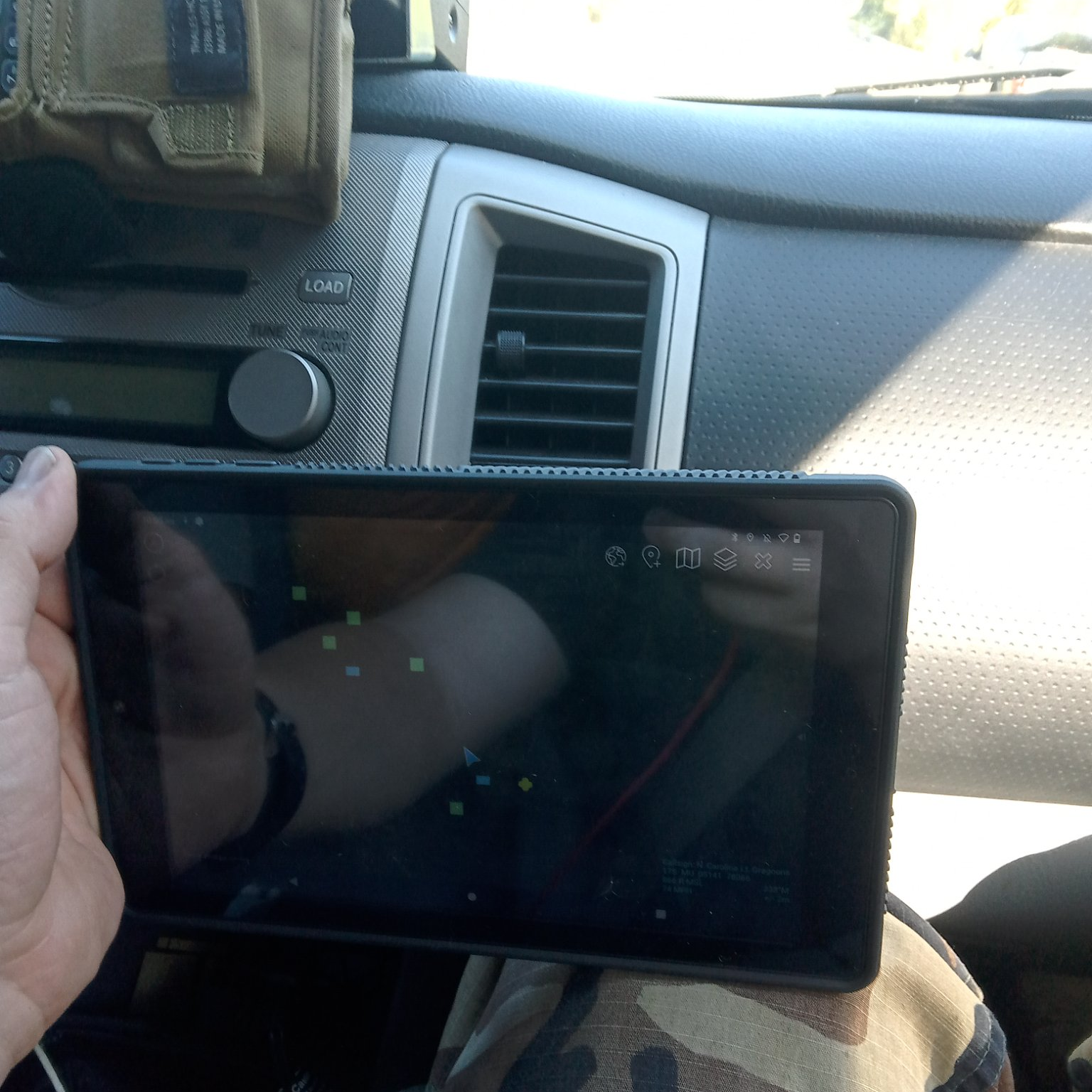
- IMPROVE our skill with the Android Team Awareness Kit (ATAK). This was my first time trying to use ATAK, and I regret not getting into it sooner. It is clearly an excellent tool for spatial awareness, but we simply lacked the skill to employ it effectively. It would also have been incredibly useful if the intelligence section could have updated my map remotely, saving me time.
- IMPROVE the content of intelligence reports with standardized templates. I would occasionally ask for an analysis and get mostly useless conjecture instead. Having templates for answering RFIs would help with this. At a minimum we will standardize templates for terrain analysis, SIGINT opportunities, and strategic assessments of how certain events impact operations.
Reconnaissance
Once in the AO, we had to do a significant amount of human intelligence (HUMINT) work asking people for information. As time went on, we relied more and more on locally produced HUMINT until it replaced our remote intelligence section’s work entirely.
We also listened to local HAM repeaters and CB channels for SIGINT.
We brought a drone but were unable to employ it due to airspace restrictions (there was a TON of helicopter activity).
- SUSTAIN the use of HUMINT and SIGINT during reconnaissance to save time and fuel physically scouting locations ourselves.
- IMPROVE by bringing a small, lightweight mobility option for local reconnaissance to save on fuel. Possible options include ATVs, motorcycles/dirt bikes, and E-bikes.
- IMPROVE aerial reconnaissance ability by having a sub-250gr non-DJI drone in addition to the larger drone for more options and fewer flight restrictions.
- IMPROVE OSINT collection by including some means of tracking aircraft beacons. Helicopters were the primary means of moving supplies into cut off areas. Tracking aircraft could have helped us to earlier identify areas that needed assistance by noting where helicopters were going.
Liaison and Convoy Operations
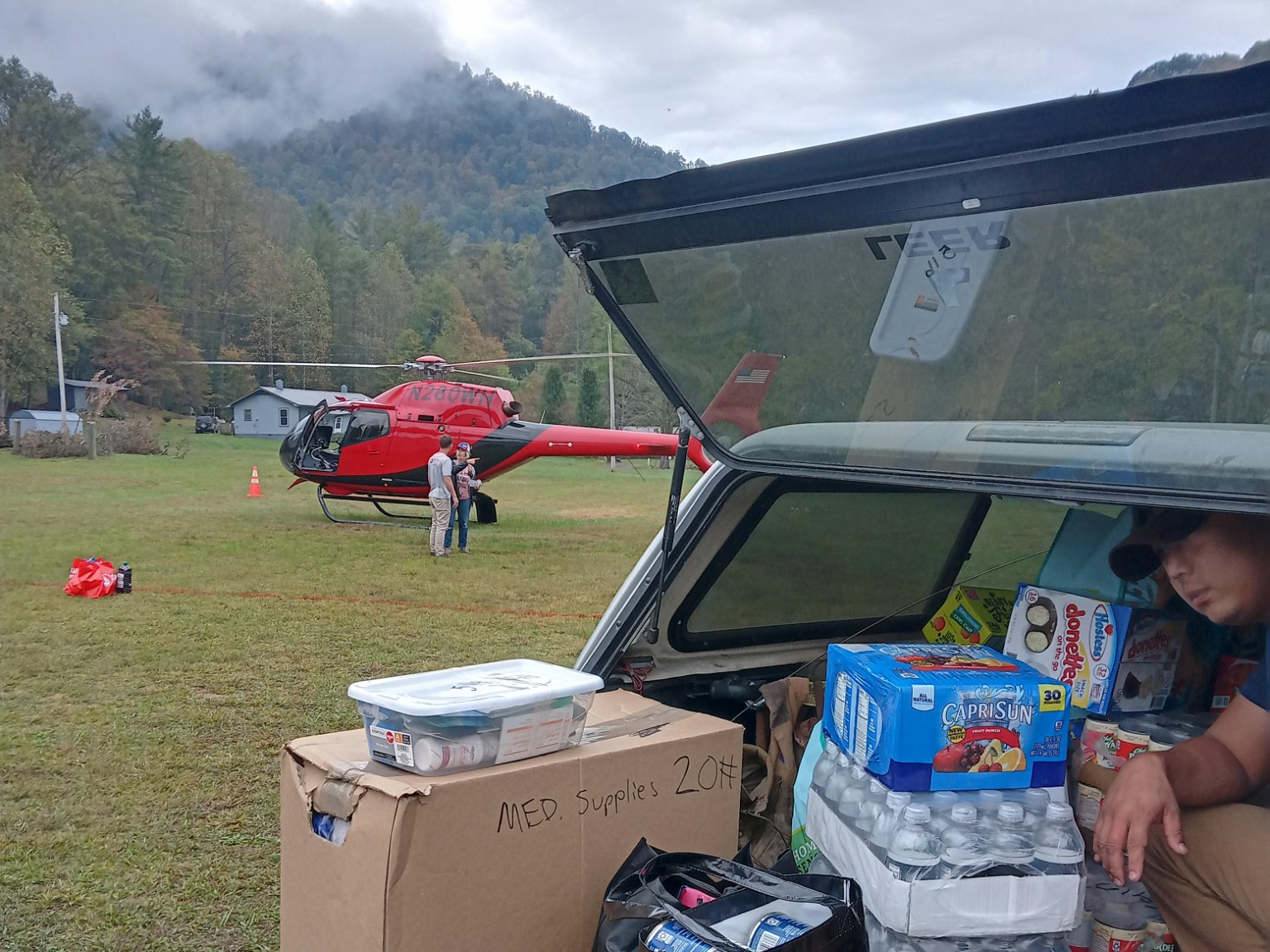
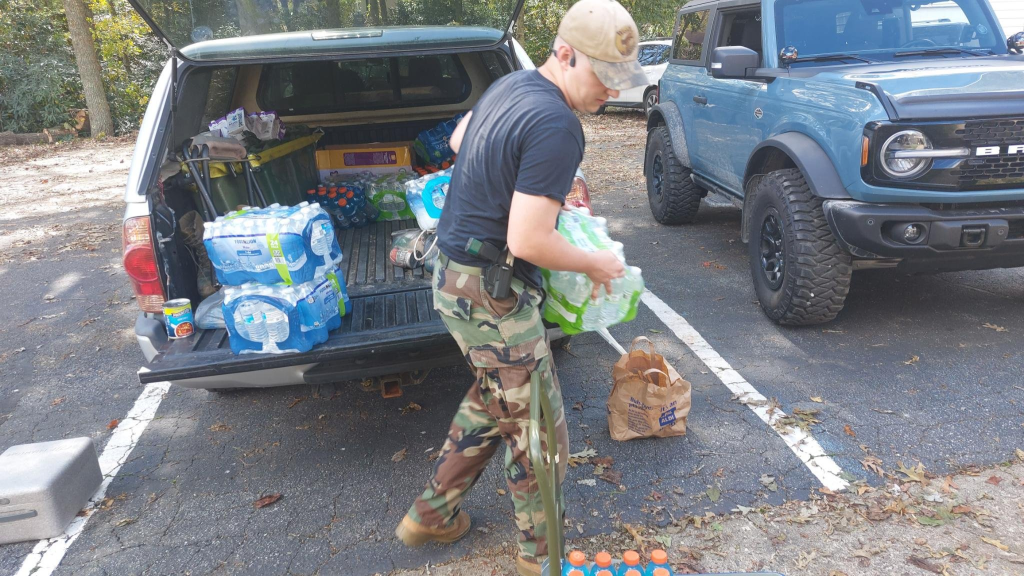
We set up our “patrol base” at a large point of distribution (POD) located in a church. We ran all our missions in direct support of that church’s relief efforts. This included wellness checks, recon patrols, and resupply convoys to homes and smaller PODs.
- SUSTAIN coordinating efforts through supporting a local church that was already distributing supplies. I believe that we would not have achieved nearly as much if we had gone elsewhere or tried to operate completely independently.
- SUSTAIN conducting resupply convoys, this was by far the most efficient and safe way to move supplies where cell coverage was nonexistent and road conditions were difficult to straight-up treacherous. It also mitigated the threat of ambush, which was a very real concern. Locals told stories about cars getting surrounded and the occupants getting robbed at gunpoint.
- SUSTAIN radio coordination between vehicles during convoys.
- IMPROVE communications within convoys by bringing extra radios to hand out to other vehicles as necessary. Said radios should be pre-programmed with FRS and MURS frequencies.
- SUSTAIN the use of a local guide to lead convoys and get us through checkpoints.
- SUSTAIN the use of a “recon pull” concept whereby we conducted reconnaissance, located a suitable location to run operations from, and “pulled” other resources and volunteers behind us to where they were needed. This was mainly done via Twitter/X and direct contact with the 118th.
- IMPROVE identification of vehicles in our convoys. This being a semi-permissive environment, I would have been comfortable marking our vehicles in some way to make it easier to identify who was and who wasn’t part of our convoy. This would have greatly helped us not to lose people in the chaotic environment we found ourselves operating in. Colored streamers tied to mirrors is one possible option.
Security
Security was a concern entering this operation. We had heard reports of some looting prior to our departure, though we never witnessed any ourselves. We didn’t want to be vulnerable, but we also didn’t want to roll into the AO in full battle rattle looking like a bunch of wannabe SF weirdos. We found balance by scaling our security posture to the level of threat that we faced at any given time. In a nutshell, we generally matched the security posture adopted by the locals. Almost everyone was openly or concealed carrying handguns, so we pretty much just did that the whole time, leaving our rifles and kit in the trucks.
I only pulled my rifle out of my truck and slung it one time. It was in an area where we’d heard firsthand accounts of robberies/burglaries, and we had already seen locals openly carrying rifles there. I pulled it out when my vehicle was parked and isolated from the rest of our convoy for a short time, and put it back when other elements of our convoy joined us.
- SUSTAIN matching our security posture to that of the locals.
- SUSTAIN bringing enough security options to allow us to remain flexible. Another group didn’t bring rifles at all and mentioned that they regretted it in that area.
- SUSTAIN posting an armed guard during the night. We split this duty into shifts a few hours long so that everyone got some sleep.
- SUSTAIN never leaving vehicles unguarded. Our vehicles were our lifelines, so we couldn’t afford to risk having them looted while we were away.
- IMPROVE nighttime security by using perimeter alert devices. This would have been a great help if we had been forced to bivouac in a more remote location than a church parking lot. Motion sensors, tripwires with shotgun blanks or other noisemakers are possible solutions.
- IMPROVE future operations by having SOPs for staging vehicles in remote bivouac areas. We will experiment with this in our future training exercises.
If you have questions about anything that we did, what did/didn’t work, comment below and I’ll answer what I can. The next part of this AAR will cover the equipment that we used. Stay tuned!
 Von Steuben Training & Consulting
Mike, great work by you, and your team. I found the 2A Procast by Tacticon very worthwhile and with loads of good Q&A. Also good learnings for taking time for well thought out prep as opposed to just blundering out ‘to help’ risking the need to rescue ill-prepared rescuers.
LikeLike
Why non-DJI drones?
LikeLike
Because DJI drones rat on you. They’re constantly broadcasting the location of the drone, the pilot, and their launch point.
LikeLike
Is there a brand with similar performance/features that you prefer (that does not broadcast)?
LikeLike
I’m still looking into that. I haven’t tried that many brands yet, but I’ve had a good experience with Exo drones.
LikeLike