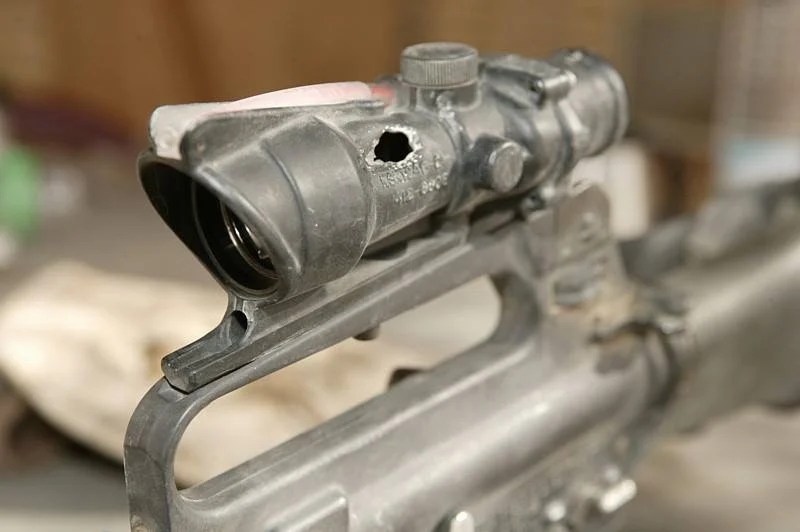
Stuff breaks. No matter how expensive an item is or how many torture tests it passes, everything will wear out and break eventually if it is actually used. Or human error gets the best of us and we just lose things. When this happens in the military, Uncle Sam just reaches into his your pockets and replaces said expensive item. But what about you? Can you afford to replace your equipment if it breaks?
I’ve written in the past about gear snobs and their obsession with purchasing only the latest and greatest equipment available. There’s nothing wrong with expensive equipment, I have some nice things myself. But what happens when that gear gets damaged or lost? Can you afford to replace it? If it breaks in a WROL scenario, you probably won’t be able to buy replacements, so do you have an extra on hand right now? ”Buy once, cry once” is misleading; everything breaks.
Performance vs. Price: the Eternal Quest for Balance
All equipment should be considered consumable, and you should plan to replace or fix everything at some point. If you have to save for months to get a $160 combat uniform when a $40 set of military surplus utilities would have met your needs, it will hit you much harder when you tear up your knees low crawling through dirt, gravel, and brush. For some people who know they can’t replace/fix their $80 combat pants, this fact even prevents them from training in them.
That said, the opposite extreme is detrimental as well. It would be folly to look at this issue and decide to only buy the cheapest gear available so that you can more easily replace it when it breaks. It does you little good to buy crap gear for the sole purpose of being able to replace it with more crap. There is a balance to be had here. A balance that is different for everyone depending on their means.
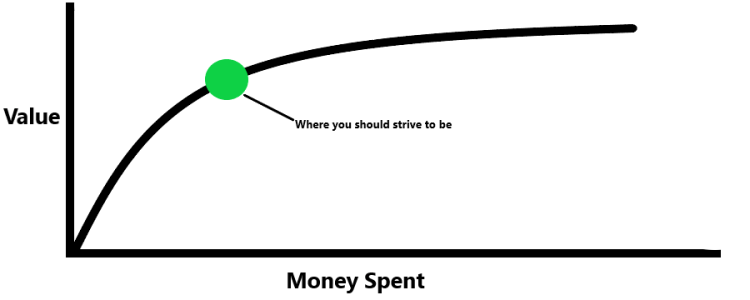
This goes back to the principle of diminishing returns from my previous article on this topic. There is always more value in the more expensive gear, but at some point the value gained is no longer worth the increase in price. At a minimum, make sure that your gear satisfies your operational requirements. Just don’t spend too much extra on useless features.
Fixing Gear
It is extremely beneficial if you have the resources and the skills to repair your damaged equipment and get more life out of it. This is a temporary measure, but greatly helps extend the operational life of your gear. I always carry a “fix-it kit” in my assault pack consisting of 100ft of paracord wrapped around a pack of large zip ties, plus a roll of duct tape. These three items have saved me countless times in the field when something rips, tears, or falls apart. I once zip-tied a fellow Marine’s boot back onto his foot when his bootlace got shredded. Not ideal, but it got him through the rest of the patrol.
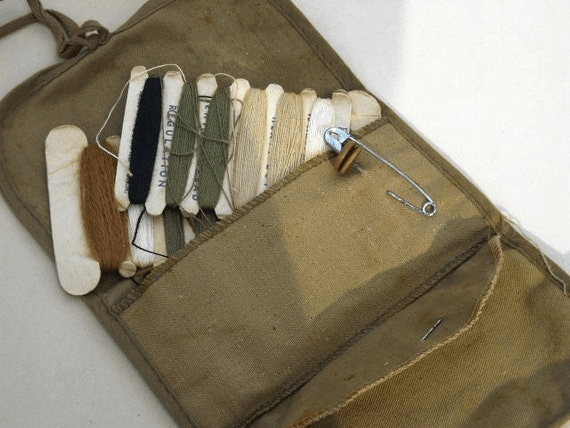
Pro tip: Don’t throw away your torn camouflage clothing. You can cut it up and use it to patch your other camo clothing when it tears. Patches over holes hold up much better than simply stitching the hole shut.
How to Run Spares
I don’t have an issue with expensive gear. Far from it, I have a few nice things myself. What I have an issue with is refusing to train with a piece of gear because one considers it “irreplaceable”. If a piece of kit is so expensive that you are afraid to train with it, you cannot actually afford it.
In an ideal world, you would have duplicates of every item in your kit. This is possible for some cheaper items (cammie paint, flashlights, canteens, etc.), but becomes unrealistic for the more pricey items.
Spare items don’t need to be exact copies, they just need to accomplish the same purpose. One thing that everybody does is upgrade parts of their gear, and certain items get swapped out with better/newer ones from time to time. Rather than ditching, selling, or giving away the old gear, consider holding onto it as a backup (unless the gear being replaced is actually garbage). For example, I have an expensive field uniform that I regularly train with. My replacement plan is milsurp camouflage fatigues that I’ve been using for years and that I know work just fine, albeit slightly less comfortable.
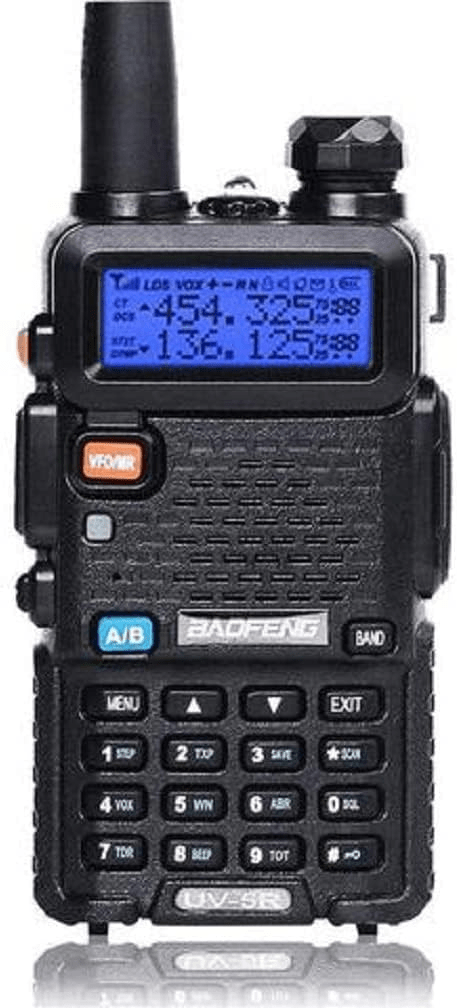
Affiliate link: https://amzn.to/3TK5NML
We can also plan to replace certain items with skills if necessary. For example, GPS receivers are potent land navigation tools. If my GPS (or the network) goes down, I also have the ability to land nav the old school way with a compass. Another example of running spare “skills” instead of gear is backup iron sights on a rifle. If you’re running a red dot with cowitnessed or flip-up iron sights, your replacement plan for your optic is the ability to hit targets with the irons.
Using “backup skills” instead of “backup gear” certainly seems like a cheaper option. The only catch is that you actually need to have the skills. If you’ve never attempted land navigation with a compass and your GPS goes down, you’re screwed. If your backup iron sights aren’t zeroed and you don’t know your holds, you might as well not have them. Don’t be lazy, train with your gear. All of it.
Summary
There is nothing wrong with having nice things. Just ensure that you have a backup plan for when things eventually fail you. Don’t let a piece of equipment be a single point of failure for you. Use spare equipment, skills, or a combination of both to enable you to continue your mission.
If you’re getting started assembling a kit or want to look into affordable equipment to run as backups, check out my Rifleman on a Budget Page. I have personally tested everything on that list and verified that it holds up under field conditions without breaking the bank.
 Von Steuben Training & Consulting
Good stuff. Critical, actually. Folks need to spend more time thinking about this. Have a new sewing kit enroute now.
LikeLiked by 1 person
Thanks! I got the idea for this article when I recently destroyed one of my canteens, but thankfully had several others on hand to replace it.
LikeLike